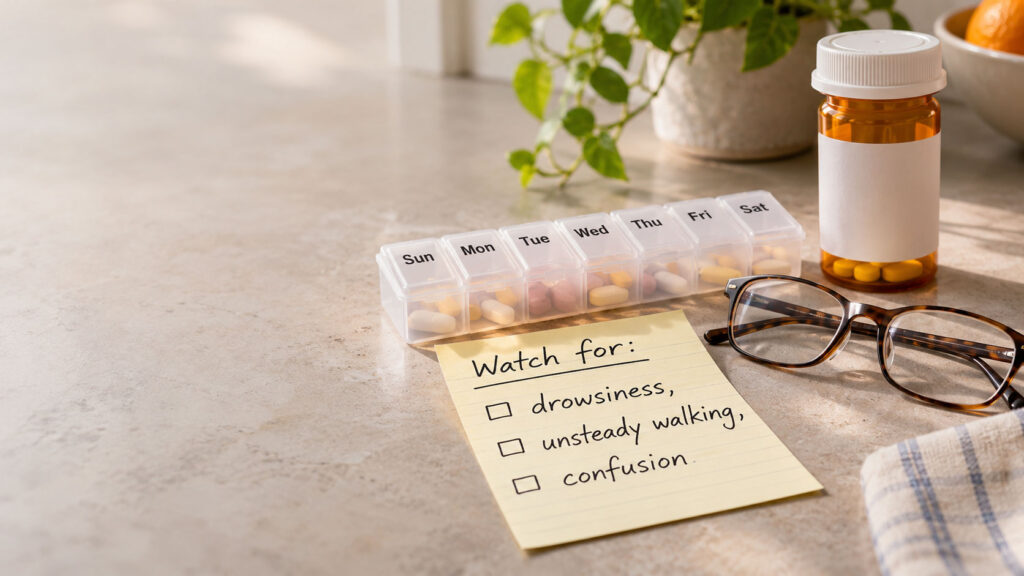
Drowsiness, unsteady walking and foggy thinking are the most common benzodiazepines side effects in elderly adults, and they lead straight to the serious ones: falls, broken hips, delirium and car crashes. No benzo is free of these risks after 65, which is why US geriatric guidelines advise avoiding the whole class in most older adults.
Table of Contents
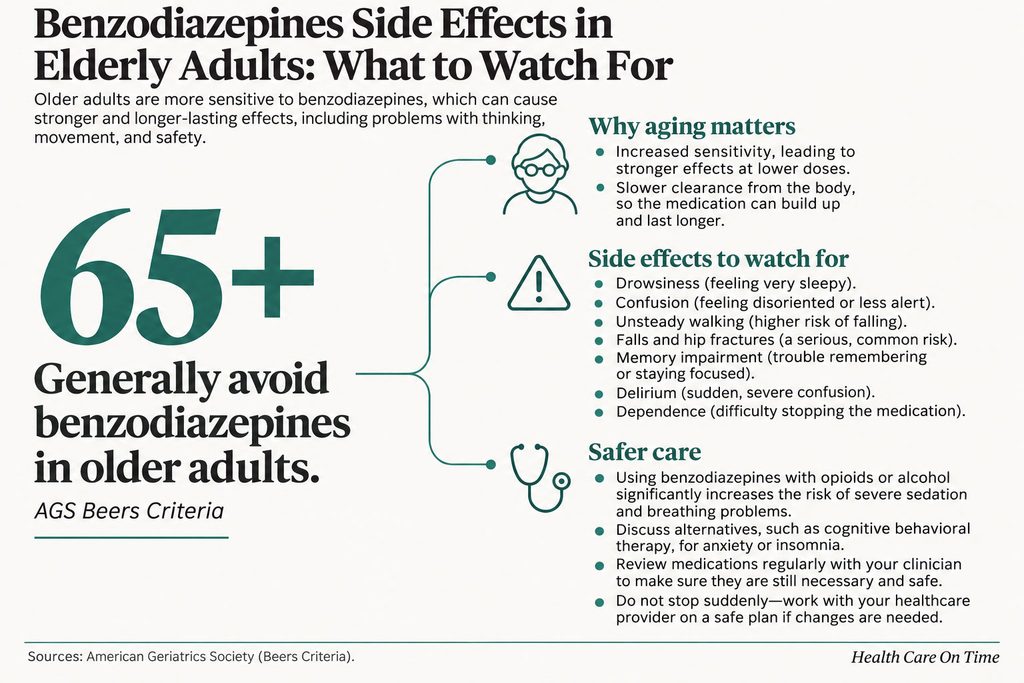
Quick Answer: After 65, benzodiazepines such as Xanax (alprazolam), Ativan (lorazepam), Valium (diazepam) and Klonopin (clonazepam) cause more drowsiness, unsteadiness, confusion and memory problems than they do in younger adults. They raise the risk of falls, hip fractures, delirium and car crashes. The 2023 AGS Beers Criteria says to avoid all of them in most older adults. No benzo is clearly “safe,” and stopping one should be a slow, planned taper with a doctor.
Why the Same Pill Hits Harder After 65
A dose that left someone feeling calm at 45 can leave them groggy and wobbly at 78, partly because the aging brain responds more strongly and partly because some of these drugs clear from the body far more slowly.
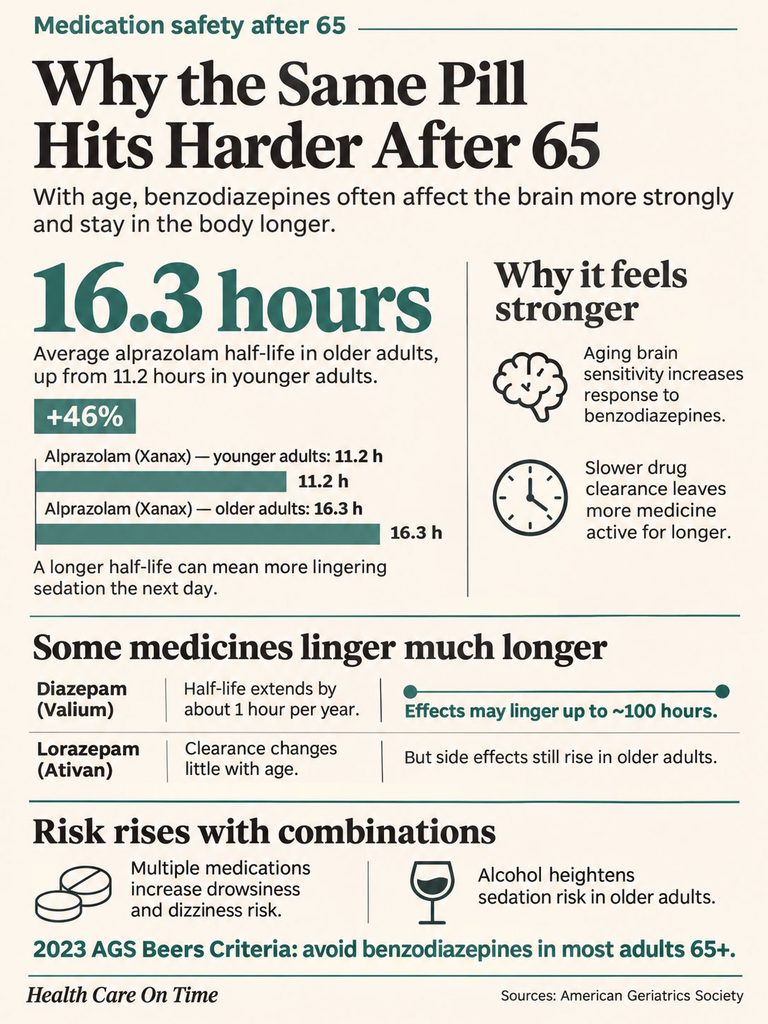
The aging brain is more sensitive to benzodiazepines, and the body breaks down the long-acting ones more slowly; the 2023 AGS Beers Criteria gives both as reasons to avoid them after 65. Higher sensitivity means the same blood level hits harder. Slower clearance means the level itself climbs higher and stays up longer, and for some drugs the gap is large. On the Xanax prescribing information, alprazolam’s average half-life is about 11.2 hours in younger adults but 16.3 hours in healthy older adults, who also reach higher blood levels on the same dose and get a lower starting dose.
Diazepam (Valium) is more extreme still. Its half-life rises by roughly 1 hour for each year of age, from about 20 hours at age 20, and an active breakdown product can linger up to 100 hours.
Lorazepam (Ativan) shows that slower clearance can’t be the whole story. Age barely changes how the body handles it, apart from one study that found clearance about 20% lower in people 60 to 84, yet the Ativan label records that sedation and unsteadiness became more common with age.
Many older adults also take a pain reliever, a sleep aid, an antidepressant and a blood pressure pill at the same time, and several of those bring their own drowsiness or dizziness. A glass of wine with dinner adds its own sedation, and since the body handles alcohol differently after 60, that one glass on top of a benzo can be enough to cause a fall.
The Side Effects, From Everyday Drowsiness to Emergencies
Some effects show up within hours of the first dose. Others build slowly over months, and families often blame them on “just getting older.”
| Side effect | What it can look like at home | Why it matters after 65 | When to call |
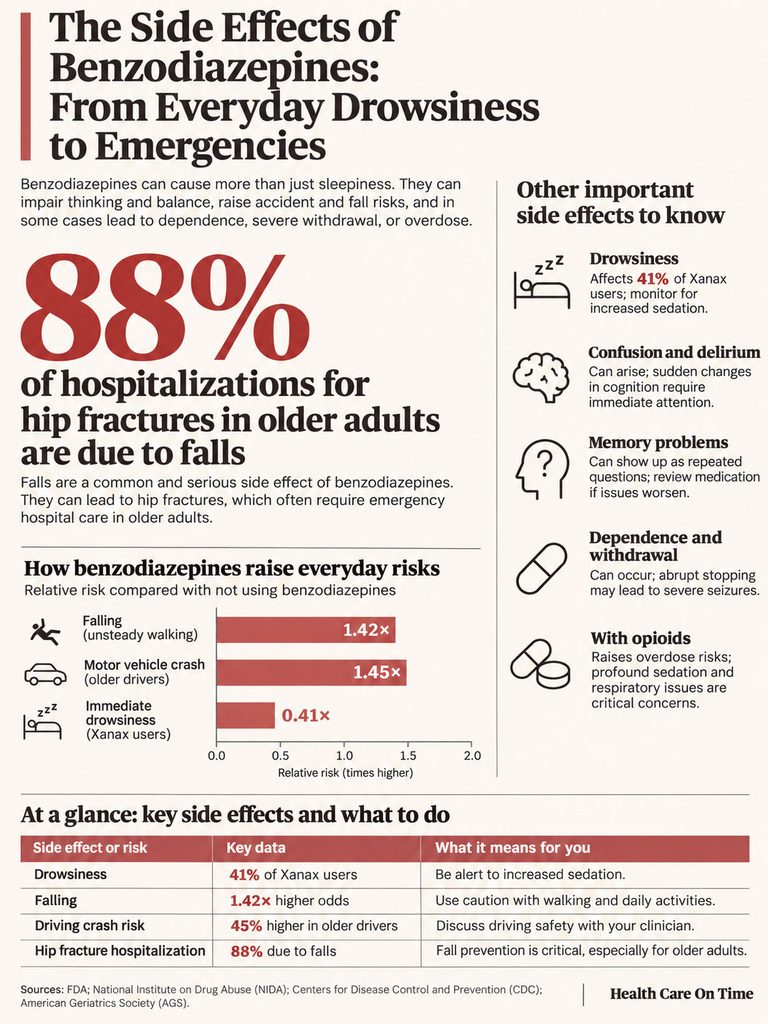
| Drowsiness and daytime sedation | Dozing in a chair by midmorning, hard to wake, slurred speech | Drowsiness hit 41% of Xanax users vs 22% on placebo in anxiety trials | Within a few days if new or after a dose change; 911 if the person can’t be woken |
| Unsteady walking and poor coordination | Shuffling, reaching for furniture, near-falls on the way to the bathroom at night | Beers Criteria links benzos to ataxia and impaired psychomotor function | After any fall or near-fall |
| Hip fracture after a fall | Groin or hip pain, can’t stand or put weight on one leg | Hip fracture risk is 1.52 times higher overall and 2.40 times higher in short-term users | Emergency care the same day |
| Confusion and delirium | Sudden muddled thinking, seeing things, worse in the evening | Beers Criteria warns benzos can trigger or worsen delirium | Same day; sudden confusion is never normal aging |
| Memory and thinking problems | Repeating questions, losing track of conversations, missed bills or pills | Placebo-controlled trials show clear memory and non-memory impairment | Next visit, sooner if it’s getting worse |
| Light-headedness and dizziness | Feeling faint on standing, holding the wall | Ativan users reported dizziness at 6.9% and unsteadiness at 3.4% | Same week; same day after fainting |
| Driving problems | New dents, slow reactions, missed turns | Crash risk rose 45% in the first week of long-acting benzo use in drivers 67 to 84 | Before the next drive |
| Slowed breathing with opioids or alcohol | Very hard to wake, slow or shallow breathing | FDA boxed warning: the combination can cause respiratory depression and death | 911 |
| Withdrawal after a missed or stopped dose | Shaky, anxious, sleepless; in severe cases seizures or hallucinations | FDA: abrupt stopping can cause life-threatening seizures | Doctor the same day; 911 for a seizure |
Drowsiness and slowed thinking
Sedation is the expected side effect, and it’s often heavier in older adults than anyone planned for. Drowsiness affected 41% of people on alprazolam in the anxiety trials behind the Xanax label, against 22% on placebo, and somnolence reached 37% versus 10% in panic disorder trials of clonazepam (Klonopin), listed in the Klonopin label on DailyMed.
Those trials mostly enrolled younger adults. In an older person, the same drowsiness can mean sleeping through lunch, skipping a walk or nodding off mid-conversation. A “hangover” feeling the morning after a bedtime dose is common with the longer-acting drugs, because the pill is still working when the person gets up.
Unsteady walking, falls and hip fractures
Falls are the side effect that most often sends older benzodiazepine users to the hospital.
Drowsiness slows reaction time and throws off balance, so a stumble a younger person would catch turns into a fall on the bathroom tile. Across studies of people 60 and older, benzodiazepine users had 1.42 times the odds of falling in a 2018 meta-analysis of fall-risk drugs, with 1.81 for long-acting drugs and 1.27 for short-acting ones. Hip fractures follow the same pattern: a PLOS ONE meta-analysis found a 52% higher risk overall, and the sharpest rise came early, with 2.40 times the risk in short-term users versus 1.20 times in long-term users.
So the first weeks after a new prescription or a dose increase are when to watch most closely. Clear the path to the bathroom, add night lights, and put in bathroom safety fixes such as grab bars and a raised toilet seat before the 3 a.m. trip, when the pill is working hardest.
Nearly 319,000 older Americans are hospitalized for hip fractures each year, and CDC fall data show that falls cause 88% of hip fracture emergency visits and hospitalizations. About 24% of people in the US die within a year of breaking a hip.
Confusion and delirium
Delirium is a sudden change in attention and thinking. An older person who was chatting normally on Sunday may be muddled, drowsy or agitated by Tuesday, sometimes seeing or hearing things that aren’t there, and the symptoms often swing through the day. The Beers Criteria advises avoiding benzodiazepines in anyone with delirium or at high risk of it, because they can bring it on or make it worse. People who are already ill, recently hospitalized or living with dementia are at the highest risk.
Families sometimes see the opposite of calm, too. Some older adults become restless or irritable on a benzo, which can lead to a higher dose when the drug itself is part of the problem.
If delirium appears, write down when it started and what changed in the days before: a new pill, a higher dose, an infection, a missed dose or a hospital stay. Then call the same day. Don’t give an extra dose. During any hospital stay, make sure the team knows about the benzo, because stopping it suddenly in the hospital can bring on withdrawal on top of everything else.
Memory problems and the dementia question
Short-term effects on memory and thinking are well established, since placebo-controlled trials clearly show benzodiazepines impair both memory and other thinking skills. At home that can look like the same question asked again and again before lunch, or a pill organizer that suddenly feels complicated.
Whether long-term use causes dementia is a harder question. Several studies have found an association, but people often start benzos for anxiety and poor sleep, and both can be early signs of dementia, so the drug may be a marker rather than a cause. One of the largest recent studies, from the Rotterdam Study in the Netherlands, followed 5,443 cognitively healthy adults (average age 70.6) for about 11.2 years and found no link between overall benzo use and dementia (hazard ratio 1.06). Two results in that 2024 BMC Medicine report still gave researchers pause: people with the highest cumulative dose of anti-anxiety benzos had a 33% higher risk, and users lost hippocampal volume faster on brain MRI.
Whatever the long-term answer turns out to be, memory problems that start or worsen on a benzo deserve a medication review before anyone assumes Alzheimer’s, and the same visit should rule out other reversible causes of forgetfulness, such as an underactive thyroid.
Driving
Slow reactions and drowsiness follow people onto the road. Among drivers aged 67 to 84 in a JAMA study, the risk of an injury crash was 45% higher in the first week after starting a long-half-life benzodiazepine and stayed 26% higher with continued use up to a year. Short-half-life drugs didn’t raise crash risk in that study, though the Beers Criteria counts crashes as a risk for every benzodiazepine.
For an older driver, a sensible rule is no driving in the first days of a new prescription or dose change, and none at all while daytime drowsiness is obvious.
Driving is often tied to independence, so this conversation can be hard. It helps to let the doctor raise it, and to line up rides, a ride service or a family schedule before the subject comes up, so giving up a few days of driving doesn’t mean being stuck at home.
Dependence, withdrawal and the opioid combination
Taken daily for weeks, any benzodiazepine can cause physical dependence, which means the body adapts and stopping suddenly triggers withdrawal. Dependence is different from addiction; it happens to people who take the drug exactly as prescribed. The Xanax label states that some risk exists even after relatively short-term use at doses under 4 mg a day. In 2020 the FDA required a stronger boxed warning on every benzodiazepine covering abuse, misuse, addiction, physical dependence and withdrawal reactions. Withdrawal after abrupt stopping can include life-threatening seizures.
Most benzodiazepine overdose deaths involve a second drug. Deaths involving benzos rose from 1,298 in 2010 to 11,537 in 2017, From 2013 to 2017, 55% of those deaths also involved prescription opioids. The FDA pointed to these trends when it strengthened the warning.
Breathing is the danger with combinations. Taken with opioid pain medicines, alcohol or other sedatives, a benzodiazepine can cause profound sedation, slowed breathing, coma and death. The Beers Criteria advises avoiding the opioid-benzo pairing in older adults. People in treatment for opioid use disorder face the same risk, so anyone taking buprenorphine long term should make sure every prescriber knows about the benzo, as the FDA urges for this pairing.
Is It the Pill or Just Getting Older?
Tiredness, a slower walk and a few forgotten names happen with age anyway, so families often explain away the early signs. Timing is the best clue that the medicine is involved.
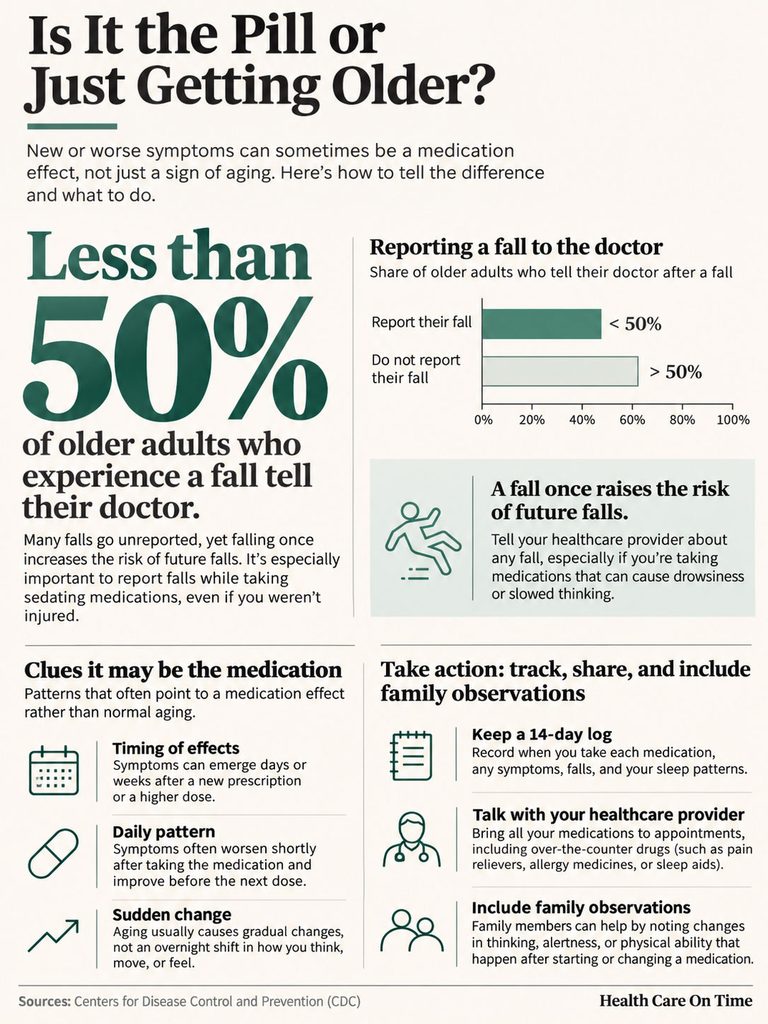
Effects that started within days or weeks of a new prescription or a higher dose are suspicious. So are symptoms that are worst soon after a dose and fade before the next one, or a groggy, unsteady stretch every morning after a bedtime pill. Sudden changes deserve the most attention. Aging rarely changes anyone overnight.
Watch the pattern, too. A person who is sharp at lunch but foggy after the evening dose is giving a clue. Someone who walks steadily in the afternoon and shuffles at breakfast is another.
A simple two-week log helps more than memory. Write down when each dose is taken, when drowsiness or unsteadiness shows up, any falls or near-falls, and how the person sleeps. Bring every pill bottle to the next appointment, including over-the-counter sleep aids, allergy pills and anything bought online, so the doctor or pharmacist can see the whole list at once rather than the version in the chart.
Fewer than half of older adults who fall tell their doctor, and falling once doubles the chance of falling again. A fall on a sedating medicine is worth reporting even when nothing seems broken.
How Common Is Benzodiazepine Use After 65?
Benzodiazepine use is common in later life, and much of it lasts longer than labels and guidelines intend. About 8.7% of Americans over 65 were prescribed one in a single year, and roughly one-third of all benzo use is long-term (120 days or more in one analysis), with older adults making up the biggest share of long-term users. In June 2025, SAMHSA, the federal substance use agency, wrote to clinicians that reducing chronic benzo use in older adults is an important public health goal, a letter described in a December 2025 UAB report.
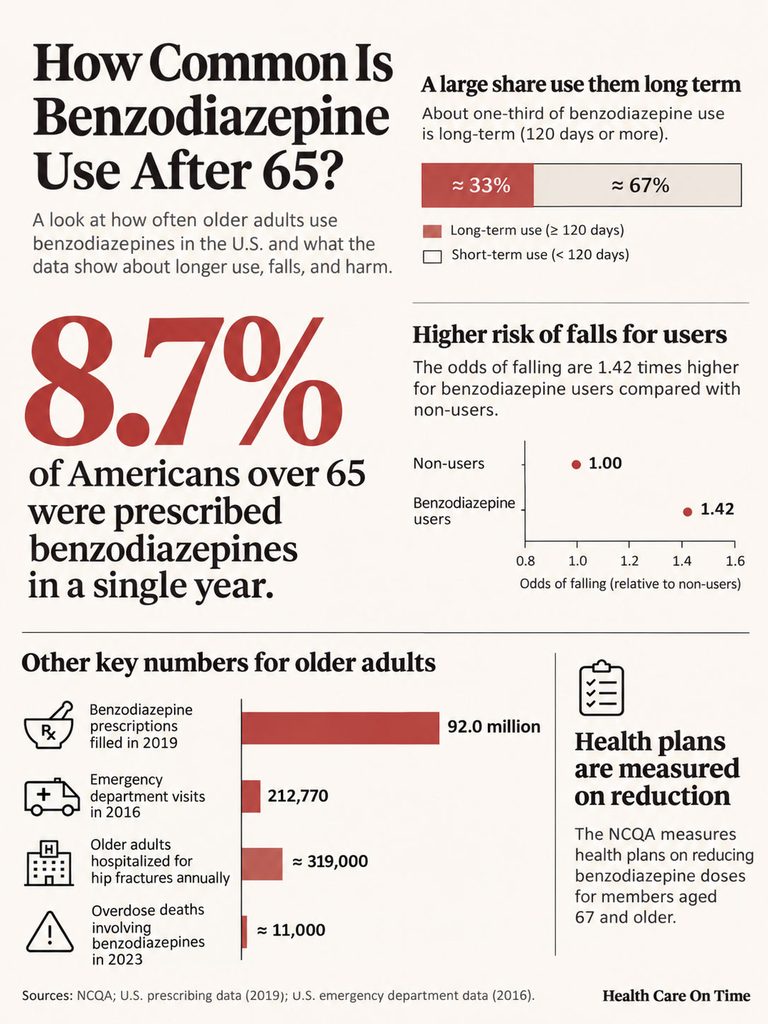
Across all ages, US pharmacies filled about 92 million benzo prescriptions in 2019, mostly alprazolam (38%), clonazepam (24%) and lorazepam (20%), and half of patients who got an oral benzo in 2018 kept getting it for two months or longer. Bad reactions to benzos accounted for about 212,770 emergency department visits in 2016, roughly 10% of all visits for adverse medication events, and among older adults about half of those visits involved the drug not being taken as prescribed.
Health plans have a reason to care as well: the NCQA deprescribing measure now scores health plans on how many members 67 and older lower their benzo dose by at least 20% in a year.
| What was measured | Result | Source and year |
| Adults over 65 prescribed a benzo in the past year | 8.7% | Gerlach critical review, 2018 |
| Adults 65+ with a benzo prescription; share taking it longer than recommended | About 10%; 25% to 30% (1.4 to 1.7 million people) | UAB Reporter, December 2025 |
| Medicare Part D enrollees dispensed a benzo | 17.6% (2015) | CMS data cited by NCQA, 2026 |
| Odds of falling, benzo users vs non-users | 1.42 overall; 1.81 long-acting; 1.27 short-acting | Seppala meta-analysis, 2018 |
| Hip fracture risk, benzo users | 1.52 overall; 2.40 short-term; 1.20 long-term | Donnelly meta-analysis, PLOS ONE, 2017 |
| Injury crash risk, drivers 67 to 84 | 1.45 in first week of long-acting use | Hemmelgarn, JAMA, 1997 |
| Dementia risk, any benzo use | Hazard ratio 1.06 (not significant) | Rotterdam Study, BMC Medicine, 2024 |
| Older adults hospitalized for hip fracture each year | Nearly 319,000 | CDC falls data |
| Long-term users who stopped after a mailed education booklet | 27% vs 5% with usual care | EMPOWER trial, JAMA Internal Medicine, 2014 |
| Overdose deaths involving benzodiazepines (all ages) | Nearly 11,000 in 2023 | NIDA data cited by UAB, 2025 |
The crash study is from the 1990s in Quebec, and most fall and fracture data come from observational studies, which show strong links but can’t prove the drug caused each fall.
Is Any Benzodiazepine Safer? Xanax, Ativan, Valium and Klonopin Compared
Lorazepam and other short-acting benzos are often assumed to be fine for older adults. For falls, the Beers Criteria rejects that idea directly, stating that shorter-acting benzodiazepines are not safer than long-acting ones for people who have fallen or broken a bone, and the fall data agree: short-acting drugs still raised the odds by 27%.
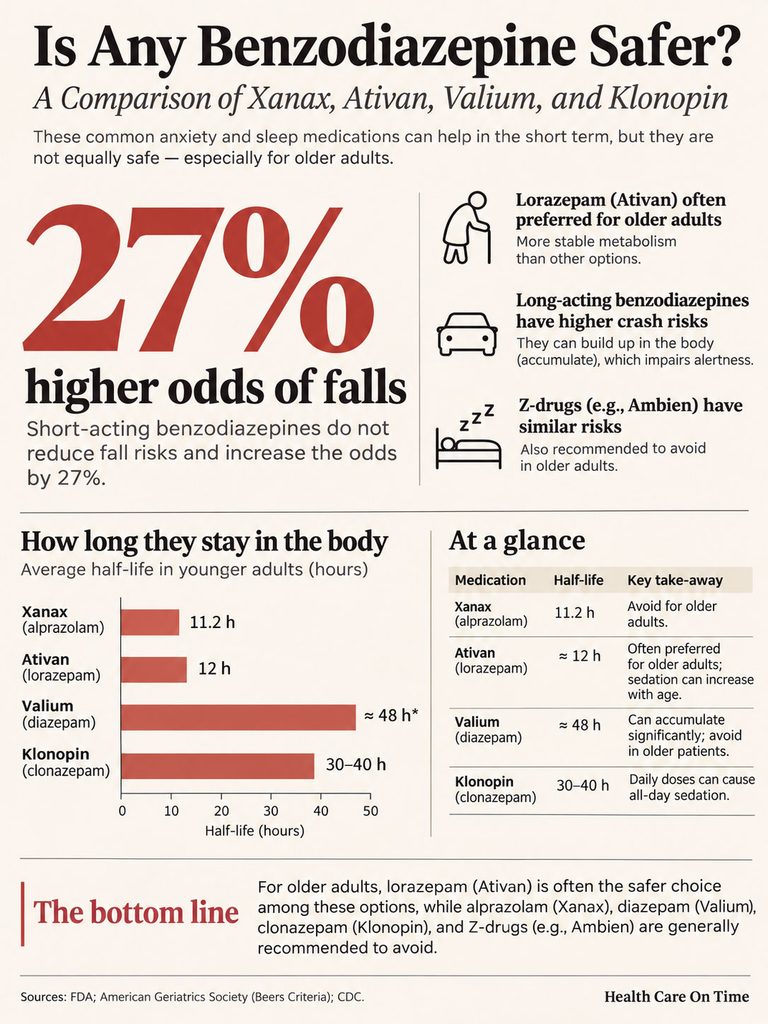
Half-life does change the kind of trouble. Long-acting drugs build up over days, keep working into the next morning and were the ones tied to higher crash risk. Short-acting drugs wear off faster, which can bring rebound anxiety between doses and makes tapering harder.
| Drug (brand) | Half-life on the FDA label | Label starting dose for older adults | What the label adds for older adults | AGS Beers 2023 |
| Alprazolam (Xanax) | 11.2 hours average in younger adults; 16.3 hours in healthy older adults | 0.25 mg, 2 or 3 times daily | Higher blood levels from reduced clearance; drowsiness 41% vs 22% on placebo | Avoid (strong recommendation) |
| Lorazepam (Ativan) | About 12 hours; age has no major effect | 1 to 2 mg per day in divided doses | Sedation and unsteadiness increased with age; use beyond 4 months not studied | Avoid (strong recommendation) |
| Diazepam (Valium) | Up to 48 hours; active metabolite up to 100 hours; rises about 1 hour per year of age | 2 to 2.5 mg once or twice daily | Builds up with repeated doses; falls and fractures reported | Avoid (strong recommendation) |
| Clonazepam (Klonopin) | 30 to 40 hours | No number given; start low and observe closely | Sedating drugs can cause confusion and oversedation in older adults; somnolence 37% vs 10% | Avoid (strong recommendation) |
Use the doses only to compare drugs; the prescriber sets the real dose. Every label calls for a lower starting dose or extra caution in older patients, and the Valium label asks for the smallest effective amount to avoid ataxia or oversedation.
When a benzo has to be used, lorazepam is often the pick in older adults because age changes its metabolism the least, so it builds up less. Its own label still shows sedation and unsteadiness rising with age.
Clonazepam sits at the other end. With a half-life of 30 to 40 hours, a bedtime dose is still partly active the next day. Daily doses accumulate. That steady level suits seizure control, but a frail older adult may feel sedated all day.
What about Ambien and over-the-counter sleep aids?
The Z-drugs (zolpidem, eszopiclone and zaleplon) are not benzodiazepines, but older adults react to them in much the same way. The Beers Criteria lists the same harms, including delirium, falls, fractures, emergency visits and car crashes, with only small gains in sleep, and gives them the same “avoid” rating; in the hip fracture meta-analysis, Z-drug users had 1.90 times the risk. Diphenhydramine, the antihistamine in many “PM” sleep products, is no better a swap, and a Choosing Wisely recommendation for long-term care advises avoiding it because of confusion and falls.
When a Benzodiazepine May Still Make Sense
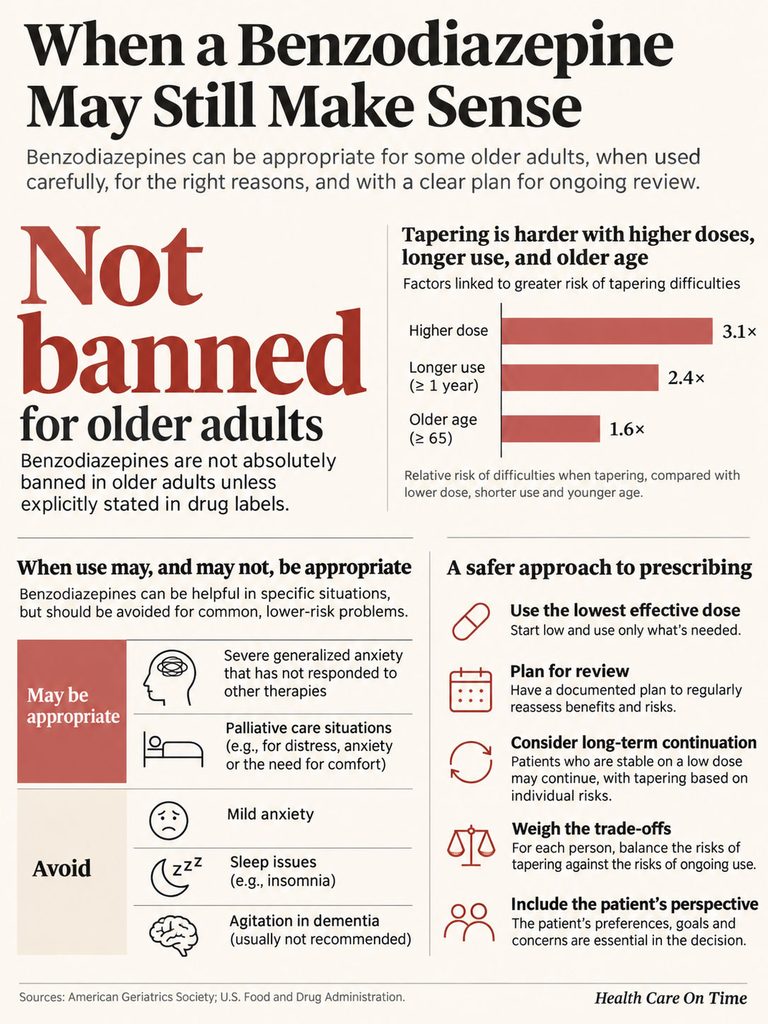
“Avoid” in the Beers Criteria is not an absolute ban unless the drug label itself forbids use. The panel lists specific situations where a benzodiazepine may be appropriate in an older adult:
- Seizure disorders
- REM sleep behavior disorder (acting out dreams during sleep)
- Withdrawal from alcohol or from another benzodiazepine
- Severe generalized anxiety disorder, usually when other treatments haven’t worked
- Anesthesia around a procedure
The American Geriatrics Society’s Choosing Wisely guidance narrows the anxiety case further, reserving benzos for severe generalized anxiety that hasn’t responded to other therapies. Palliative and end-of-life care is its own situation, and the Beers recommendations don’t apply in hospice.
Even in those cases, the drug should be the lowest effective dose with a clear reason written in the chart and a plan for review. Someone who started lorazepam after a single bad night in the hospital years ago is a very different case from someone with a seizure disorder.
Some people have taken the same small dose for decades without obvious trouble, and for them the decision is genuinely personal. The national tapering guideline (more on it below) asks clinicians to weigh the risks of tapering against the risks of continuing, and both rise with higher doses, longer use, older age and more medical conditions. Even a very old, stable person may still be better off tapering slowly. Either way, the person taking the pill gets a say.
Outside those situations, a benzo for sleep, mild worry or agitation in dementia is the kind of prescription geriatric experts ask clinicians to question.
Do Benzodiazepines Even Work Well After 65?
The evidence that benzodiazepines help older adults is modest. A critical review in the Harvard Review of Psychiatry searched for trials in older adults covering insomnia, anxiety disorders and behavior symptoms of dementia, the three reasons these drugs are most often prescribed.
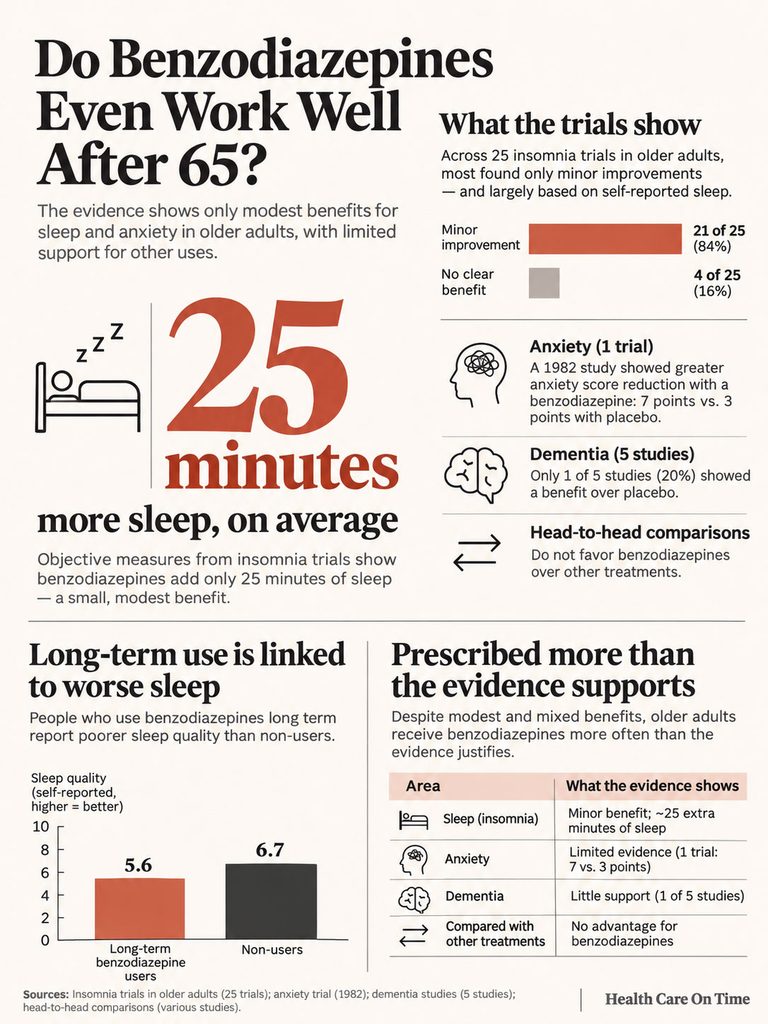
For insomnia, 21 of 25 trials showed some improvement in sleep, but the gains were small and mostly self-reported, and only 6 of the 21 positive trials followed people for longer than 14 days. Measured objectively, sedative hypnotics added about 25 minutes of total sleep. Long-term benzo users in the review actually had worse sleep quality than non-users.
Only one trial in older adults with an anxiety disorder met the review’s criteria, an oxazepam study from 1982 with 220 people, where anxiety scores fell about 7 points on the drug versus about 3 on placebo. For agitation and other behavior changes in dementia, only one of five studies showed a benefit over placebo, and in head-to-head comparisons no trial favored the benzodiazepine.
Older adults, in other words, get far more benzodiazepine prescriptions than this evidence can justify.
Alternatives for Sleep and Anxiety That Carry Less Risk
Most benzodiazepine prescriptions in older adults are for insomnia or anxiety, and both have better first-line options.
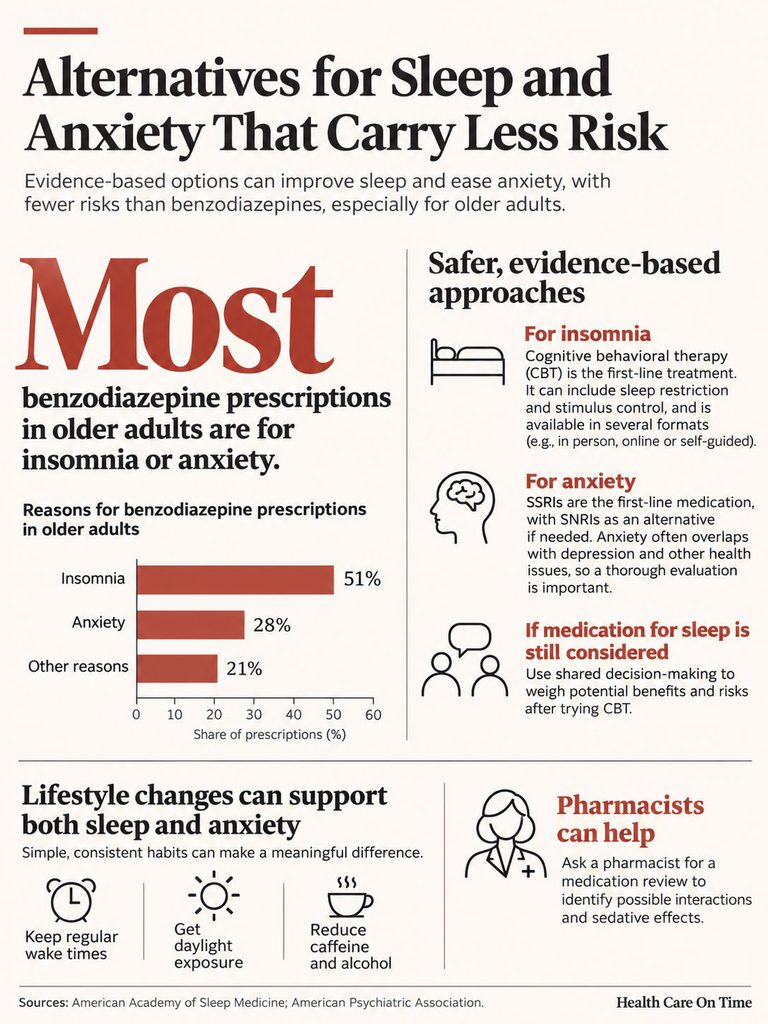
Cognitive behavioral therapy for insomnia is the first-line treatment for chronic insomnia in adults of any age, according to the American College of Physicians, and it comes before any sleeping pill. The approach combines work on unhelpful thoughts about sleep with behavior changes such as sleep restriction and stimulus control, plus basic sleep habits. It can be done in person, in a group, by phone, online or through self-help books, which helps people who can’t get to a sleep clinic or don’t drive at night.
Sleep restriction sounds harsh, and the first week can feel worse before it gets better. The idea is to limit time in bed to roughly the hours actually spent sleeping, then widen the window as sleep becomes deeper and more regular. Stimulus control means using the bed only for sleep, getting out of bed after a long stretch awake, and going back only when sleepy, so the brain stops linking the bed with lying awake and worrying. If pills are added later, the ACP wants a shared decision that weighs benefits, harms and costs, and it reminds clinicians that FDA approval for sleep medicines covers short-term use of about four to five weeks.
For anxiety, the American Geriatrics Society’s HealthInAging anxiety guidance puts an SSRI antidepressant first among medicines, with an SNRI if that doesn’t help, and calls cognitive behavioral therapy particularly helpful for several anxiety disorders. These drugs take a few weeks to work and have side effects of their own, so a doctor should start low and check in.
Benzos can get in the way of therapy, too, because they may blunt the benefit of exposure-based treatment for panic disorder, in which a person practices facing the physical sensations they fear. And since anxiety in older adults often overlaps with depression, thyroid problems and medication effects, a good evaluation checks for those before settling on any drug.
Some changes help both problems at once: a regular wake time, daytime light and activity, less caffeine after noon, and less alcohol in the evening.
A pharmacist can help here as well. Ask for a full medication review, sometimes called a brown-bag review, where every bottle comes in and the pharmacist looks for duplicates, interactions and drugs that add to drowsiness. That review can turn up a second sedating medicine hiding in a cold or sleep product.
Stopping Safely: Why the Taper Must Be Planned
Nobody who has taken a benzodiazepine daily for months should stop it suddenly. Abrupt stopping or a rapid dose cut can cause serious withdrawal, including seizures, and the FDA asks patients to agree on a slow tapering plan with their health care professional first. Withdrawal symptoms can appear even during a careful taper.
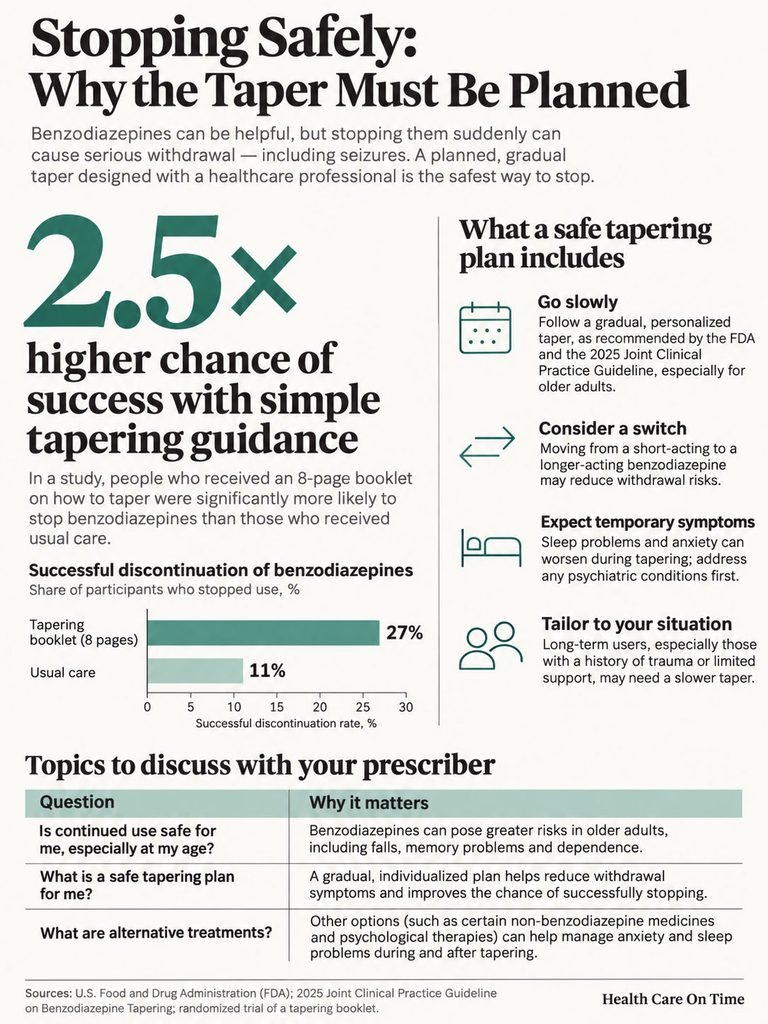
The current US standard is the 2025 Joint Clinical Practice Guideline on Benzodiazepine Tapering, led by the American Society of Addiction Medicine with nine other groups, including the American Geriatrics Society. For older adults, its main points (summarized in American Family Physician in 2026) come down to these:
- People 65 and older should be considered for tapering because their risk of harm is higher.
- First cuts are small, about 5% to 10% of the dose every 2 to 4 weeks.
- The whole taper can take months or even years.
- The benefits and risks of continuing should be reassessed at least every 3 months, more often in older adults or people with several medical conditions.
Those percentages are general figures, and the real schedule is the prescriber’s call. Some prescribers first switch a short-acting drug to a longer-acting one at an equal dose, a step UAB psychiatrist Aniket Malhotra recommends, because tapering short-acting drugs can worsen rebound anxiety and withdrawal.
Sleep often gets worse for a while during a taper, and the old anxiety can return, which is why the guideline asks clinicians to address psychiatric conditions before the taper begins. Some people have withdrawal symptoms that linger for months after the last dose, known as protracted withdrawal, and rapid cuts carry the biggest danger, especially with short-acting drugs. The hardest tapers tend to involve very long use, short-acting drugs, past substance use, trauma or little support at home, and those people usually need a slower pace with more frequent check-ins.
Even a mailed booklet can get people started. In the EMPOWER trial, 303 long-term users aged 65 to 95 received an 8-page booklet on benzo risks with a 21-week stepwise tapering schedule. Six months later, 27% had stopped completely compared with about 5% who got usual care, another 11% had cut their dose, and 62% had raised stopping with their doctor or pharmacist. Therapy helps too: adding psychotherapy to a supervised taper raised the odds of stopping about fivefold in one meta-analysis.
| Situation | What to do | Why |
| A doctor suggests a benzo for new sleep trouble | Ask whether CBT for insomnia can come first | ACP names CBT for insomnia first-line; Beers rates benzos “avoid” |
| The person takes a benzo and an opioid pain medicine | Ask the prescriber to review the pairing; skip alcohol entirely | FDA boxed warning for breathing risk; Beers says avoid the combination |
| A fall or near-fall since starting or raising the dose | Call the prescriber and ask whether the benzo is a factor | Hip fracture risk is highest in new users |
| Sudden confusion, agitation or seeing things | Same-day medical care | Benzos can trigger delirium |
| Three or more brain-active medicines (sleep aids, antidepressants, opioids, seizure drugs) | Request a full medication review | Beers advises avoiding 3 or more CNS-active drugs together |
| Long-term user wants to stop | Ask for a written taper plan; never stop suddenly | Abrupt stopping can cause seizures |
| Shaking, panic or no sleep after a missed dose or taper step | Call the prescriber the same day; 911 for a seizure | Withdrawal can be severe even with a gradual taper |
| Still driving while on a benzo | Ask directly whether driving is safe at this dose | Crash risk is highest in the first week of a long-acting benzo |
Questions to bring to the appointment
Written questions keep the visit focused, especially when a family member comes along. A few worth bringing:
- “Was this meant to be short-term, and is it still the right medicine for Dad at 80?”
- “Could the Ativan be part of why Dad keeps falling?”
- “Would CBT for insomnia work for him, and where can we find it?”
- “If we taper, how fast will it go, and who do we call if withdrawal gets bad?”
- “Is it safe for him to keep driving on this dose?”
- “Do any of the other prescriptions add to the drowsiness?”
Frequently Asked Questions
How long can older adults take benzodiazepines?
Labels support short-term use only. FDA approval for sleep medicines covers about four to five weeks; Ativan hasn’t been studied beyond 4 months or Klonopin beyond 9 weeks, and on the Xanax label dependence risk climbs with doses above 4 mg a day or use beyond 12 weeks. Anyone who has taken one longer should have it reviewed at least every 3 months, never just stopped.
Is it safe for elderly people to take benzodiazepines?
For most people over 65, a benzo isn’t a good first choice. The 2023 Beers Criteria rates all of them “avoid,” with exceptions such as seizures, alcohol withdrawal and severe anxiety.
Which benzodiazepine is safest for older adults?
Lorazepam is often preferred because age barely changes how the body clears it, so it builds up less than diazepam or clonazepam. Even so, the Beers Criteria rates every benzo “avoid” and states that shorter-acting ones are not safer for people at risk of falls. When one is truly needed, the usual approach is the lowest dose for the shortest time, with a plan to stop.
What drugs should people over 65 avoid?
The Beers Criteria flags dozens of medicines rather than a short list. Commonly cited examples include benzodiazepines, Z-drug sleeping pills like zolpidem, diphenhydramine and similar older antihistamines, sulfonylureas for diabetes, and aspirin taken only to prevent a first heart attack. It also warns against combining three or more brain-active drugs. These are “use only with good reason” flags, so don’t stop any prescription without checking with the prescriber first.
Do benzodiazepines cause dementia?
The evidence is mixed. Some studies found a link, but a large 2024 Dutch study found no overall rise in dementia risk, though high doses of anti-anxiety benzos and faster brain shrinkage on MRI were concerns. Short-term memory effects are well established either way.
Can an older adult stop Xanax or Ativan on their own?
Regular users shouldn’t. Stopping suddenly or cutting the dose fast can cause severe withdrawal, including seizures, so a doctor should build a slow taper, often starting with cuts of about 5% to 10% every 2 to 4 weeks.
Are Z-drugs like Ambien a safer swap?
Usually not. Zolpidem, eszopiclone and zaleplon carry the same Beers “avoid” rating as benzos, and the hip fracture data are no better for them.
Can benzodiazepines cause depression in older adults?
Depressed mood and suicidal thoughts are among the harms the NCQA ties to benzo use in older adults, along with loss of physical function and impaired thinking. A low mood that starts or deepens on a benzo is worth raising with the prescriber, and thoughts of self-harm need help right away. The 988 Suicide & Crisis Lifeline takes calls and texts at 988 around the clock, including from family members worried about someone.
What are the warning signs that a benzo dose is too strong for an older person?
Watch for drowsiness during the day, slurred speech, an unsteady walk, new forgetfulness and sudden confusion. Any fall, any new driving mistakes and any trouble waking the person are reasons to call the prescriber, and slow or shallow breathing, especially in someone who also takes an opioid or drinks, calls for 911 right away.
Medical disclaimer: This article is for general education and isn’t a substitute for advice from a doctor or pharmacist who knows the person’s full medical history. Don’t start, stop or change the dose of any benzodiazepine without talking to the prescriber. If someone can’t be woken, has slow or shallow breathing or has a seizure, call 911.
References
- 2023 American Geriatrics Society Beers Criteria Update Expert Panel. American Geriatrics Society 2023 updated AGS Beers Criteria for potentially inappropriate medication use in older adults. J Am Geriatr Soc. 2023. https://geriatrictoolkit.missouri.edu/drug/Beers-Criteria-AGS-2023.pdf
- US Food and Drug Administration. FDA requiring Boxed Warning updated to improve safe use of benzodiazepine drug class. 2020. https://www.fda.gov/drugs/drug-safety-and-availability/fda-requires-boxed-warning-updated-improve-safe-use-benzodiazepine-drug-class
- XANAX (alprazolam) tablets prescribing information. FDA label, 2021. https://www.accessdata.fda.gov/drugsatfda_docs/label/2021/018276s055lbl.pdf
- ATIVAN (lorazepam) tablets prescribing information. FDA label, 2021. https://www.accessdata.fda.gov/drugsatfda_docs/label/2021/017794s048lbl.pdf
- VALIUM (diazepam) tablets prescribing information. FDA label, 2023. https://www.accessdata.fda.gov/drugsatfda_docs/label/2023/013263s097lbl.pdf
- KLONOPIN (clonazepam) tablets label. DailyMed, updated December 2025. https://dailymed.nlm.nih.gov/dailymed/drugInfo.cfm?setid=cfa0d79a-843c-4b88-95a1-e9511d649ca1
- NCQA. Deprescribing of Benzodiazepines in Older Adults (DBO). Updated January 2026. https://www.ncqa.org/report-cards/health-plans/state-of-health-care-quality-report/deprescribing-of-benzodiazepines-in-older-adults-dbo/
- Butler M, Salisbury-Afshar E. Benzodiazepine Tapering: Joint Guidelines From the American Society of Addiction Medicine. Am Fam Physician. 2026;113(6):611-614. https://www.aafp.org/afp/2026/0600/practice-guidelines-benzodiazepine-tapering
- Windsor M. More than a million older Americans take benzodiazepines long-term. UAB Reporter, December 15, 2025. https://www.uab.edu/reporter/research-innovation/more-than-a-million-older-americans-take-benzodiazepines-long-term-here-is-why-doctors-want-them-to-stop-and-how-a-uab-psychiatrist-approaches-the-conversation
- Gerlach LB, Wiechers IR, Maust DT. Prescription benzodiazepine use among older adults: a critical review. Harv Rev Psychiatry. 2018;26(5):264-273. https://escholarship.org/content/qt9n77h38c/qt9n77h38c.pdf
- Seppala LJ, et al. Fall-Risk-Increasing Drugs: A Systematic Review and Meta-Analysis: II. Psychotropics. J Am Med Dir Assoc. 2018;19(4). https://researchinformation.umcutrecht.nl/en/publications/fall-risk-increasing-drugs-a-systematic-review-and-meta-analysis–2/
- Donnelly K, Bracchi R, Hewitt J, Routledge PA, Carter B. Benzodiazepines, Z-drugs and the risk of hip fracture: a systematic review and meta-analysis. PLOS ONE. 2017;12(4):e0174730. https://journals.plos.org/plosone/article?id=10.1371/journal.pone.0174730
- Hemmelgarn B, Suissa S, Huang A, Boivin JF, Pinard G. Benzodiazepine use and the risk of motor vehicle crash in the elderly. JAMA. 1997. https://jamanetwork.com/journals/jama/fullarticle/417260
- vom Hofe I, et al. Benzodiazepine use in relation to long-term dementia risk and imaging markers of neurodegeneration: a population-based study. BMC Med. 2024;22:266. https://doi.org/10.1186/s12916-024-03437-5
- Tannenbaum C, Martin P, Tamblyn R, Benedetti A, Ahmed S. Reduction of inappropriate benzodiazepine prescriptions among older adults through direct patient education: the EMPOWER cluster randomized trial. JAMA Intern Med. 2014;174(6):890-898. https://jamanetwork.com/journals/jamainternalmedicine/fullarticle/1860498
- Centers for Disease Control and Prevention. Older Adult Falls Data. Reviewed September 2026. https://www.cdc.gov/falls/data-research/facts-stats
- American College of Physicians. ACP recommends cognitive behavioral therapy as initial treatment for chronic insomnia. 2016. https://www.acponline.org/acp-newsroom/acp-recommends-cognitive-behavioral-therapy-as-initial-treatment-for-chronic-insomnia
- American Geriatrics Society. Choosing Wisely recommendation on benzodiazepines and sedative-hypnotics, via American Family Physician. https://www.aafp.org/pubs/afp/collections/choosing-wisely/25.html
- Society for Post-Acute and Long-Term Care Medicine. Choosing Wisely recommendation on sedating medications, via American Family Physician. https://www.aafp.org/pubs/afp/collections/choosing-wisely/459.html
- American Geriatrics Society, HealthInAging.org. Anxiety: care and treatment. https://healthinaging.org/a-z-topic/anxiety/care-treatment
- Substance Abuse and Mental Health Services Administration. 988 Frequently Asked Questions. https://www.samhsa.gov/mental-health/988/faqs
- Arnold MJ. Beers Criteria for Inappropriate Medication Use in Older Adults: Update From the American Geriatrics Society. Am Fam Physician. 2024;109(4):374-375. https://www.aafp.org/afp/2024/0400/practice-guidelines-inappropriate-medication-use-older-adults