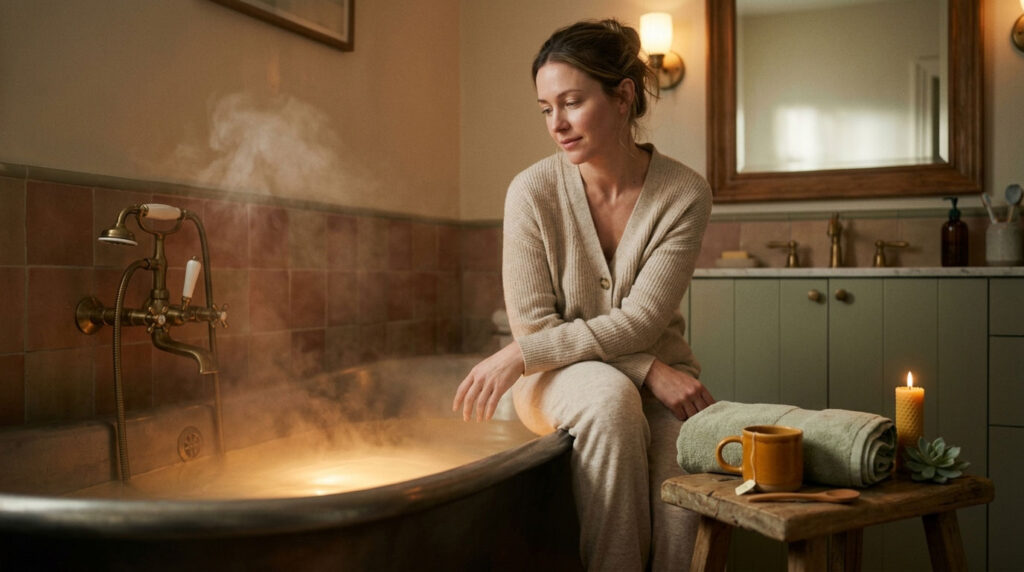
The most effective first-line remedy for hemorrhoid pain is not a tube of cream or a pricey pill. It is a few inches of plain warm water and ten quiet minutes. Doctors have leaned on this remedy for over 150 years, and it still outperforms most of the products lining pharmacy shelves.
Table of Contents
Quick Answer
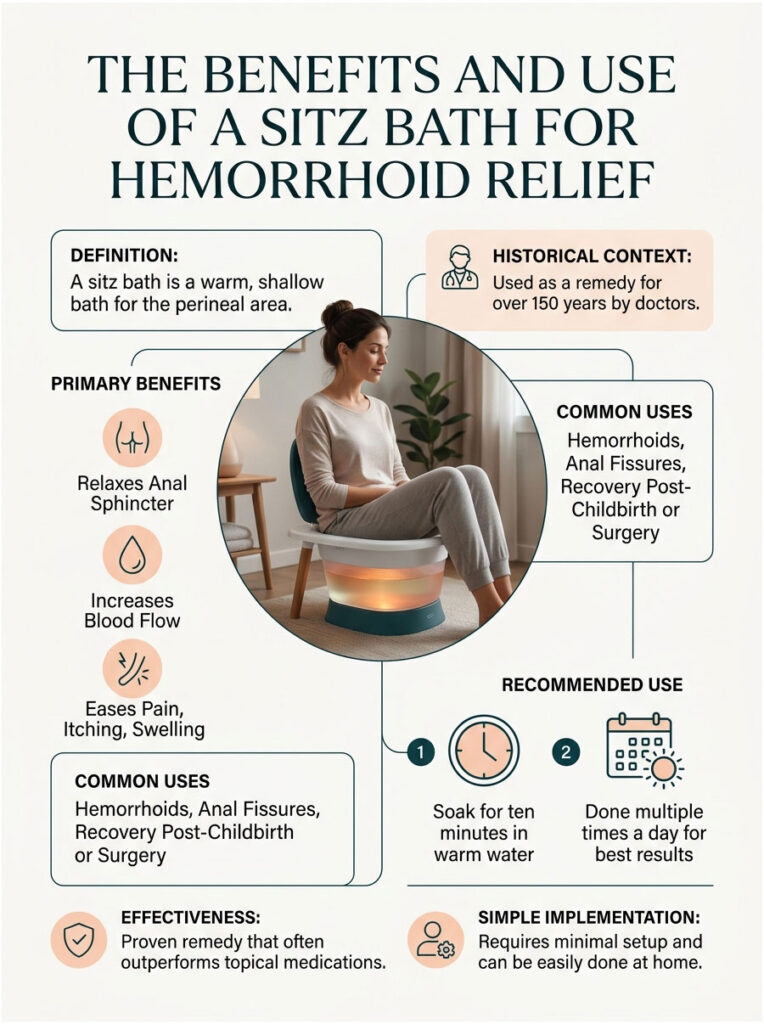
A sitz bath is a warm, shallow bath in which you soak only the perineal area, the skin between your anus and genitals. The warm water relaxes the anal sphincter, increases blood flow, and eases pain, itching, and swelling. It is a common home treatment for hemorrhoids, anal fissures, and recovery after childbirth or surgery.
At a Glance
- A sitz bath soaks only your bottom and perineal area, not your whole body.
- It eases hemorrhoid pain by relaxing muscles and boosting circulation.
- Water should be warm, around 104 F, never hot enough to scald.
- A typical soak lasts 15 to 20 minutes, up to three or four times a day.
- Plain warm water works; salts and additives are optional and not always safe.
- Bleeding that will not stop or severe pain means it is time to call a doctor.
If you have ever wondered whether a sitz bath actually does anything, the short answer is yes, and this guide explains exactly how it works, when to use it, how often to do it, and how to do it right.
What a Sitz Bath Actually Is
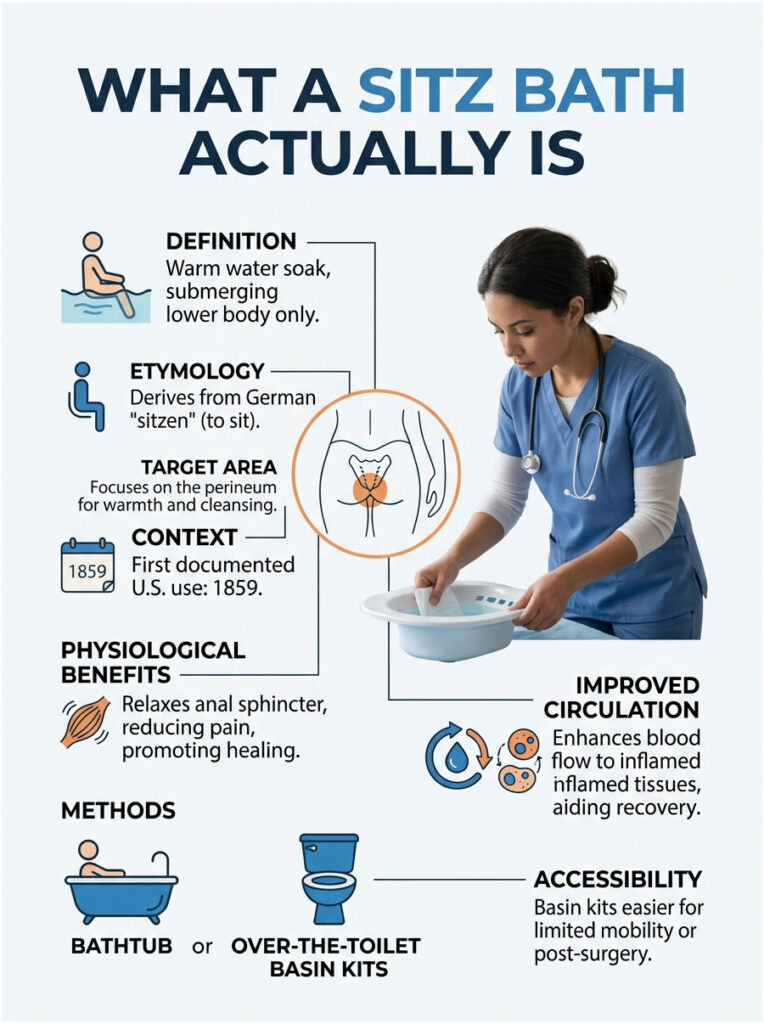
A sitz bath sounds technical, but the idea is simple. You sit in a small amount of warm water so that only your lower body is submerged.
The Simple Definition and Where the Word Comes From
The word “sitz” comes from the German verb sitzen, which means “to sit.” That is the whole concept: a bath you sit in rather than lie down in.
A sitz bath targets the perineum, the area between the anus and the external genitals. Instead of soaking your entire body, you concentrate warmth and gentle cleansing on one sensitive zone.
This is not a new idea. According to Cleveland Clinic, the first documented use of a sitz bath in the United States dates to 1859, when it was a metal half-tub people reclined in.
How Warm Water Relieves Pain
The relief is not just comfort, there is real physiology behind it. Warm water relaxes the anal sphincter, the ring of muscle that opens and closes the anus.
Cleveland Clinic explains that relaxing this muscle reduces spasm and improves blood circulation in the anal tissues, which promotes healing and lowers pain.
Better circulation also helps inflamed, irritated skin calm down. Patients booking checkups through HealthCareOnTime often describe a sitz bath as the first thing that finally took the edge off.
Bathtub Method Versus Over-the-Toilet Basin
There are two common ways to take a sitz bath. The first is your own bathtub, filled with just a few inches of warm water.
The second is a plastic basin kit that fits over the toilet seat. These kits are sold in most US pharmacies and big-box stores, and many include a bag and tube to refill warm water as it cools.
Neither requires a prescription. Our medical reviewers note that the basin kit is often easier for people with limited mobility or those recovering from surgery, since it avoids climbing in and out of a tub.
Why a Sitz Bath Helps Hemorrhoids
Hemorrhoids are the number one reason Americans reach for a sitz bath. To understand why the soak works, it helps to know what is going on down there.
What Hemorrhoids Are and Why They Hurt
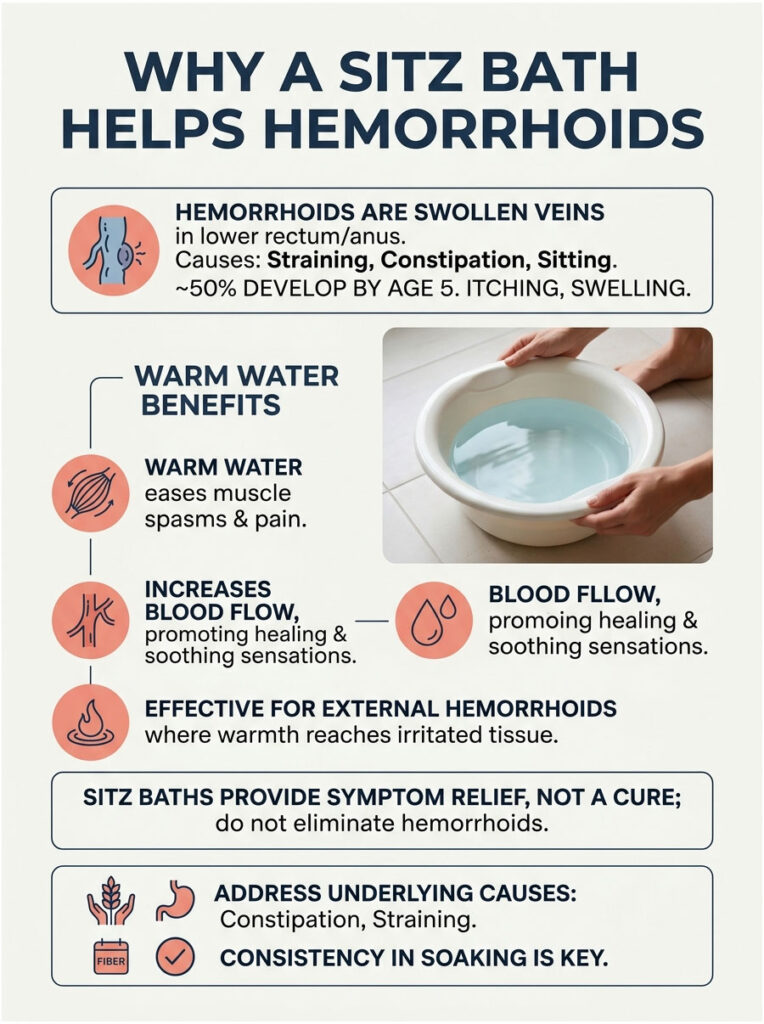
Hemorrhoids are swollen veins in the lower rectum and anus. They are extremely common, and most cases are tied to straining, constipation, pregnancy, or prolonged sitting.
According to the National Institute of Diabetes and Digestive and Kidney Diseases, hemorrhoids are very common in American adults, and about half of people develop them by age 50.
External hemorrhoids sit under the skin around the anus and can cause pain, itching, and swelling. The discomfort can make sitting, walking, and bowel movements genuinely miserable.
How the Warm Soak Eases Symptoms
A sitz bath attacks hemorrhoid discomfort from several angles at once. The warmth relaxes the anal sphincter, which eases the muscle spasm that drives sharp pain.
That same relaxation can make passing stool less painful, and it gently increases blood flow to help the area heal. The warm water also soothes the itching and burning that hemorrhoids so often bring.
Across patients our diagnostic network serves, a warm soak after a bowel movement is one of the most reliably helpful self-care steps for hemorrhoid flare-ups.
What a Sitz Bath Can and Cannot Do
Here is the honest part. A sitz bath relieves symptoms, but it does not cure hemorrhoids or make them vanish.
It eases pain, itching, and swelling while your body does the healing. It works best for external hemorrhoids, where the warmth can actually reach the irritated tissue.
A sitz bath also does not fix the cause. If constipation and straining created the problem, those need addressing too, with fiber, fluids, and better bathroom habits. Our medical reviewers stress that lasting relief comes from treating the cause, not just soaking the symptom.
Table 1: How a Sitz Bath Helps Common Conditions
| Condition | How a Sitz Bath Helps | Typical Soak Frequency | Expected Relief | Key Caution |
| External hemorrhoids | Relaxes sphincter, eases pain, itching, swelling | 2 to 4 times daily, after bowel movements | Symptom relief, not a cure | Severe pain may signal a thrombosed hemorrhoid |
| Anal fissure | Relaxes muscle spasm, improves blood flow to the tear | 2 to 3 times daily | Less pain, supports healing | Avoid salt additives that may sting the cut |
| Postpartum perineal soreness | Soothes swelling and stitches, promotes healing | 2 to 3 times daily | Comfort and faster recovery | Confirm timing with your provider after delivery |
| Post-surgical recovery | Keeps the area clean, eases discomfort | As directed, often after bowel movements | Cleaner wound, less pain | Follow exact surgeon instructions on when to start |
| Bartholin cyst | Warmth may help a small cyst drain and reduce discomfort | 3 to 4 times daily | Eased pressure and pain | A growing or infected cyst needs medical care |
In questions sent to our medical team, “how often should I do this” is the most common. The answer depends on the condition, but consistency matters more than long single sessions.
Benefits and Other Uses Beyond Hemorrhoids
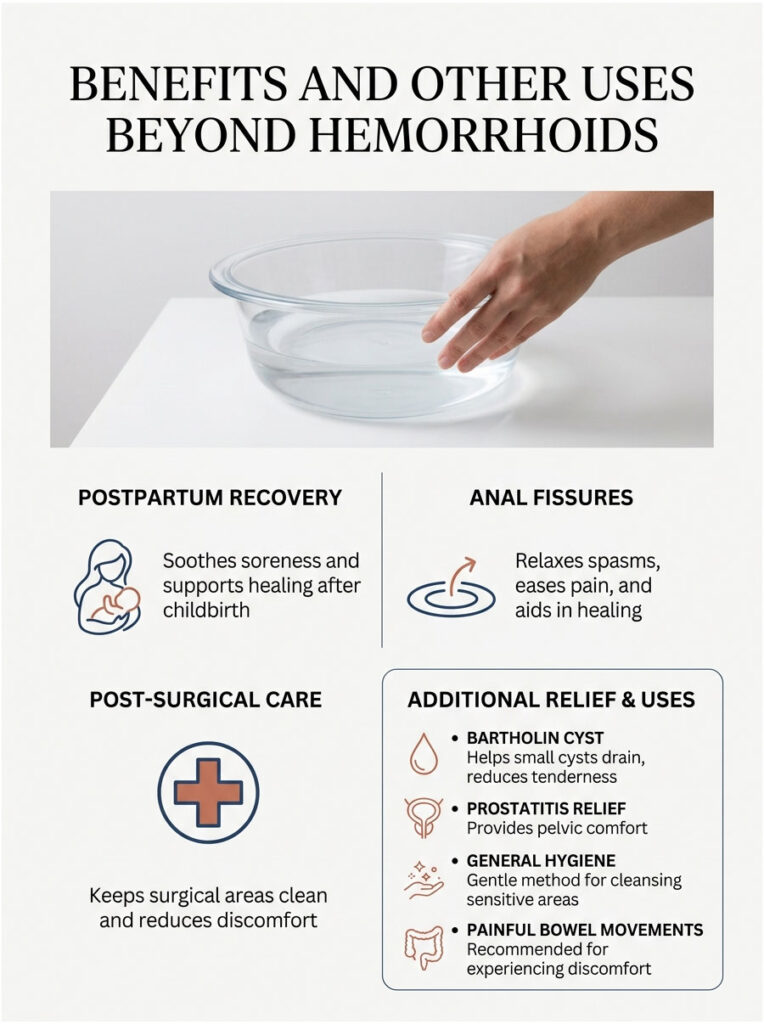
Hemorrhoids may be the headline use, but a sitz bath helps with a wider range of perineal discomfort. The same warm-water principle applies across several situations.
Postpartum Perineal Recovery
Childbirth puts the perineal area through a lot, whether delivery is vaginal or by cesarean. Swelling, soreness, and stitches are common in the days and weeks afterward.
A warm sitz bath soothes that soreness and supports healing. Many new parents find it one of the few genuinely comforting parts of early recovery.
Anal Fissures and Post-Surgical Healing
An anal fissure is a small tear in the lining of the anus, and it can be sharply painful. The warm soak relaxes the spasm that keeps a fissure irritated, which both eases pain and supports healing.
After surgery such as a hemorrhoidectomy, providers frequently prescribe sitz baths. The soak keeps the surgical area clean, especially after bowel movements, and reduces discomfort during recovery.
Bartholin Cyst, Prostatitis, and General Hygiene
A Bartholin cyst forms near the opening of the vagina, and warm soaks can help a small one drain and feel less tender. Some people with prostatitis also use sitz baths for pelvic comfort.
Beyond any specific condition, a sitz bath is simply a gentle way to cleanse a sensitive area. It can be useful for anyone with discomfort during bowel movements or general perineal irritation.
How to Take a Sitz Bath, Step by Step
A sitz bath is easy to do well once you know the basics. The core sequence is the same whether you use a tub or a basin kit:
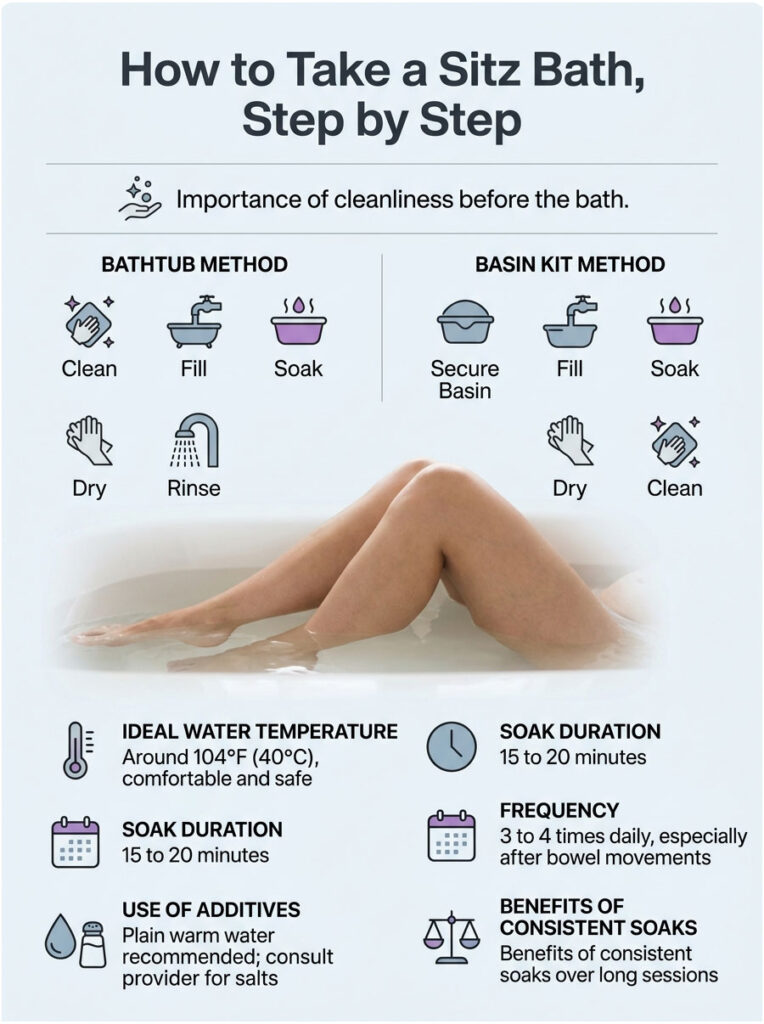
- Clean the tub or basin thoroughly before filling it.
- Add warm water, around 104 F, deep enough to cover the perineal area.
- Soak for 15 to 20 minutes, topping up with warm water as it cools.
- Pat the area dry gently with a soft towel, never rubbing.
- Empty and wash the tub or basin so it is clean for next time.
The details below cover each method.
Bathtub Method
Start by cleaning your tub, since the skin around the anus is sensitive to bacteria. A quick scrub and rinse is enough.
Fill the tub with about 3 to 4 inches of warm water, deep enough to cover your perineal area when seated. Lower yourself in and soak for 15 to 20 minutes, topping up with warm water if it cools.
When finished, gently pat the area dry with a soft towel rather than rubbing. Drain the tub and rinse it out.
Over-the-Toilet Basin Kit Method
Place the basin under the raised toilet seat and check that it sits securely. Fill it with warm water, either directly or using the included bag and tube.
Sit so your perineal area is submerged, and soak for 15 to 20 minutes. If the kit has a refill bag, you can add warm water through the tube as the bath cools.
Afterward, pat dry, empty the basin, and wash it thoroughly with warm, soapy water so it is clean for next time.
Water Temperature, Depth, and Timing
Temperature is where people most often go wrong. The water should be warm and comfortable, never hot enough to scald.
Cleveland Clinic suggests an average temperature near 104 degrees Fahrenheit, which is warm but safe. Water that is too hot can burn the skin and may worsen hemorrhoid swelling.
A typical session runs 15 to 20 minutes, repeated three or four times a day and after bowel movements. Our lab partners note that several short, consistent soaks tend to help more than one long marathon session.
Table 2: Sitz Bath Settings at a Glance
| Parameter | Recommended Value | Source |
| Water temperature | Warm, around 104 F (40 C), never scalding | Cleveland Clinic |
| Water depth | About 3 to 4 inches, enough to cover the perineum | WebMD |
| Soak duration | 15 to 20 minutes per session | Cleveland Clinic / WebMD |
| Frequency | 3 to 4 times daily, and after bowel movements | GoodRx |
| Additives | Plain warm water is enough; add salts only if a provider approves | Cleveland Clinic |
That last row matters more than most people expect, which is why the next section looks at additives in detail.
Epsom Salt and Additives: What the Evidence Says
Walk down any pharmacy aisle and you will see Epsom salt blends marketed specifically for sitz baths. The truth about additives is more nuanced than the packaging suggests.
Warm Water Alone Versus Epsom Salt
Here is a fact that surprises many people. You do not need Epsom salt for a sitz bath to work.
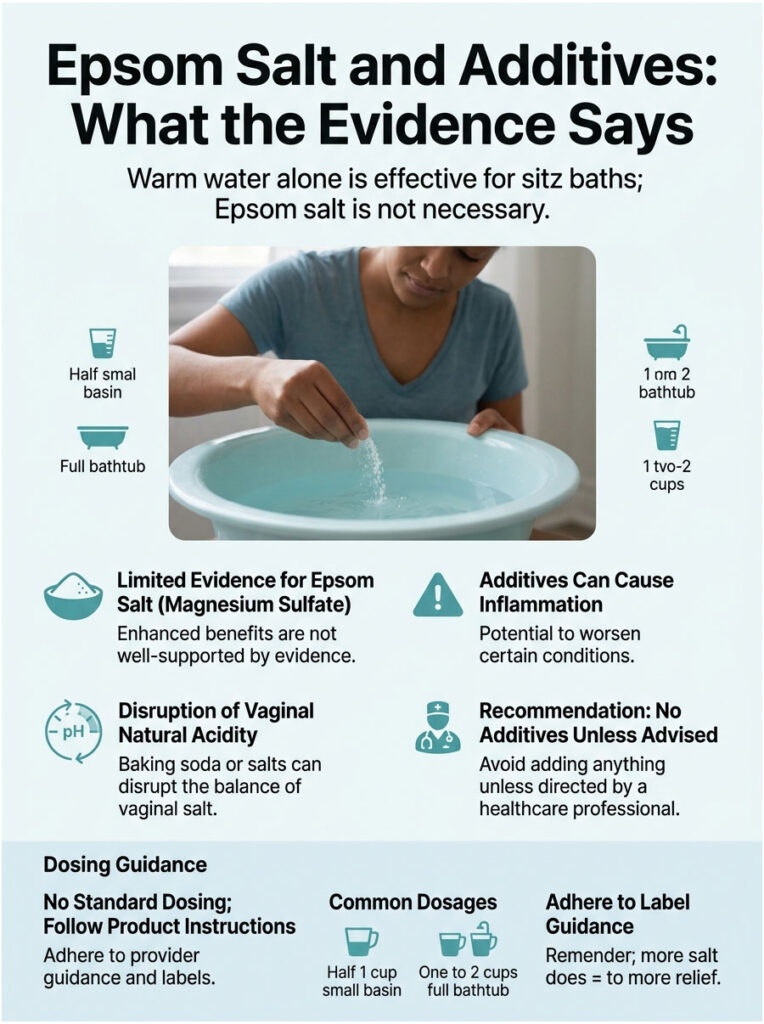
Cleveland Clinic is direct about this: warm water alone is effective, and salts, oils, and other substances may actually cause inflammation in some people.
Epsom salt, which is magnesium sulfate, is widely believed to soothe irritated skin. The evidence for added benefit over plain warm water is limited, so plain water is a perfectly legitimate choice.
When Additives Can Backfire
Additives are not automatically harmless. GoodRx notes that extra ingredients can worsen pain from cuts, anal fissures, and vaginal infections.
Baking soda or salts can also upset the naturally slightly acidic environment of the vaginal area. What feels soothing for one condition can irritate another.
This is why our medical reviewers recommend a simple rule: do not add anything to a sitz bath unless a healthcare professional has specifically told you to.
How Much Epsom Salt, If a Provider Approves
If a provider does give the go-ahead, dosing is not standardized. GoodRx points out there is no official recommendation for how much Epsom salt to use.
As a rough guide, brand instructions often suggest around half a cup for a small over-the-toilet basin, or one to two cups for a full bathtub. Always dissolve it fully in warm water before soaking.
Patients commonly ask us whether more salt means more relief. It does not. Stick to label guidance and a provider’s advice rather than improvising.
Common Mistakes and Safety Risks
Sitz baths are very safe, which is part of why doctors recommend them so freely. Still, a few avoidable mistakes can turn a soothing soak into an irritating one.
Water Too Hot, Soaking Too Long, Dirty Basin
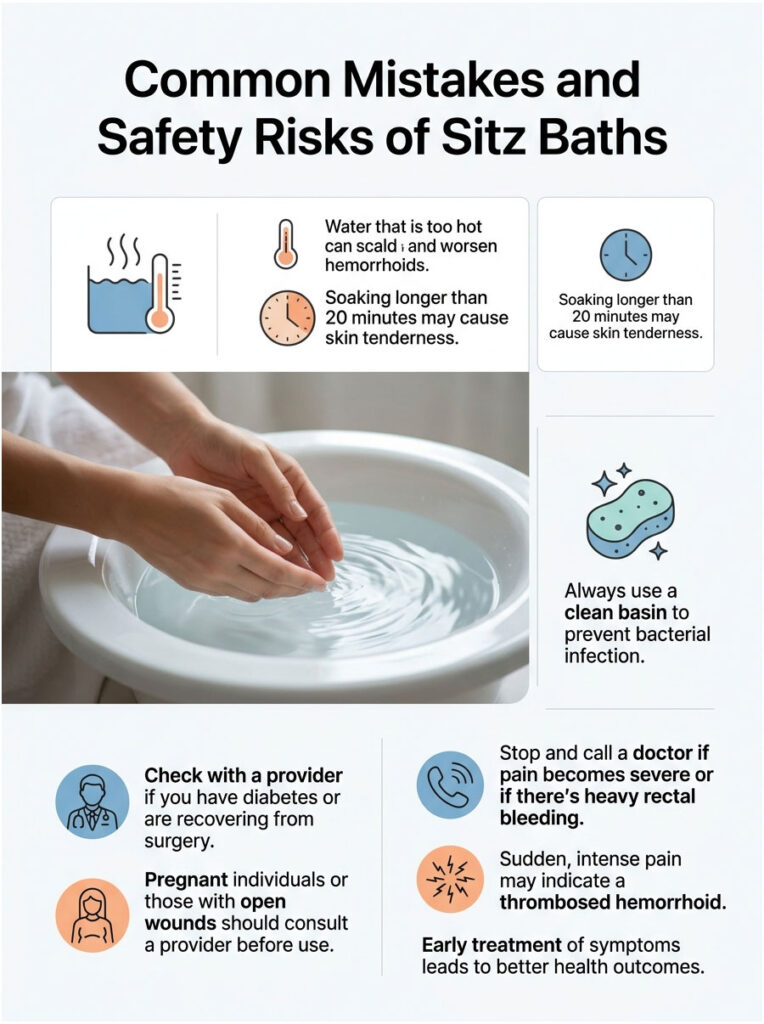
The most common mistake is water that is too hot. Hot water can scald sensitive skin and may even increase hemorrhoid swelling, the opposite of what you want.
Soaking far longer than 20 minutes does not add benefit and can leave skin waterlogged and tender. Stick to the recommended window.
A dirty tub or basin is the other big risk. The skin around the anus is sensitive to bacteria, so a clean surface before every soak is not optional.
Who Should Check With a Provider First
Most people can take a sitz bath without any clearance. A few groups should check first.
People with diabetes should be cautious, since reduced sensation can make it harder to judge water temperature and notice a burn. Anyone recovering from surgery should follow their surgeon’s exact timing.
If you are pregnant or have open wounds or an active infection in the area, a quick word with a provider is wise before adding any salts or starting a soaking routine.
Red-Flag Symptoms That Mean Stop and Call a Doctor
A sitz bath manages symptoms, so it should never replace medical attention for warning signs. Stop and contact a provider if pain becomes severe rather than mild.
Heavy or persistent rectal bleeding is a red flag, as is bleeding if you have never had hemorrhoids diagnosed before. Sudden, intense pain in a hemorrhoid can signal a thrombosed hemorrhoid, which is a blood clot that is easiest to treat within about 72 hours.
Fever, spreading redness, or worsening swelling after surgery also warrant a call. In cases reviewed by our medical team, treating these signals early consistently leads to better outcomes.
When a Sitz Bath Is Not Enough
Sometimes the smartest move is to recognize that a soak alone will not solve the problem. Certain situations call for a proper medical evaluation.
Signs Hemorrhoids Need Medical Treatment
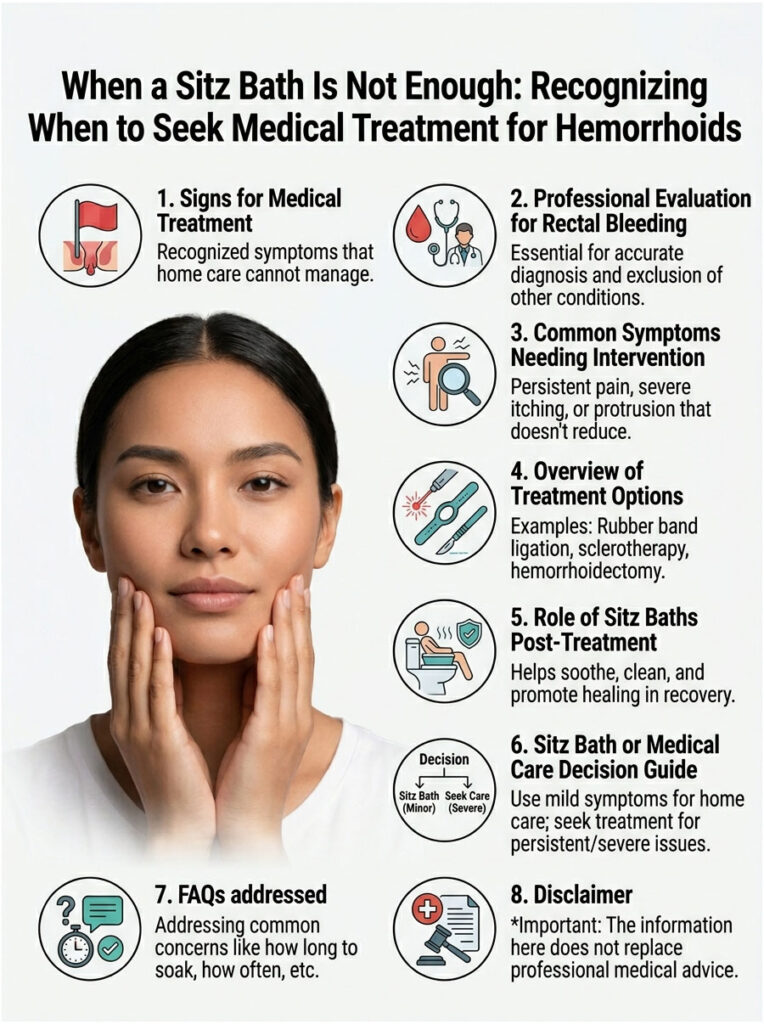
Most hemorrhoids settle within a couple of weeks with home care. If yours do not improve after that, it is time for a professional look.
Rectal bleeding always deserves a diagnosis, because other conditions can cause it and should be ruled out. Hemorrhoids that keep returning, prolapse, or interfere with daily life also point toward medical treatment.
Treatment Options a Provider May Recommend
A provider has options well beyond home care. According to the NIDDK, treatments range from in-office procedures to surgery for more severe cases.
These can include rubber band ligation, which cuts off blood flow to a hemorrhoid, and other minimally invasive procedures. A sitz bath often remains part of recovery even after these treatments.
The point is not that a sitz bath fails. It is that a soak is the comfort layer, while diagnosis and definitive treatment address the underlying problem.
Table 3: Sitz Bath Decision Guide
| Scenario | Likely Issue | Recommended Action |
| Mild hemorrhoid pain and itching | Uncomplicated external hemorrhoids | Sitz bath 2 to 4 times daily, plus fiber and fluids |
| Rectal bleeding with no prior diagnosis | Needs evaluation to rule out other causes | See a healthcare provider for a formal diagnosis |
| Sudden, severe pain in a hemorrhoid | Possible thrombosed hemorrhoid | Seek care promptly, ideally within 72 hours |
| Symptoms persist beyond 2 weeks of home care | Hemorrhoids may need medical treatment | Book a provider visit to discuss options |
| Fever or spreading redness after surgery | Possible wound infection | Contact your surgeon or provider right away |
The pattern is simple. A sitz bath is excellent for everyday relief, but bleeding, severe pain, and warning signs belong with a clinician.
Frequently Asked Questions
Does a sitz bath really help hemorrhoids?
Yes. A warm sitz bath relaxes the anal sphincter, increases blood flow, and eases the pain, itching, and swelling of hemorrhoids. It does not cure them, but it is one of the most reliable forms of symptom relief, especially for external hemorrhoids.
How long should you sit in a sitz bath?
A typical sitz bath lasts 15 to 20 minutes. Soaking much longer does not add benefit and can leave the skin waterlogged and tender. Several shorter, consistent soaks throughout the day tend to help more than one extended session.
How often should you take a sitz bath?
Most people take a sitz bath three or four times a day, and after each bowel movement, during a flare-up. After surgery, follow your provider’s specific instructions. Consistency matters more than the length of any single soak.
Should sitz bath water be hot or warm?
Warm, never hot. Aim for water around 104 degrees Fahrenheit, comfortable to the touch. Water that is too hot can burn sensitive skin and may actually worsen hemorrhoid swelling, which defeats the purpose of the soak.
Do you need Epsom salt in a sitz bath?
No. Plain warm water is effective on its own, and Cleveland Clinic notes that salts and other additives can cause inflammation in some people. Only add Epsom salt or other ingredients if a healthcare provider specifically recommends it for your situation.
Can you take a sitz bath without a kit?
Yes. A regular bathtub works well, filled with just 3 to 4 inches of warm water. Clean the tub first. The over-the-toilet basin kit is simply more convenient for some people, especially after surgery or with limited mobility.
Can a sitz bath make hemorrhoids worse?
A properly done sitz bath should not worsen hemorrhoids. Problems usually come from water that is too hot, which can increase swelling, or from salts and additives that irritate sensitive tissue. Use warm water and skip additives unless a provider advises otherwise.
Is a sitz bath safe during pregnancy?
Sitz baths are generally considered safe and are often used for pregnancy-related hemorrhoids. Use warm, not hot, water. Because individual situations vary, it is best to confirm with your provider, especially before adding any salts to the water.
How soon after surgery can you take a sitz bath?
This depends entirely on the procedure and your surgeon’s guidance. Many providers prescribe sitz baths during recovery from hemorrhoid or perineal surgery. Always follow the exact timing and instructions your surgical team gives you rather than starting on your own.
Does a sitz bath shrink hemorrhoids?
A sitz bath can reduce swelling and ease symptoms, but it does not permanently shrink or cure hemorrhoids. It manages discomfort while your body heals. Lasting improvement also requires addressing causes like constipation, straining, and low fiber intake.
How do you clean a sitz bath basin?
After each use, empty the basin and wash it thoroughly with warm, soapy water. Some people also wipe it with rubbing alcohol and dry it with a paper towel. A clean basin before every soak helps prevent skin infection in a sensitive area.
Can children use a sitz bath?
Yes, children can use sitz baths, sometimes recommended for uncomfortable bowel movements or a skin reaction in the genital area. An adult should always supervise, keep the water warm rather than hot, and check with a pediatrician about the right approach.
Disclaimer
This article is for general informational purposes only and does not constitute medical advice. It is not a substitute for professional diagnosis or treatment. Always consult a qualified healthcare provider about hemorrhoids, rectal bleeding, or any perineal symptoms, and before starting a sitz bath routine after surgery, during pregnancy, or if you have diabetes or another chronic condition.