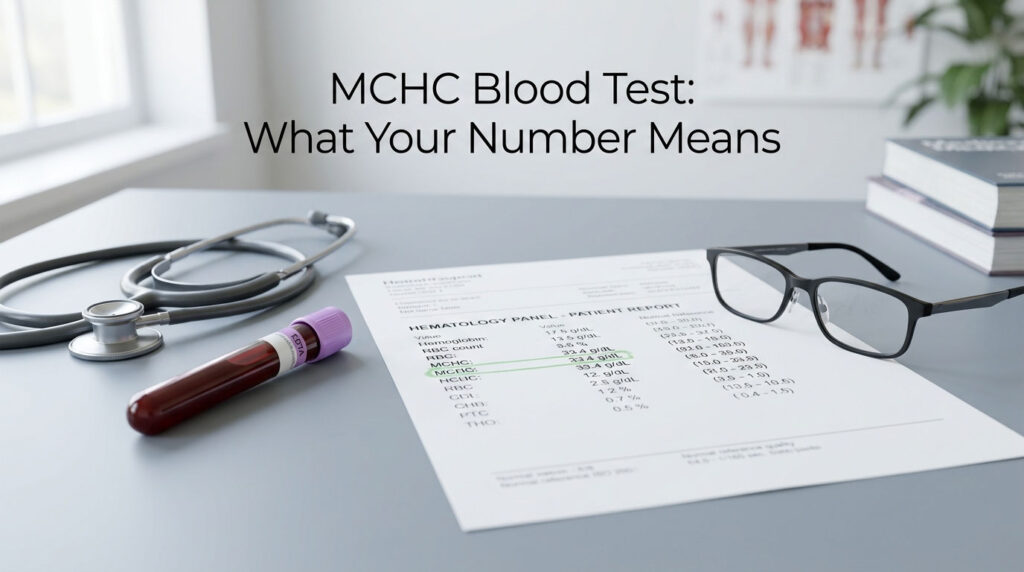
Roughly 9.3% of Americans aged 2 and older have anemia per the latest CDC NHANES brief released in December 2024, and the first clue often shows up as four letters on a lab report most patients have never paid attention to before: MCHC. If you just opened your complete blood count results and spotted “MCHC” with a number beside it and maybe a small “L” or “H” flag, you’re in the right place to figure out what it actually means.
The number is not a diagnosis. It’s a calculation, a clue, and a starting point that helps your doctor decide whether your red blood cells are filled with the right amount of hemoglobin.
Table of Contents
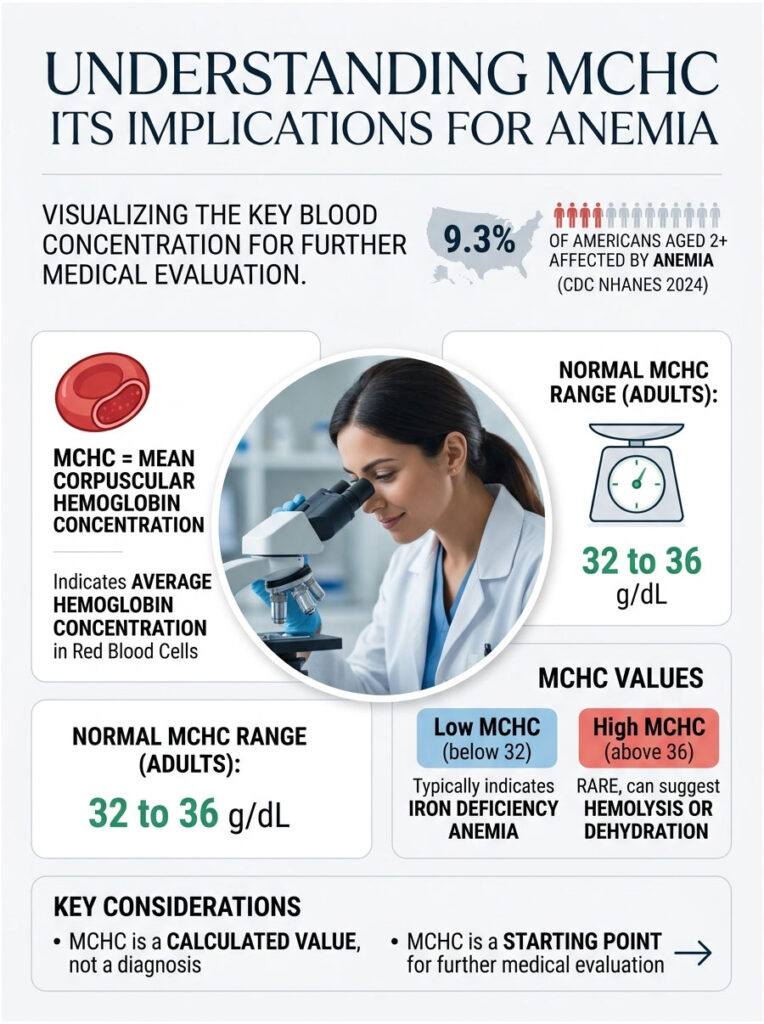
Quick Answer: MCHC (Mean Corpuscular Hemoglobin Concentration) is a calculated value in your complete blood count (CBC) that measures the average concentration of hemoglobin inside your red blood cells. The normal MCHC range for adults is 32 to 36 g/dL. Low MCHC (below 32) most often signals iron deficiency anemia, while high MCHC (above 36) is uncommon and usually points to hemolysis, hereditary spherocytosis, dehydration, or a lab interference.
At a Glance
- MCHC stands for Mean Corpuscular Hemoglobin Concentration, measured in grams per deciliter (g/dL)
- Normal adult MCHC range: 32 to 36 g/dL (some US labs use 31.5 to 35.7 g/dL)
- MCHC is calculated, not directly measured: Hemoglobin ÷ Hematocrit × 100
- Low MCHC (hypochromia) most commonly means iron deficiency anemia
- High MCHC (hyperchromia) is rare and usually means hemolysis, spherocytosis, or a lab artifact
- US anemia prevalence: 13% of women, 5.5% of men; 31.4% of Black non-Hispanic women
- Almost always interpreted alongside MCV, MCH, RDW, and ferritin, never alone
What Is an MCHC Blood Test?
The MCHC blood test is a small but informative piece of one of the most common tests in American medicine. Mayo Clinic and Cleveland Clinic both list the complete blood count as a standard screening that millions of US adults receive every year, and MCHC comes back automatically with that order.
Our medical reviewers note that patients rarely request an MCHC test on its own. It shows up because a clinician ordered a CBC for fatigue, an annual physical, pre-surgical clearance, or a workup for anemia symptoms like pale skin or shortness of breath.
What MCHC Actually Measures
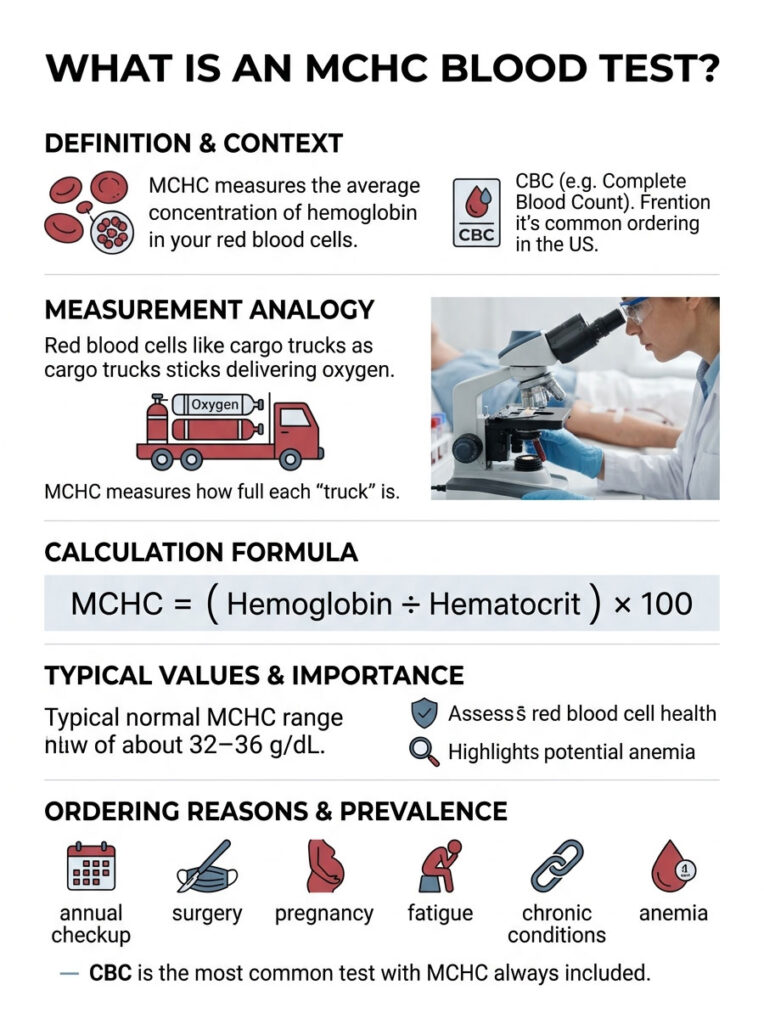
MCHC measures the average concentration of hemoglobin inside your red blood cells, not the number of red blood cells you have and not the size of those cells. It tells you how densely packed with hemoglobin each cell is on a per-volume basis.
Think of red blood cells as oxygen-delivery trucks. MCHC tells you how full each truck is, while MCV tells you how big the truck is, and the red blood cell count tells you how many trucks are on the road.
How MCHC Is Calculated (Hemoglobin ÷ Hematocrit)
MCHC isn’t measured directly by the analyzer. It’s calculated from two numbers already on your CBC: total hemoglobin and hematocrit (the percentage of your blood volume made up of red cells).
The formula used by every major US lab is straightforward: MCHC = (Hemoglobin in g/dL ÷ Hematocrit as a decimal) × 100. A result of hemoglobin 14 g/dL and hematocrit 42% gives an MCHC of about 33.3 g/dL.
Why Doctors Order It (Part of the CBC)
Doctors order a CBC for routine annual checkups, before surgery, during pregnancy, when investigating fatigue or weakness, when monitoring chronic conditions, and any time anemia is suspected. The CBC ordered through HealthCareOnTime panels delivers MCHC automatically alongside the other red cell indices.
Patrick Gallagher, MD, professor of pediatrics at Ohio State University, has described the CBC as far and away the most common blood test US doctors order. MCHC rides along with every single one of them.
MCHC Normal Range and Reference Values
The MCHC normal range is one of the most consistent reference values across US labs, though small variations exist depending on the analyzer and the population the lab serves. Knowing both the standard range and the variations helps you read your own results with less confusion.
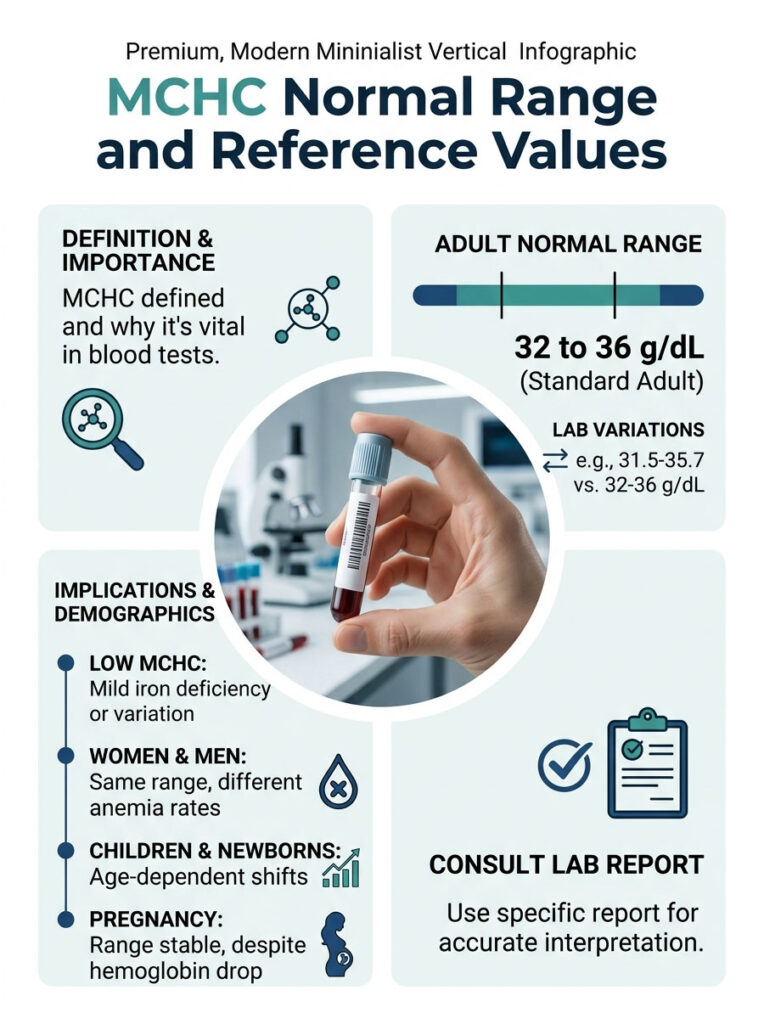
In CBCs processed through our lab partners, the most common adult reference range printed on the report is 32 to 36 g/dL. A handful of US labs, including some Labcorp panels, use a slightly narrower 31.5 to 35.7 g/dL.
Standard Adult Normal Range (32 to 36 g/dL)
For non-pregnant adults of either sex, the standard MCHC normal range is 32 to 36 g/dL. Results that land between 30 and 32 g/dL are often called “mildly low” and frequently reflect early iron deficiency or normal biological variation rather than active disease.
Values above 36 g/dL are uncommon and almost always trigger a retest or further workup.
Why Some Labs Use 31.5 to 35.7 g/dL
Reference ranges vary because each laboratory establishes its own values based on the analyzer, the local population, and statistical cutoffs (usually the 2.5th to 97.5th percentile of healthy controls). A 31.5 to 35.7 g/dL range from one lab and 32 to 36 g/dL from another are clinically equivalent.
Always read your result against the range printed on your specific report, not against a generic chart from a different source.
MCHC Normal Range for Women
The MCHC normal range for adult women is the same as for adult men: 32 to 36 g/dL. The values don’t differ by sex, even though hemoglobin and hematocrit do.
That said, US women have substantially higher rates of anemia than men, so they’re more likely to see a low MCHC flag on their report.
MCHC Normal Range for Men
Adult men also fall into the 32 to 36 g/dL band. Patients commonly ask us why men still get tested if they’re at lower risk; the answer is that screening detects the small but serious slice of men who have unexplained iron loss, often from GI bleeding that needs investigation.
MCHC Normal Range for Children and Newborns
MCHC values shift across childhood. Newborns typically run slightly higher (32 to 36 g/dL with some references reaching 38 g/dL in the first days), while infants 6 months to 2 years often run on the lower side of the adult range.
Children 2 to 12 generally fall into the 32 to 36 g/dL band, similar to adults.
MCHC During Pregnancy
Pregnant women experience a natural dilution of blood as plasma volume expands faster than red cell production. Hemoglobin and hematocrit drop, but MCHC usually stays within the normal 32 to 36 g/dL range because both numerator and denominator decrease together.
A truly low MCHC during pregnancy is a more reliable flag for iron deficiency than a borderline-low hemoglobin alone.
Table 1: MCHC Normal Range by Age, Sex, and Status
| Population | MCHC Normal Range | Unit | Source | Notes | Action if Outside Range |
| Adult Men | 32 to 36 | g/dL | Mayo Clinic / NIH | Standard reference | Repeat + iron studies if low |
| Adult Women (non-pregnant) | 32 to 36 | g/dL | Mayo Clinic / NIH | Same as men | Iron + ferritin workup if low |
| Pregnant Women | 32 to 36 | g/dL | ACOG | Hb and Hct drop, MCHC stays | Treat iron deficiency promptly |
| Children (2 to 12 yrs) | 32 to 36 | g/dL | American Academy of Pediatrics | Same band as adults | Pediatric iron workup if low |
| Newborns (0 to 14 days) | 32 to 38 | g/dL | NIH / Pediatric Ref. | Slightly wider upper bound | Pediatrician follow-up |
| Older Adults (65+) | 32 to 36 | g/dL | NIH NHANES | Same band, anemia risk rises | Investigate chronic disease |
How MCHC Fits Into Your CBC (MCHC vs MCH vs MCV vs RDW)
MCHC is one of five red blood cell indices on a CBC, and on its own it can’t tell you very much. The full diagnostic story emerges when you read MCHC alongside MCV, MCH, RDW, hemoglobin, and hematocrit.
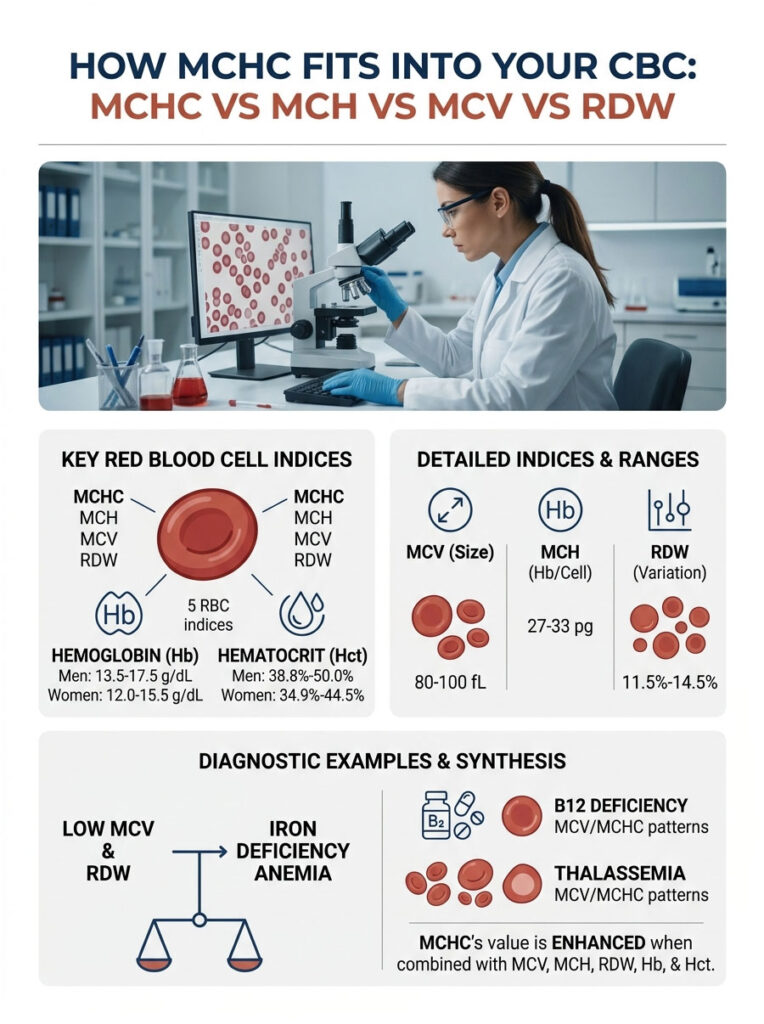
Our medical reviewers note that MCHC interpreted in isolation misses about half the diagnostic value it carries when combined with the other indices.
Hemoglobin (Hb) Explained
Hemoglobin is the iron-rich protein in red blood cells that carries oxygen from the lungs to the rest of the body. It’s measured directly in grams per deciliter and is the single most important number on your CBC for diagnosing anemia.
Normal adult hemoglobin runs 13.5 to 17.5 g/dL for men and 12.0 to 15.5 g/dL for women.
Hematocrit (Hct) Explained
Hematocrit is the percentage of your blood volume made up of red blood cells. Normal adult hematocrit runs 38.8% to 50.0% for men and 34.9% to 44.5% for women.
Hematocrit and hemoglobin together feed the MCHC calculation, which is why both numbers need to be accurate for the MCHC to be meaningful.
MCV (Mean Corpuscular Volume)
MCV measures the average size of your red blood cells in femtoliters (fL). Normal range: 80 to 100 fL.
Low MCV (microcytic) usually points to iron deficiency or thalassemia. High MCV (macrocytic) usually points to B12 or folate deficiency, hypothyroidism, or chronic alcohol use.
MCH (Mean Corpuscular Hemoglobin)
MCH measures the average amount of hemoglobin per red blood cell in picograms (pg). Normal range: 27 to 33 pg.
MCH and MCHC sound similar but measure different things. MCH is the amount of hemoglobin per cell; MCHC is the concentration of that hemoglobin within the cell’s volume.
RDW (Red Cell Distribution Width)
RDW measures how much variation exists in the size of your red blood cells. Normal range: 11.5% to 14.5%.
A high RDW alongside low MCV and low MCHC is one of the strongest signals of iron deficiency anemia, often appearing before hemoglobin drops below the normal range.
How These Indices Tell a Diagnostic Story Together
In iron deficiency anemia, you typically see low hemoglobin, low MCV, low MCH, low MCHC, and high RDW. In thalassemia, you see low MCV and MCHC but often a normal or only mildly elevated RDW. In B12 deficiency, MCV runs high while MCHC stays normal or slightly low.
Reading MCHC alongside its CBC neighbors is what turns a confusing number into a diagnostic pattern.
What Low MCHC Means (Below 32 g/dL)
Low MCHC is medically called hypochromia, and it means your red blood cells contain less hemoglobin than they should for their size. It’s a common finding on US CBCs, and the cause matters more than the number itself.
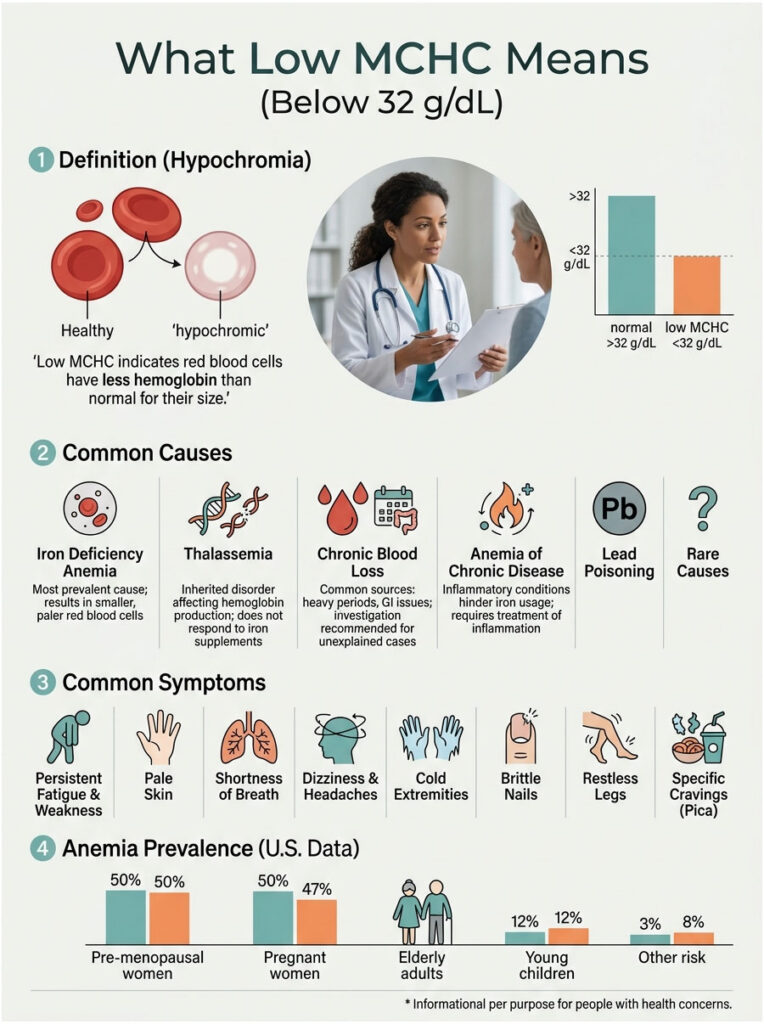
Patients ordering iron panels through HealthCareOnTime after a low MCHC flag often ask the same first question: how worried should I be? The honest answer is that mildly low values are usually fixable, but the underlying cause always deserves attention.
Iron Deficiency Anemia (Most Common Cause)
Iron deficiency is the most common cause of low MCHC in the US and worldwide. Without enough iron, your bone marrow can’t produce normally hemoglobin-filled red cells, so the cells come out smaller and paler.
You’ll typically see low MCHC paired with low MCV, low MCH, low hemoglobin, and a high RDW.
Thalassemia (Inherited Hemoglobin Disorder)
Thalassemia is an inherited disorder of hemoglobin production, more common in Americans of Mediterranean, Middle Eastern, South Asian, or Southeast Asian ancestry. It produces low MCHC and low MCV, but usually with a normal or only mildly elevated RDW.
Distinguishing thalassemia from iron deficiency matters because iron supplements don’t fix thalassemia and can cause iron overload over time.
Chronic Blood Loss
Slow, ongoing blood loss is a quiet driver of low MCHC. Common US causes include heavy menstrual periods, peptic ulcers, colon polyps, hiatal hernias, and undiagnosed gastrointestinal bleeding.
The American College of Gastroenterology recommends investigation of unexplained iron deficiency in men and postmenopausal women to rule out colon cancer or other GI sources.
Anemia of Chronic Disease
Long-running inflammatory conditions like rheumatoid arthritis, inflammatory bowel disease, chronic kidney disease, and certain cancers can block the body from using its stored iron properly. MCHC often dips into the low-normal or mildly low range.
In these cases, iron supplements alone don’t solve the problem; the underlying inflammation needs treatment too.
Lead Poisoning and Rare Causes
Lead exposure interferes with hemoglobin production, particularly in children. Sideroblastic anemia, copper deficiency, and certain medications can also produce low MCHC.
The CDC considers blood lead levels at or above 3.5 mcg/dL elevated in children and recommends prompt evaluation.
Common Symptoms of Low MCHC
Symptoms develop slowly and often get blamed on stress, poor sleep, or busy schedules before anyone thinks to check a CBC. Watch for persistent fatigue, weakness, pale skin (especially inside the lower eyelid), shortness of breath on mild exertion, dizziness, headaches, cold hands and feet, brittle nails, and restless legs.
Pica, the craving for ice, dirt, or starch, is a less well-known but very specific sign of iron deficiency.
Table 2: USA Anemia Prevalence (CDC NHANES, August 2021 to August 2023)
| Population Group | Anemia Prevalence | Source |
| US population age 2 and older (overall) | 9.3% | CDC NHANES Data Brief 519, Dec 2024 |
| US females age 2 and older | 13.0% | CDC NHANES Data Brief 519 |
| US males age 2 and older | 5.5% | CDC NHANES Data Brief 519 |
| Adolescent girls 12 to 19 years | 17.4% | CDC NHANES Data Brief 519 |
| Women 20 to 59 years | 14.0% | CDC NHANES Data Brief 519 |
| Black non-Hispanic women (highest subgroup) | 31.4% | CDC NHANES Data Brief 519 |
| US men age 85 and older | 39.5% | CDC MMWR 2018 |
What High MCHC Means (Above 36 g/dL)
High MCHC, called hyperchromia, is far less common than low MCHC and almost always warrants a careful second look. In many cases the elevated reading turns out to be a lab artifact rather than a true biological abnormality.
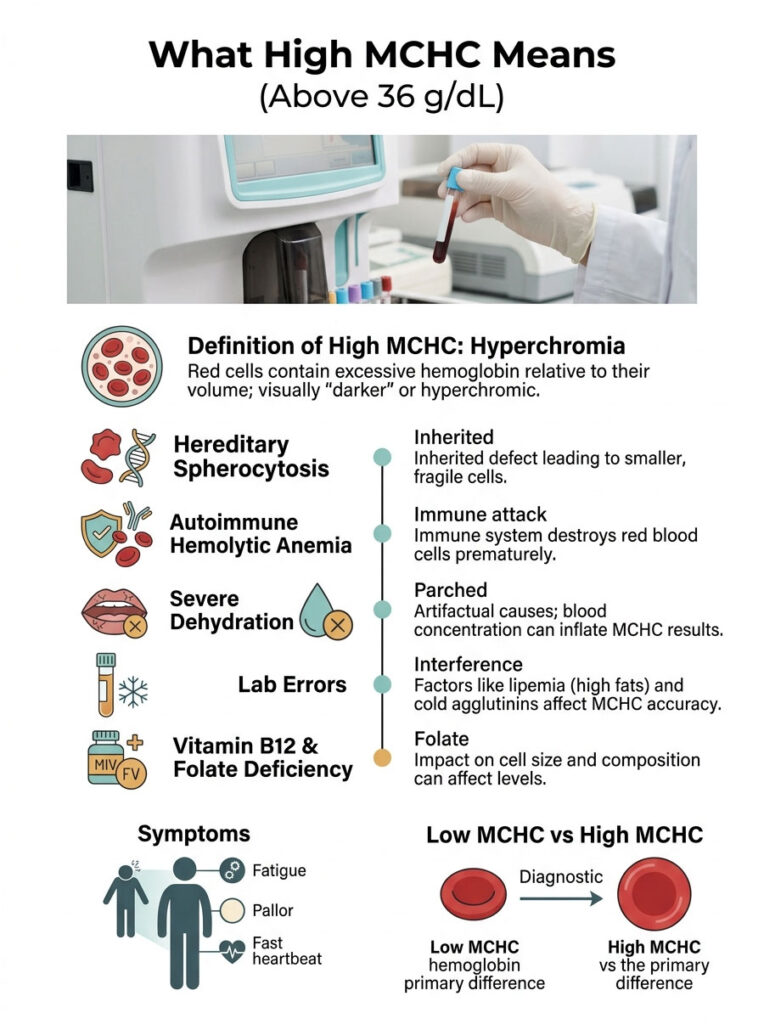
Across hemolysis workups we see, true high MCHC most often reflects red cells that have lost membrane surface, leaving the same amount of hemoglobin packed into a smaller cell volume.
Hereditary Spherocytosis
Hereditary spherocytosis is an inherited red cell membrane disorder that produces small, round, dense red cells with elevated MCHC, often in the 36 to 38 g/dL range. It’s most common in Americans of Northern European ancestry.
Mild forms may go undetected until adulthood; severe forms present in infancy with jaundice and an enlarged spleen.
Autoimmune Hemolytic Anemia
In autoimmune hemolytic anemia, the immune system mistakenly destroys red blood cells. The surviving cells often have abnormal hemoglobin concentrations, raising MCHC.
It can be triggered by viral infections, certain medications, lymphomas, or autoimmune conditions like lupus.
Severe Dehydration (Artifactual)
Severe dehydration concentrates the blood, sometimes inflating MCHC into the high range. This is artifactual, meaning the lab value is elevated but the underlying biology is normal.
Rehydration and a repeat CBC usually return MCHC to baseline within a day or two.
Lab Errors and Interferences (Lipemia, Cold Agglutinins)
Lipemia (very high triglycerides in the sample), cold agglutinins (antibodies that clump red cells in cold conditions), high bilirubin, or hemolysis during the blood draw can all artificially elevate MCHC. This is one of the most common reasons a high MCHC turns into a non-issue after a repeat draw.
Many US labs flag MCHC values above 37 g/dL for technical review before reporting the result.
Vitamin B12 and Folate Deficiency
Severe vitamin B12 or folate deficiency produces unusually large red cells (high MCV) that occasionally also carry elevated MCHC. This pattern is less common than the classic high-MCV-with-normal-MCHC profile, but worth checking with serum B12 and folate testing.
In patients we serve who present with high MCHC and high MCV together, B12 and folate panels become essential next steps.
Symptoms of High MCHC
True high MCHC from hereditary or hemolytic causes often comes with fatigue, jaundice (yellowing of skin and eyes), dark urine, an enlarged spleen, and sometimes gallstones from chronic red cell breakdown. Artifactual high MCHC usually produces no symptoms at all.
Low MCHC vs High MCHC at a Glance
Low MCHC and high MCHC sit on opposite ends of the diagnostic story but share one feature: neither is a diagnosis by itself. Low MCHC almost always means too little hemoglobin (the iron deficiency family of problems); high MCHC almost always means red cells that have lost volume relative to their hemoglobin content (the hemolysis and membrane-disorder family, or a lab artifact).
The distinction shapes the entire follow-up: low MCHC sends you toward iron studies; high MCHC sends you toward a peripheral smear and a possible hemolysis workup.
When to Worry, When Not To: A Practical Decision Guide
A single out-of-range MCHC, especially without symptoms, rarely signals an emergency. The right next step depends on how far the value is from normal, what other CBC values look like, and whether you have symptoms.
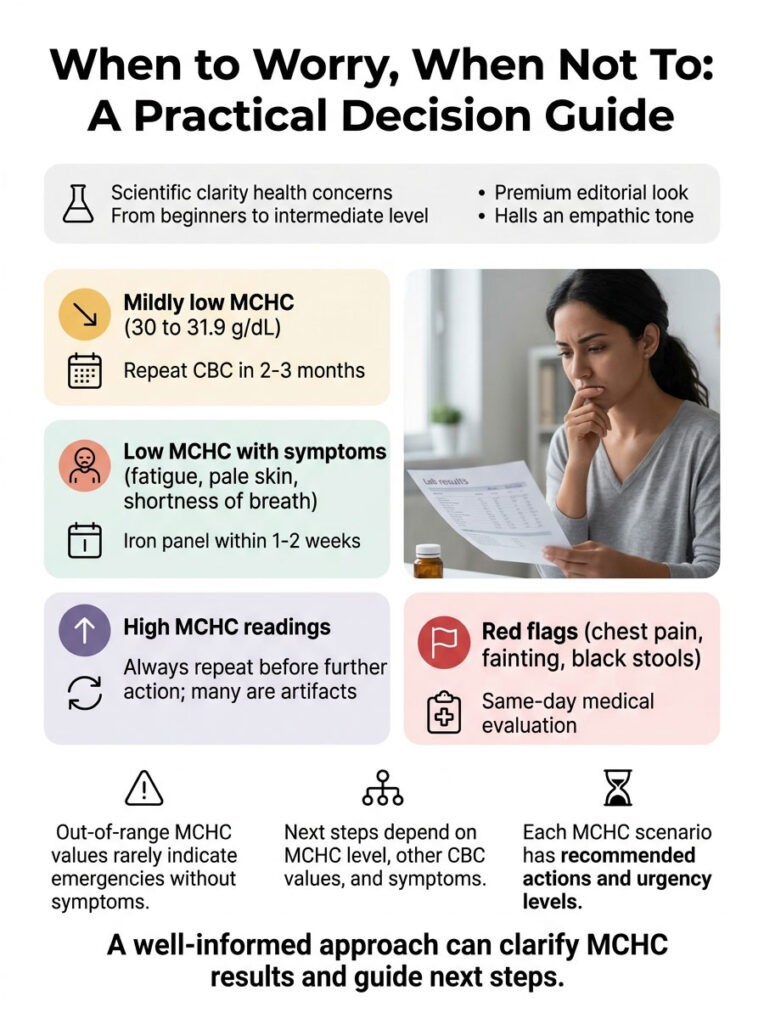
Table 3: MCHC Result and Next-Step Decision Matrix
| Your Result + Context | Recommended Action | Urgency |
| MCHC 30 to 31.9 g/dL, no symptoms, otherwise normal CBC | Repeat CBC in 2 to 3 months, add ferritin | Routine |
| MCHC below 32 g/dL with low Hb, low MCV, high RDW | Iron panel, ferritin, treat as iron deficiency | Within 1 to 2 weeks |
| MCHC below 30 g/dL with fatigue, pale skin, shortness of breath | Same-week doctor visit, full anemia workup | Within 1 week |
| MCHC above 36 g/dL, single isolated reading | Repeat CBC, check for lipemia or cold agglutinins | Within 2 to 4 weeks |
| MCHC above 36 g/dL with jaundice or dark urine | Hemolysis workup, peripheral smear | Within 1 week |
| Low MCHC plus chest pain, fainting, or black stools | Emergency department evaluation | Same day |
| Any abnormal MCHC during pregnancy | Same-week OB consultation | Within 1 week |
Mildly Low MCHC With No Symptoms
A mildly low MCHC (30 to 31.9 g/dL) with no symptoms and an otherwise normal CBC is often biological variation or early iron depletion. A repeat CBC in two to three months, plus a ferritin level, usually clarifies the picture.
Low MCHC With Symptoms (Fatigue, Pale Skin, Shortness of Breath)
Low MCHC combined with symptoms is the most actionable pattern. An iron panel (ferritin, serum iron, TIBC, transferrin saturation) booked through HealthCareOnTime confirms iron deficiency in most cases.
High MCHC: Always Repeat the Test First
A high MCHC is almost always rechecked before any workup begins. Many high readings disappear on the repeat because the original was an artifact from sample handling, lipemia, or a cold-agglutinin issue.
Red Flags That Need Same-Day Care
Chest pain, severe shortness of breath, fainting, black or tarry stools, vomiting blood, very rapid heartbeat, or severe pallor with weakness all need same-day medical evaluation regardless of the MCHC number on the page.
How to Improve Low MCHC
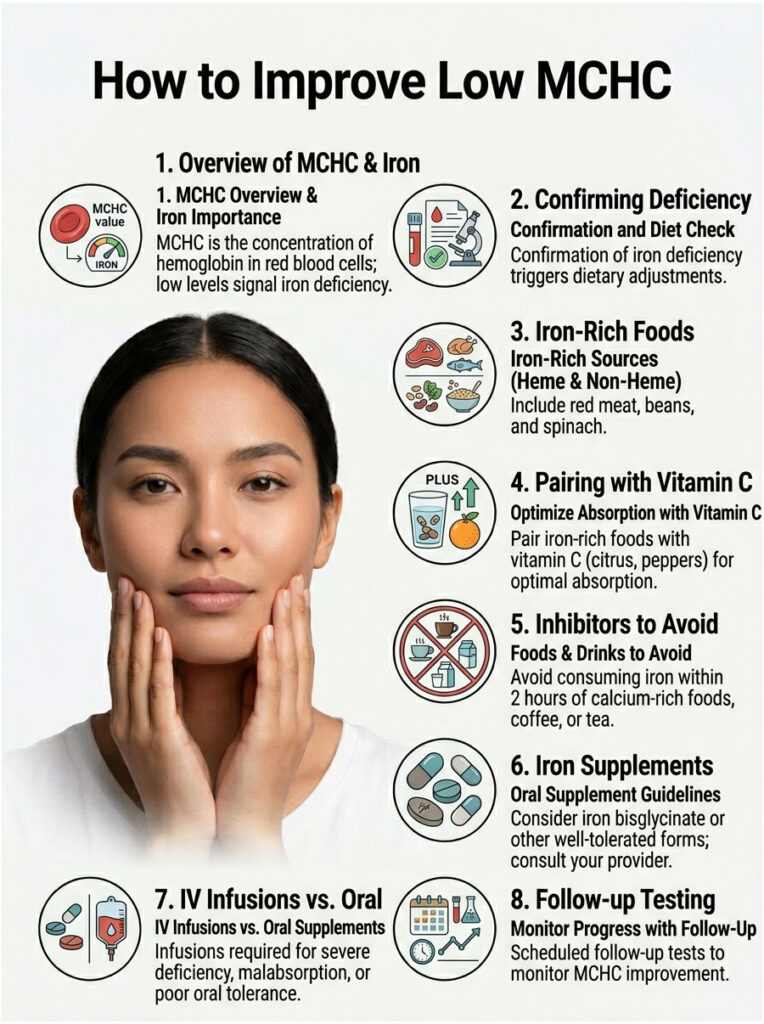
If your workup confirms iron deficiency, raising MCHC back into the normal range is usually straightforward. Expect 6 to 12 weeks for blood numbers to improve and 3 to 6 months to fully replenish iron stores.
Iron-Rich Foods (USA Grocery-Friendly List)
Heme iron from animal sources absorbs best: lean beef, chicken liver, beef liver, oysters, clams, sardines, and dark-meat poultry. Non-heme iron from plant sources is harder to absorb but still useful: lentils, chickpeas, kidney beans, spinach, kale, pumpkin seeds, cashews, dark chocolate (70%+ cacao), and fortified breakfast cereals.
The NIH Office of Dietary Supplements recommends 18 mg of iron daily for women aged 19 to 50 and 8 mg for men and postmenopausal women.
Pairing Iron With Vitamin C for Absorption
Vitamin C dramatically improves non-heme iron absorption. Pair beans with bell peppers, spinach with strawberries, or fortified cereal with orange juice.
A small glass of orange juice with a vegetarian iron-rich meal can roughly double the iron actually absorbed.
Foods and Drinks That Block Iron Absorption
Coffee, black tea, calcium-rich foods, and high-fiber bran can all reduce iron absorption when consumed at the same meal. The fix is timing: separate iron-rich meals from coffee, tea, and dairy by at least one to two hours.
Calcium supplements are particularly worth spacing apart from iron supplements.
When You Need a Supplement and Which Form
Diet alone rarely corrects established iron deficiency anemia. Most US clinicians start with ferrous sulfate 325 mg (providing 65 mg elemental iron) once daily or every other day; the every-other-day schedule has been shown in recent studies to improve absorption and reduce side effects.
Ferrous bisglycinate and ferrous fumarate are gentler alternatives for patients with stomach upset, nausea, or constipation on standard ferrous sulfate.
When Oral Iron Isn’t Enough
Severe iron deficiency, malabsorption disorders (celiac disease, gastric bypass, inflammatory bowel disease), or pregnancy with worsening anemia may require IV iron infusions. Common US options include iron sucrose, ferric carboxymaltose, and ferumoxytol, typically delivered in one to four outpatient infusions.
Across patients we serve with severe iron-deficiency profiles, IV iron often raises hemoglobin and MCHC within 4 to 6 weeks compared to 8 to 12 weeks for oral therapy.
Follow-Up Testing Schedule
A repeat CBC and ferritin at 8 to 12 weeks after starting treatment confirms improvement. Once values return to normal, continue iron supplementation for an additional 3 to 6 months to rebuild stores.
A final ferritin at 6 months helps decide when to stop.
How the MCHC Test Is Performed
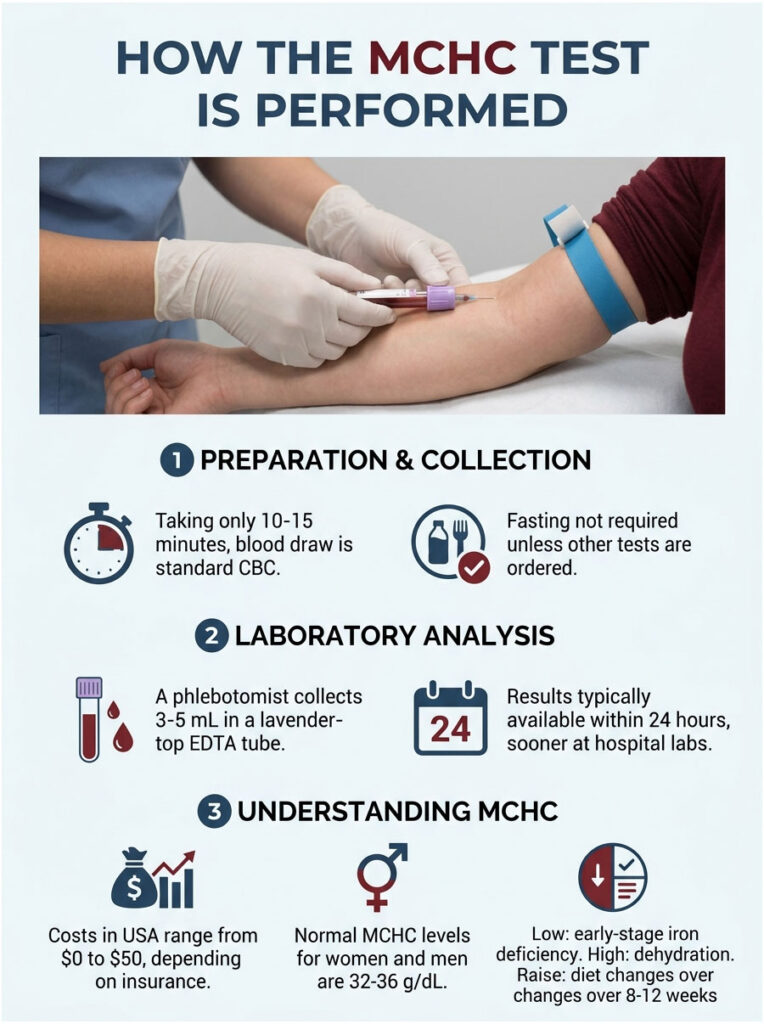
The MCHC test is technically just one calculation pulled from a routine CBC, so the patient experience is the same as any standard blood draw. Most US patients are in and out of the lab in 10 to 15 minutes.
Fasting Required? (Usually No)
A standalone CBC, including MCHC, does not require fasting. If your doctor ordered a CBC alongside a lipid panel, glucose, or comprehensive metabolic panel, you may need 8 to 12 hours of fasting for those other tests, which means no food before the MCHC draw too.
Always follow the specific instructions your ordering physician or lab provides.
What to Expect at the Lab
A phlebotomist draws a small tube of blood (usually 3 to 5 mL) from a vein in your arm. The sample goes into a lavender-top EDTA tube and is run on a hematology analyzer like the Beckman Coulter DxH 800 used by the CDC NHANES program.
Discomfort is brief; soreness or a small bruise at the puncture site is the most common after-effect.
Cost in the USA (With and Without Insurance)
A CBC including MCHC is among the cheapest US lab tests. With insurance, most patients pay $0 to $30 as part of preventive care. Without insurance, direct-pay prices typically run $10 to $50 at major US labs.
Booking through aggregator panels often brings the cash price under $20.
Turnaround Time
CBC results, including MCHC, are usually available within 24 hours at most US labs, and same-day at hospital labs. Online patient portals from Labcorp, Quest, and most hospital systems deliver results electronically, often before your follow-up appointment.
Frequently Asked Questions
What is a normal MCHC level for a woman?
The MCHC normal range for adult women is 32 to 36 g/dL, identical to men. Some US labs use 31.5 to 35.7 g/dL. Pregnancy does not typically change the normal MCHC range, although hemoglobin and hematocrit naturally drop. Always interpret your result against the range printed on your specific lab report.
What does it mean if my MCHC is low but my hemoglobin is normal?
A low MCHC with normal hemoglobin often signals early-stage iron deficiency, before anemia fully develops. Iron stores (ferritin) typically drop first, then MCHC and MCV start dipping, and finally hemoglobin falls. Catching this pattern early lets you correct iron levels with diet or supplements before symptomatic anemia develops.
Can dehydration cause high MCHC?
Severe dehydration can artificially elevate MCHC by concentrating the blood. The elevation is artifactual, meaning your underlying biology is normal but the lab number reads high. Rehydration and a repeat CBC usually return MCHC to baseline within a day or two. Mild everyday dehydration rarely shifts MCHC enough to flag.
What level of MCHC is dangerous?
MCHC below 28 g/dL or above 38 g/dL is uncommon and usually warrants prompt medical evaluation, especially with symptoms. The number itself isn’t directly dangerous; the underlying cause is. Severe iron deficiency, hemolysis, hereditary spherocytosis, or active bleeding can be serious, so abnormal MCHC values should never be ignored even if you feel fine.
How can I raise my MCHC naturally?
Eat iron-rich foods like lean beef, chicken liver, lentils, spinach, and fortified cereals, paired with vitamin C sources (citrus, bell peppers, strawberries) to improve absorption. Separate iron-rich meals from coffee, tea, and calcium by at least an hour. Most patients need 8 to 12 weeks of dietary changes plus possible supplementation to see MCHC return to normal.
What’s the difference between MCHC and MCH?
MCH is the average amount of hemoglobin per red blood cell, measured in picograms. MCHC is the concentration of that hemoglobin within the cell’s volume, measured in g/dL. MCH tells you how much hemoglobin each cell has; MCHC tells you how densely packed that hemoglobin is. Both can drop in iron deficiency anemia.
Do I need to fast for an MCHC blood test?
No, a standalone CBC including MCHC does not require fasting. If your CBC is ordered alongside a lipid panel, glucose, or comprehensive metabolic panel, fasting may be required for those other tests. Follow the specific fasting instructions your ordering physician or lab provides for the whole panel.
Is low MCHC always anemia?
No. Mildly low MCHC (30 to 31.9 g/dL) is often normal biological variation or early iron depletion without true anemia. Anemia is technically defined by low hemoglobin (below 12 g/dL for women, 13 g/dL for men). You can have low MCHC with normal hemoglobin, which is an early warning rather than a diagnosis.
Can stress affect MCHC?
Chronic stress can indirectly affect MCHC by influencing eating habits, sleep, gut absorption, and inflammatory pathways, but it doesn’t directly change the value. Acute stress doesn’t shift MCHC. If you have a low MCHC and high stress levels, the iron deficiency itself, not the stress, is the issue to address.
What cancers cause low MCHC?
Colon cancer, stomach cancer, and other GI cancers can cause low MCHC through slow chronic blood loss, leading to iron deficiency anemia. Blood cancers affecting bone marrow (leukemia, lymphoma, multiple myeloma) can also lower MCHC by disrupting red cell production. Unexplained iron deficiency in men or postmenopausal women warrants a colon cancer workup.
How long does it take to correct low MCHC?
With diet plus iron supplementation, MCHC typically begins improving in 4 to 8 weeks and returns to the normal range in 8 to 12 weeks. Full iron-store recovery takes 3 to 6 months. People with ongoing blood loss, malabsorption, or chronic disease may need longer treatment and follow-up testing to maintain normal levels.
Should I worry if my MCHC is just slightly outside the normal range?
A single mildly abnormal MCHC (within 1 to 2 g/dL of the normal range), no symptoms, and an otherwise normal CBC is usually not cause for alarm. The recommended next step is a repeat CBC in 2 to 3 months along with a ferritin level. Persistent abnormalities or any new symptoms (fatigue, pale skin, shortness of breath, jaundice) warrant a fuller workup with your physician.
Disclaimer: This article is for general health information only and is not a substitute for professional medical advice, diagnosis, or treatment. Always discuss your CBC and MCHC results with your healthcare provider, especially before starting iron supplements, changing medications, or interpreting lab values during pregnancy. HealthCareOnTime offers diagnostic testing and health information; we do not provide individual treatment plans or replace your physician’s clinical judgment.
References
- Mayo Clinic, Complete Blood Count Overview: https://www.mayoclinic.org/tests-procedures/complete-blood-count/about/pac-20384919
- CDC NHANES Data Brief No. 519, Anemia Prevalence: United States, August 2021–August 2023: https://www.cdc.gov/nchs/data/databriefs/db519.pdf
- NIH Office of Dietary Supplements, Iron Fact Sheet for Health Professionals: https://ods.od.nih.gov/factsheets/Iron-HealthProfessional/
- WebMD, What Is an MCHC Blood Test?: https://www.webmd.com/a-to-z-guides/mchc-blood-test
- MedlinePlus, Red Blood Cell Indices: https://medlineplus.gov/lab-tests/red-blood-cell-rbc-indices/
- American Society of Hematology, Iron-Deficiency Anemia: https://www.hematology.org/education/patients/anemia/iron-deficiency
- CDC, Lead Poisoning Prevention: https://www.cdc.gov/lead-prevention/
- American College of Gastroenterology: https://gi.org/
- Cleveland Clinic, Complete Blood Count Test: https://my.clevelandclinic.org/health/diagnostics/4053-complete-blood-count
- CDC NHANES Program: https://www.cdc.gov/nchs/nhanes/index.htm
- Johns Hopkins Medicine, Hereditary Spherocytosis: https://www.hopkinsmedicine.org/