Two people share the same chicken salad at a Saturday cookout. One is doubled over by 11 p.m. The other feels fine until Monday morning, then spends the day sprinting to the bathroom.
Table of Contents
Same meal, two different illnesses. And the clearest evidence of which one you have is sitting in the toilet bowl in front of you.
Most people flush without looking. That glance is worth ten seconds.
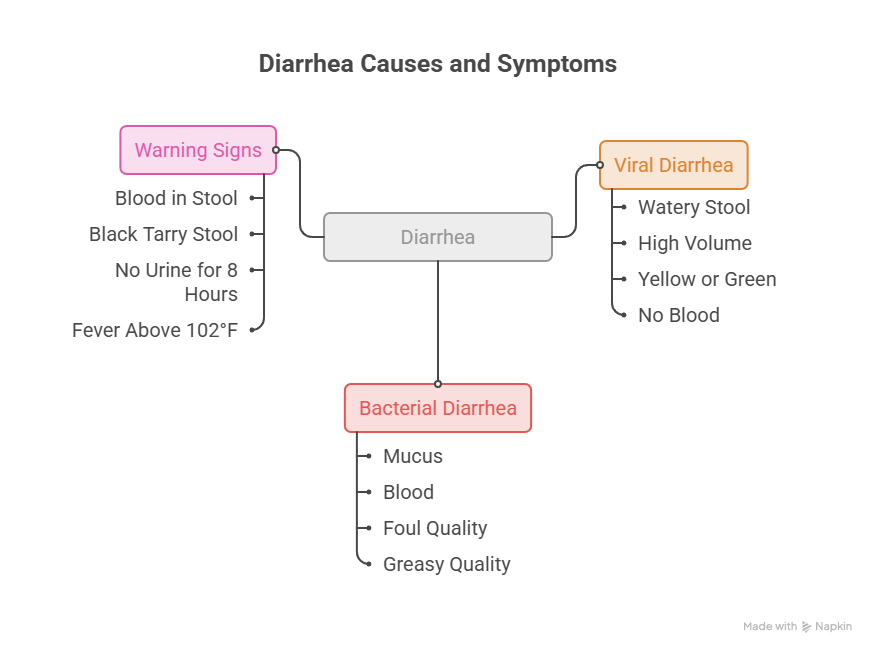
Quick Answer: Stomach flu usually brings large-volume, watery diarrhea that looks yellow or green and starts 12 to 48 hours after exposure, often with vomiting and a low-grade fever. Food poisoning tends to hit within 1 to 16 hours with sharper cramps, and stool may be foul-smelling, greasy, streaked with mucus, or bloody. Timing plus who else got sick is your strongest clue. Blood or black stool means call a doctor.
At a Glance
- Onset time separates the two better than any single symptom does.
- Watery, high-volume, yellow or green stool without blood leans viral.
- Mucus, blood, or a distinctly foul, greasy quality leans bacterial.
- Fever and body aches show up more often with stomach flu, but bacteria cause both.
- Stomach flu typically clears in 1 to 3 days; bacterial food poisoning can run 4 to 10 days.
- Blood in stool, black tarry stool, no urine for 8 hours, or a fever above 102 degrees F means stop guessing and get evaluated.
- Stool testing is recommended in specific situations, not for every case of diarrhea.
How to Tell the Difference in 60 Seconds
Before the detail, run three questions. They resolve most cases at home.
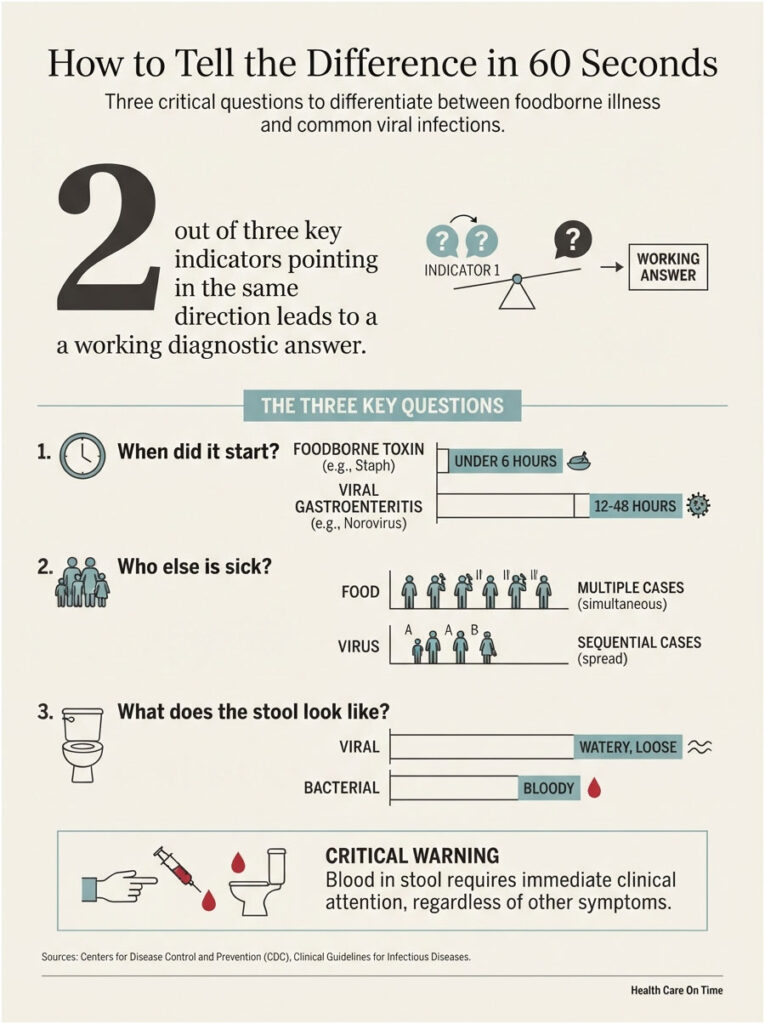
Question one: when did it start? Count backward from your first symptom. Under six hours after a meal points to a preformed toxin. Twelve to forty-eight hours after contact with a sick person points to norovirus.
Question two: who else is sick? Several people who ate the same meal falling ill within a few hours of each other means food. Household members falling ill one after another, two days apart, means a virus spreading person to person.
Question three: what does the stool look like? Watery, high-volume, yellow or green, no blood, leans viral. Smaller and frequent with mucus or blood, leans bacterial.
Get two of three pointing the same direction and you have a working answer. Get blood in the stool and the answer stops mattering, because that finding needs a clinician either way.
Stomach Flu and Food Poisoning Are Not the Same Illness
American households use the two names interchangeably, and the habit causes real confusion at the doctor’s office. They describe different things.
What “Stomach Flu” Actually Means
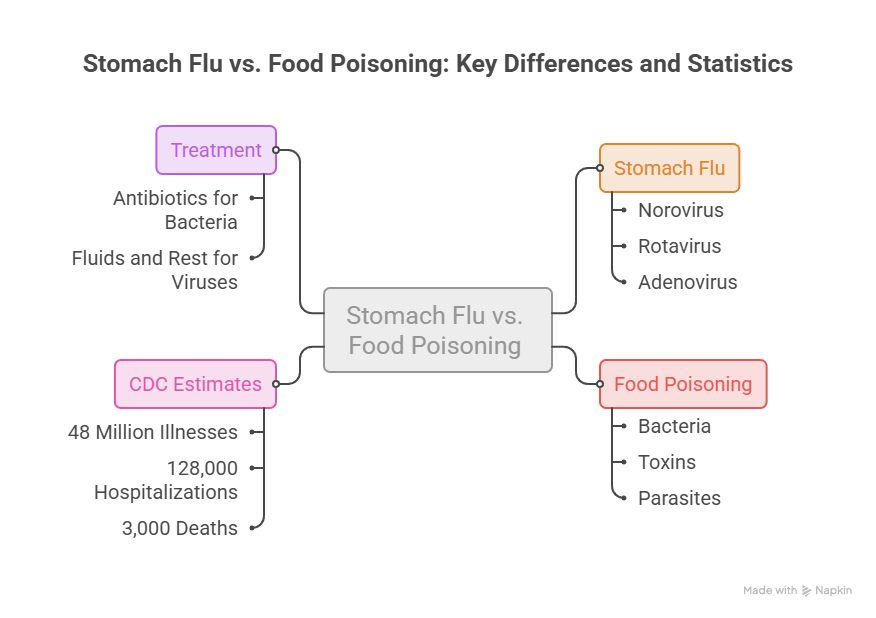
Stomach flu is a nickname for viral gastroenteritis, an inflammation of the stomach and intestines caused by a virus. It has nothing to do with influenza, which attacks the nose, throat, and lungs.
In the United States, norovirus dominates across every age group. Rotavirus, adenovirus, and astrovirus fill out the rest, with rotavirus mostly affecting unvaccinated young children.
Norovirus spreads person to person, through contaminated surfaces, and through the fecal-oral route. One infected person can seed an office, a cruise ship, or a nursing home floor within days.
What Food Poisoning Actually Means
Food poisoning, or foodborne illness, means you swallowed something harmful. That might be bacteria like Salmonella or Campylobacter, a preformed toxin left behind by Staphylococcus aureus, a parasite like Giardia, or a virus.
The CDC estimates that 48 million Americans get sick from a foodborne illness each year, with 128,000 hospitalized and 3,000 deaths.
Where the Two Overlap
Here is the part that trips people up. Norovirus is also the largest single cause of foodborne illness in the country, responsible for about 58% of cases acquired domestically.
A norovirus infection picked up from a contaminated salad is technically both food poisoning and stomach flu. The two labels describe route of exposure and causative agent, not two sealed categories.
Patients booking stool panels through HealthCareOnTime frequently arrive convinced it was “something they ate,” when household transmission from a sick child two days earlier was the actual source.
The scale is large. CDC surveillance puts the annual American norovirus burden at 19 to 21 million illnesses, 465,000 emergency department visits, 109,000 hospitalizations, and roughly 900 deaths, mostly among adults 65 and older, across about 2,500 reported outbreaks.
Why the Distinction Changes What You Do Next
For a healthy adult with mild symptoms, treatment is identical either way. Fluids, rest, patience.
The distinction starts to matter at the edges. A bacterial cause raises the odds that antibiotics help, that a stool test is warranted, and that the illness will run past day four.
A viral cause raises the priority of household containment, because norovirus spreads with almost no help from you. It also means antibiotics do nothing at all.
What Your Stool Is Telling You
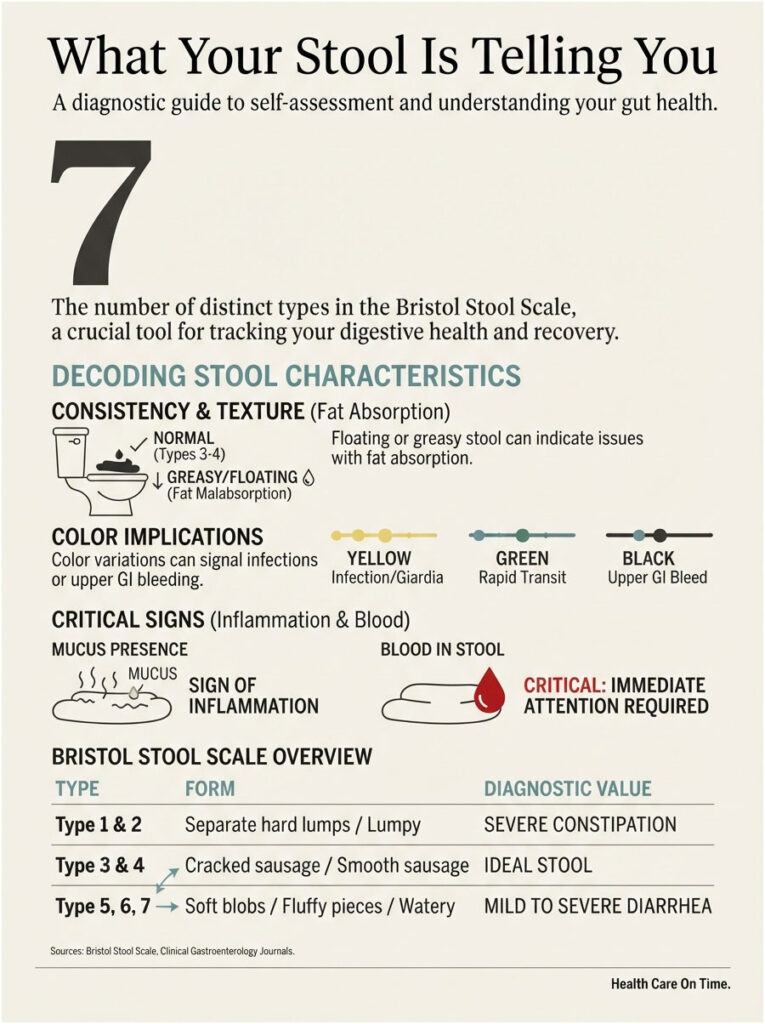
Stool is the most underused diagnostic clue in home self-assessment. Here is how to read it.
Volume and Frequency
Viral gastroenteritis produces high-volume, watery output. The small intestine stops absorbing fluid efficiently, so what comes out is largely water, and a lot of it.
Bacterial food poisoning often produces smaller, more frequent, more painful stools, especially when the colon is inflamed. Ten trips producing very little is a different pattern than four trips producing a lot.
Our medical reviewers note that volume is generally a more reliable signal than count, because people in distress consistently overestimate frequency.
Color, and What Yellow or Green Really Means
Yellow and green stool during a gut infection is common and rarely alarming. Bile leaves the gallbladder green and turns brown as colon bacteria act on it over several hours.
When diarrhea pushes contents through in an hour instead of a day, that chemical change never finishes. You get green, then yellow, then pale.
Both illnesses do this. Yellow diarrhea occurs with both stomach flu and food poisoning, and generally means food is moving through the intestines too fast for bile to be fully processed.
Black, tarry stool is a different story. It suggests bleeding higher in the digestive tract and needs same-day attention, not a home remedy. Pepto-Bismol also darkens stool, so mention any medication you took when you describe it.
Consistency, Floating, and Greasy Stool
Watery and formless is expected in both illnesses at the peak. What matters is what appears later.
Stool that floats, looks greasy, leaves an oily film, or resists flushing suggests fat is not being absorbed. When that pattern begins one to two weeks after a suspected exposure and lingers, Giardia moves up the list, particularly after drinking untreated stream or well water.
Mucus in Stool
A small amount of mucus is normal and usually invisible. Visible white or clear strands, jelly-like clumps, or a slimy coating mean the intestinal lining is inflamed and producing extra protective mucus.
Invasive bacteria such as Shigella, Campylobacter, and Salmonella trigger this far more often than norovirus does. Persistent mucus is a reason to describe your symptoms to a clinician rather than wait it out.
Blood in Stool, and Why It Changes the Plan
Blood is the single most important thing to look for. The Infectious Diseases Society of America is direct on this: bloody stool is not an expected manifestation of viral gastroenteritis.
Bright red streaks on the surface can come from a torn anal margin after repeated straining, which is minor and self-limiting. Blood mixed evenly through the stool, or stool that looks stirred with red, is not minor.
Shiga toxin-producing E. coli classically causes severe cramping and bloody diarrhea with little or no fever, typically three to four days after exposure. It carries a risk of hemolytic uremic syndrome, a kidney complication most dangerous in children under 5 and adults over 65.
In cases reviewed by our medical team, bloody diarrhea is the finding patients most often dismiss and most often regret dismissing.
Odor
Every case of diarrhea smells unpleasant. What people report with bacterial infections is different in kind rather than degree: sulfurous, rotten, or sickly sweet, and strong enough to fill a room.
Giardia has a reputation for a distinctly sulfurous smell paired with greasy stool and sulfur-tasting burps. Odor alone proves nothing, but combined with timing and consistency it adds weight.
Mapping Your Stool to the Bristol Stool Scale
The Bristol Stool Scale runs from Type 1, hard separate pellets, to Type 7, entirely liquid with no solid pieces. Acute gastroenteritis from either cause usually parks you at Type 6 or 7.
The useful part is tracking the climb back. Moving from Type 7 to Type 6 to Type 5 over three or four days is normal recovery.
Staying at Type 7 past day four, or sliding backward after a day of improvement, is worth reporting. Relapse after apparent recovery sometimes signals a secondary infection or a complication rather than a slow bounce.
Table 1: Stool Signs Compared Side by Side
| Stool Feature | Typical Stomach Flu (Norovirus) | Typical Bacterial Infection (Salmonella, Campylobacter, STEC) | Toxin-Type Food Poisoning (S. aureus, B. cereus) | What It Suggests | Action Level |
| Onset after exposure | 12 to 48 hours | 6 hours to 5 days | 30 minutes to 6 hours | Fast onset favors toxins; slow onset favors bacteria | Note the clock time |
| Volume per episode | Large, watery, high volume | Small to moderate, frequent | Often minimal; vomiting dominates | High volume raises dehydration risk fastest | Monitor fluids hourly |
| Frequency in 24 hours | 4 to 8 episodes | 6 to 15 episodes | 0 to 4 episodes | Frequent small stools suggest colon inflammation | Monitor |
| Color | Yellow, green, pale | Brown, green, sometimes dark red | Yellow or brown | Color reflects transit speed, not severity | Reassurance only |
| Consistency | Bristol Type 7, uniformly liquid | Type 6 to 7, loose with solid bits | Type 6 to 7, brief | Both illnesses look similar here | Not diagnostic alone |
| Visible mucus | Uncommon | Common with Shigella, Campylobacter, Salmonella | Rare | Mucus signals lining inflammation | Contact clinician |
| Visible blood | Not expected | Common with STEC, Shigella, Campylobacter | Not expected | Blood shifts the diagnosis toward bacteria | Seek care same day |
| Odor | Strong, sour | Strongly foul, sulfurous | Variable | Foul plus greasy raises parasite suspicion | Note for clinician |
| Typical duration | 1 to 3 days | 2 to 10 days | 12 to 48 hours | Illness past day 4 favors bacteria or parasite | Reassess at day 4 |
Timing Is the Strongest Clue You Have
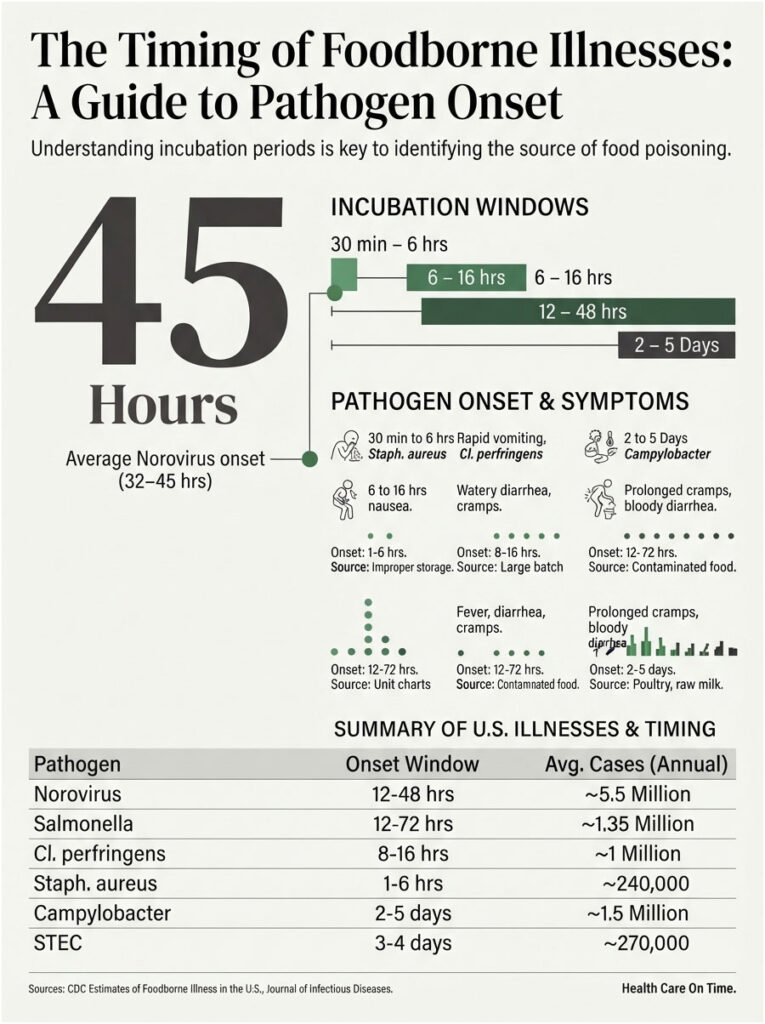
If you get only one piece of evidence, make it the clock. A CDC analysis of foodborne outbreaks from 1998 to 2013 grouped pathogens cleanly by how long they take to make people sick.
The 30-Minute to 6-Hour Window
This is toxin territory. Staphylococcus aureus and the vomiting form of Bacillus cereus do not need to multiply inside you. They already produced their toxin in food that sat too long at room temperature.
Symptoms arrive violently and vomiting leads. Think potato salad at a picnic, cream-filled pastries left on a counter, or fried rice held warm for hours before serving.
Recovery is usually fast. Most people are through it within 24 hours, though the dehydration risk during those hours is real.
The 6-to-16-Hour Window
Clostridium perfringens and the diarrheal form of B. cereus live here. Watery diarrhea and cramps dominate, vomiting is uncommon, and fever is usually absent.
Institutional food is the classic source: catering trays, buffet steam tables, large batches of gravy or stew cooled too slowly overnight.
C. perfringens alone accounts for an estimated 889,000 domestically acquired foodborne illnesses a year in the United States.
The 12-to-48-Hour Window
Norovirus lives here, and so do many Salmonella cases. The CDC outbreak analysis found norovirus, Salmonella, and Shigella clustering at median outbreak incubation periods of 32 to 45 hours.
This overlap is exactly why stool character and fever pattern still matter. Timing narrows the field; it rarely closes the case on its own.
The 2-to-5-Day Window
Campylobacter and STEC take the longest among common bacteria, with median outbreak incubation periods of 62 to 87 hours. By then most people have stopped suspecting food at all.
Undercooked poultry, unpasteurized milk, and contaminated water are the usual Campylobacter sources. Undercooked ground beef, raw sprouts, and pre-cut leafy greens carry STEC.
Hepatitis A stretches this further still, with a median incubation period measured in weeks rather than days. It is rare, but it explains why “I ate that a month ago” does not always rule food out.
The “Who Else Ate It” Test
This one question resolves a surprising share of cases. If three people who shared a meal are sick and nobody else in the household is, food is the likely vehicle.
If one person got sick, then a family member fell ill two days later, then another two days after that, you are watching person-to-person spread. That staircase pattern points to norovirus nearly every time.
Restaurants and cruise ships produce both patterns at once, which is why outbreak investigators rely on lab confirmation rather than symptom reports.
Table 2: Onset, Stool Pattern, and US Burden by Pathogen
| Pathogen | Typical or Median Onset | Stool Signature | Estimated US Illnesses per Year | Source |
| Norovirus | 12 to 48 hours (median 32 to 45 h in outbreaks) | High-volume watery, yellow or green, no blood | 19 to 21 million total; 5.5 million foodborne | CDC Norovirus Burden; CDC EID, April 2025 |
| Campylobacter spp. | 2 to 5 days (median 62 to 87 h) | Loose to bloody, mucus common, marked cramping | 1.9 million foodborne | CDC EID, April 2025 |
| Nontyphoidal Salmonella | 6 to 72 hours (median 32 to 45 h) | Loose, sometimes bloody, fever prominent | 1.3 million foodborne | CDC EID, April 2025 |
| Clostridium perfringens | 6 to 16 hours | Watery, no blood, little vomiting or fever | 889,000 foodborne | CDC EID, April 2025 |
| STEC (Shiga toxin E. coli) | 3 to 4 days | Severe cramps, visibly bloody, often no fever | 357,000 foodborne | CDC EID, April 2025 |
| Staphylococcus aureus toxin | 1 to 6 hours | Vomiting-dominant, diarrhea mild if present | Counted within unspecified-agent estimates | Washington State DOH foodborne agent chart |
| Invasive Listeria monocytogenes | Days to weeks | Diarrhea variable; systemic illness dominates | Small case count, high fatality rate | CDC EID, April 2025 |
The April 2025 Emerging Infectious Diseases analysis attributed roughly 9.9 million domestically acquired foodborne illnesses, 53,300 hospitalizations, and 931 deaths to six major pathogens plus Toxoplasma gondii, with norovirus leading illnesses at 5.5 million and Salmonella leading deaths at 238.
Strain composition shifts too. A CDC research letter from July 2025 documented norovirus GII.17 rising from under 10% of American outbreaks in the 2022 to 2023 season to 75% in 2024 to 2025, displacing the long-dominant GII.4 and pushing the season’s onset earlier.
Fever, Cramps, and the Rest of the Picture
Stool is the headline. Everything else is supporting evidence.
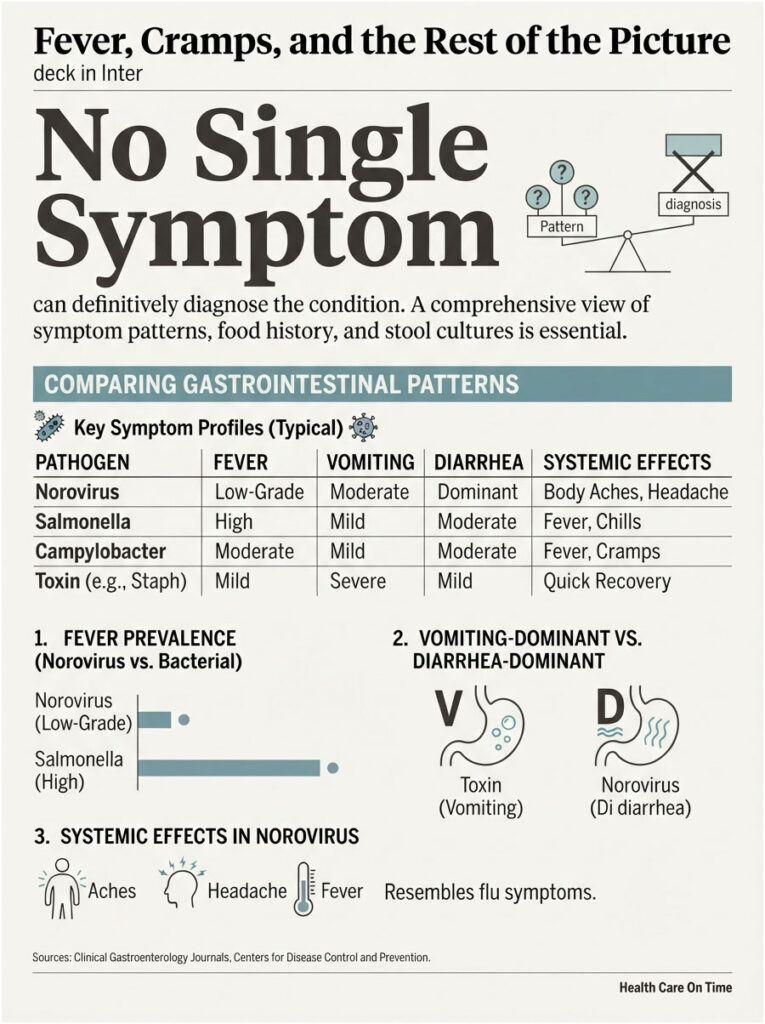
Why Fever Leans Viral But Is Not a Rule
Low-grade fever, chills, headache, and body aches show up more often with viral gastroenteritis. Clinicians at Cleveland Clinic describe systemic effects such as fever and chills as somewhat more typical of viral gastroenteritis, while noting the pattern does not hold across the board.
Salmonella and Campylobacter both produce genuine fevers, sometimes higher than norovirus does. STEC, oddly, often produces none at all despite causing the most alarming stool of the group.
Vomiting-Dominant Versus Diarrhea-Dominant
Northwestern Medicine notes that stomach flu tends to present with more nausea and vomiting but less diarrhea compared with food poisoning.
Projectile vomiting starting within a few hours of a meal, with little diarrhea, is the signature of preformed toxin. Vomiting alongside watery diarrhea a day or two after contact with a sick person points to norovirus.
Body Aches, Headache, and the Wrung-Out Feeling
Norovirus commonly brings muscle aches and a headache that people describe as feeling like the flu without the cough. That systemic quality is part of why the “stomach flu” nickname stuck.
Toxin-mediated food poisoning rarely does this. You feel wrecked while it is happening, then noticeably better a few hours later.
What None of These Signs Can Prove Alone
No single symptom is diagnostic. Keck Medicine of USC notes that food history provides clues and a stool culture can sometimes provide answers.
Our medical reviewers note that symptom overlap is the rule rather than the exception. The practical goal at home is not naming the pathogen. It is deciding whether you can safely ride this out.
When Stool Testing Is Actually Worth It
Most gut infections resolve without anyone identifying the cause. Testing every case would waste money and delay care for the people who need it.
The IDSA Criteria in Plain English
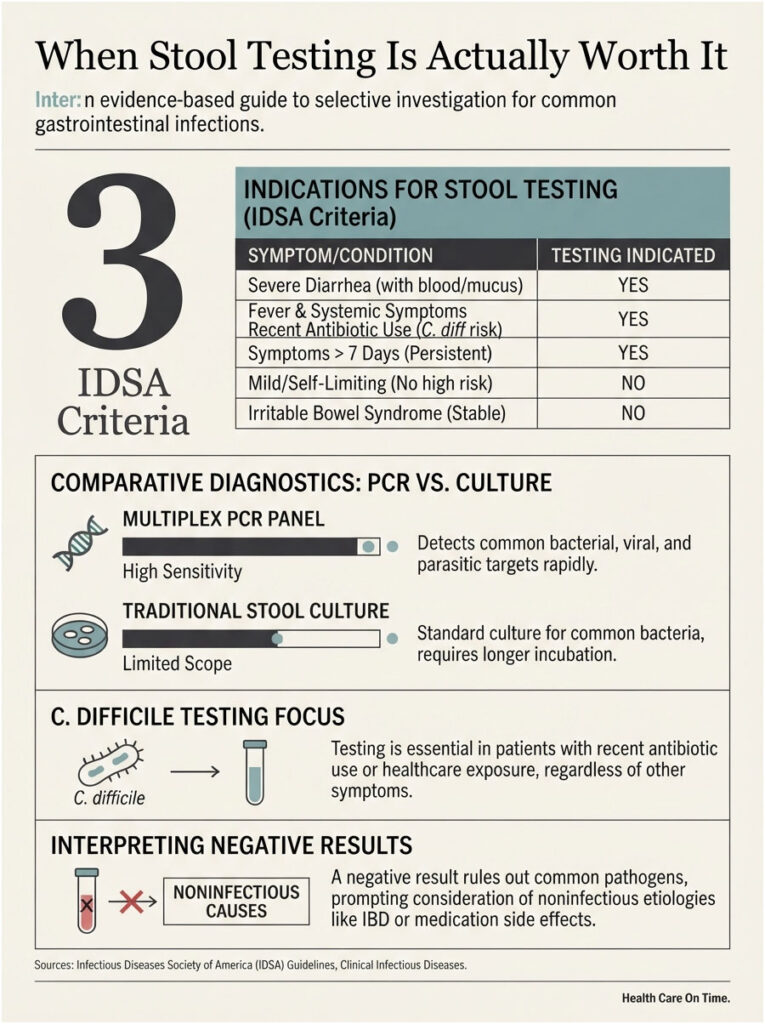
IDSA recommends stool testing for Salmonella, Shigella, Campylobacter, Yersinia, C. difficile, and STEC when diarrhea comes with fever, bloody or mucoid stools, severe abdominal cramping or tenderness, or signs of sepsis.
Immunocompromised patients get tested more readily. So do people with diarrhea beyond seven days, recent international travel, or exposure during a known outbreak.
The yield justifies the selectivity. Among American adults presenting to emergency departments with diarrhea who submitted a stool specimen, 17% had a bacterial enteric infection, and a bacterial cause was found in 5% to 11% of children in emergency and outpatient settings.
What a GI Pathogen PCR Panel Detects
Multiplex PCR panels screen one stool sample for a long list of bacteria, viruses, and parasites at once, usually returning results within a day rather than the several days culture requires.
They detect organisms older methods missed, which partly explains why current burden estimates run higher than the 2011 figures. Sensitivity has a downside: a panel can flag an organism you are carrying without it being the cause of today’s symptoms.
Stool Culture and Why It Still Matters
PCR tells you what is present. Culture grows the organism so the lab can determine species, serotype, and antibiotic susceptibility.
IDSA recommends culturing positive molecular results when public health reporting requires an isolate, or when susceptibility results would change treatment. Across the diagnostic network HealthCareOnTime works with, reflex culture after a positive panel is standard practice for reportable organisms.
C. difficile Testing and When It Applies
If you have had three or more unformed stools in 24 hours, are not taking laxatives, and used antibiotics in the past several weeks, C. difficile belongs in the conversation.
Hospital stays, nursing home residence, and proton pump inhibitor use all raise that suspicion further.
What a Negative Result Rules In
A negative panel is not a wasted test. It shifts attention toward noninfectious causes such as inflammatory bowel disease, medication side effects, bile acid malabsorption, or celiac disease.
That redirection matters most when diarrhea has run for weeks rather than days.
What to Expect When You Collect a Sample
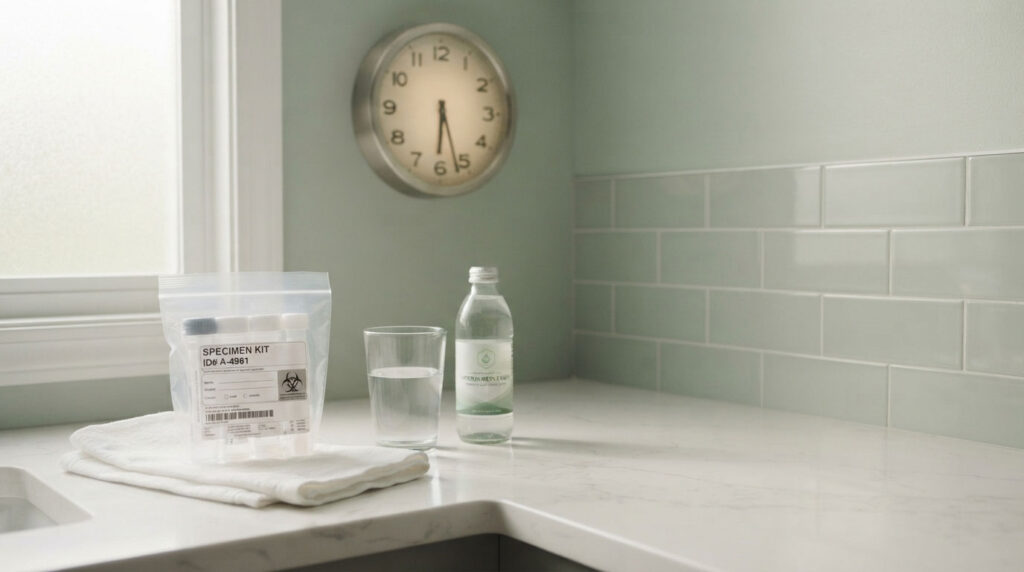
Most labs supply a container with preservative. Collect stool before it touches toilet water, using the provided scoop or a clean disposable container placed under the seat.
Do not collect from a diaper that has absorbed liquid, and do not mix in urine. Refrigerate unless the kit says otherwise, and return it within the window printed on the label, since delay reduces accuracy for some organisms.
Red Flags That Mean Stop Self-Treating
Everything above assumes you are basically stable. These findings change that.
Signs of Dehydration in Adults
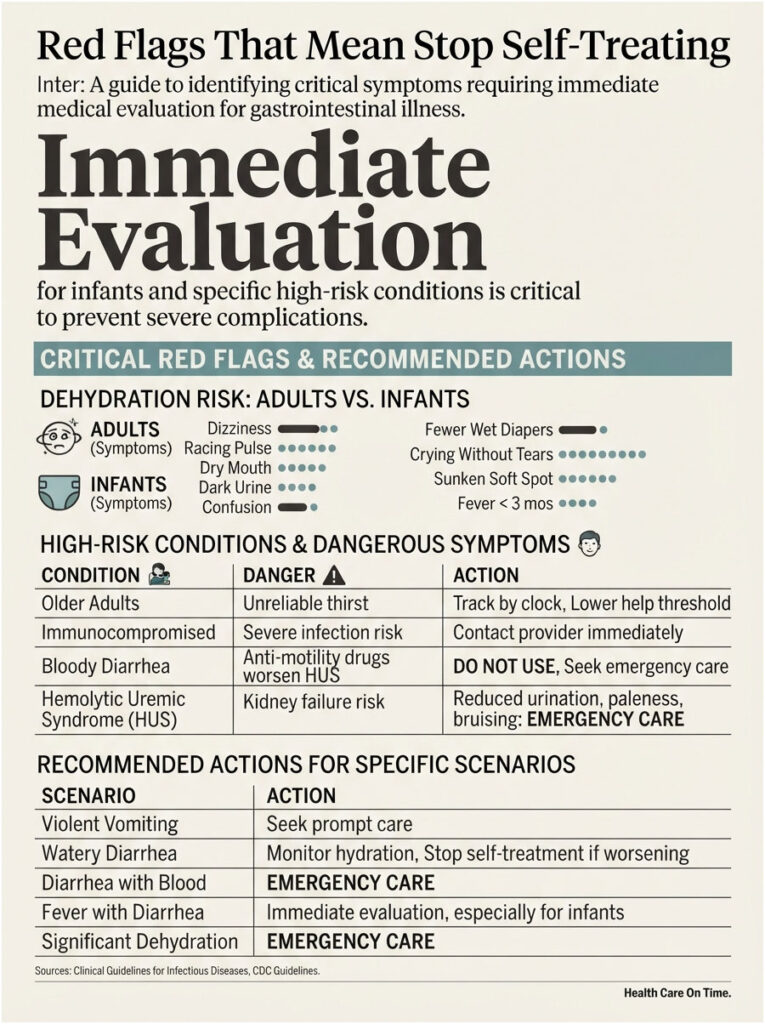
Watch for dizziness on standing, a racing pulse, dry mouth with no saliva, very dark urine, or no urination for eight hours. Confusion or unusual sleepiness is an emergency, not something to sleep off.
Older adults dehydrate faster and show fewer warning signs. Thirst becomes an unreliable indicator past roughly age 70, so track fluid intake by the clock instead.
Signs of Dehydration in Infants and Young Children
In babies, look for fewer than one wet diaper in eight hours, crying without tears, a sunken soft spot on the head, and unusual listlessness. Any fever in an infant under three months warrants immediate evaluation.
Children under 5 carry real risk. CDC figures indicate that by age 5, about 1 in 40 American children will visit an emergency department for norovirus and 1 in 160 will be hospitalized.
Offer oral rehydration solution in small amounts frequently, even a teaspoon every few minutes. Plain water and juice both work poorly for a dehydrated child, and juice can worsen diarrhea.
Older Adults and Immunocompromised Readers
Adults 65 and older account for the large majority of norovirus deaths in the United States. If you are in that group, or on chemotherapy, immunosuppressants, or dialysis, the threshold for calling a clinician should be far lower.
Chronic kidney disease, heart failure, and diuretic use all narrow the margin for fluid loss. A day of diarrhea that a healthy 30-year-old shrugs off can destabilize someone managing those conditions.
Bloody Diarrhea, HUS, and Anti-Diarrheals
When STEC is possible, anti-motility drugs like loperamide can make things worse by holding toxin in the colon longer. Antibiotics given for STEC may also raise the risk of hemolytic uremic syndrome.
Warning signs of HUS usually appear five to ten days after diarrhea starts: greatly reduced urination, unusual paleness, easy bruising, and profound fatigue. That combination is an emergency department visit, not a next-day appointment.
Table 3: What to Do Based on Your Situation
| Scenario | Most Likely Cause | Recommended Action | Timeframe |
| Violent vomiting within 4 hours of a shared meal, little diarrhea | Preformed bacterial toxin | Rest, small sips of oral rehydration solution, no anti-emetics without advice | Expect improvement within 24 hours |
| Watery yellow diarrhea 24 to 48 hours after contact with a sick person | Norovirus | Home care, isolate from household, disinfect with bleach solution | Reassess at 72 hours |
| Diarrhea with visible blood, at any age | STEC, Shigella, or Campylobacter | Contact a clinician, request stool testing, avoid loperamide | Same day |
| Fever above 102 degrees F with diarrhea | Invasive bacterial infection | Urgent care or clinician visit, stool testing indicated | Within 12 hours |
| No urination for 8 hours, dizziness on standing | Significant dehydration | Urgent care or emergency department for IV fluids | Immediately |
| Symptoms still present on day 5 | Bacterial or parasitic infection | Clinician visit, stool panel plus ova and parasite exam | Within 24 hours |
| Infant under 3 months with fever or diarrhea | Any cause | Pediatric emergency evaluation | Immediately |
| Diarrhea starting within 8 weeks of antibiotics | C. difficile | Clinician visit, request C. difficile testing | Within 24 to 48 hours |
| Greasy floating stool 1 to 2 weeks after untreated water exposure | Giardia | Clinician visit, request stool parasite testing | Within a few days |
Home Care That Actually Helps
For most cases, treatment is the same regardless of cause. Replace fluid, rest the gut, wait it out.
Rehydration, and Why Sipping Beats Chugging
A large glass of water on an irritated stomach usually comes straight back up. Small sips every few minutes, or ice chips, stay down far better.
Oral rehydration solutions such as Pedialyte use the sodium-to-glucose ratio that maximizes fluid absorption across an inflamed intestine. Sports drinks carry too much sugar and too little sodium for heavy diarrhea, though they beat drinking nothing.
Clear broth adds sodium that plain water lacks. Losing salt without replacing it is what turns fatigue into dizziness.
What to Eat and When
Once you can hold liquids for a few hours, add bland starches. Bananas, rice, applesauce, and toast are gentle on the gut.
Current guidance favors returning to a normal diet sooner rather than living on the BRAT diet for days, since prolonged restriction slows recovery of the intestinal lining.
Skip alcohol, caffeine, very fatty food, and large amounts of dairy for the first several days. Many people are temporarily lactose intolerant after a gut infection.
Medications: What Is Safe, What Is Not
Loperamide can reduce watery diarrhea in adults with no fever and no blood in the stool. Bismuth subsalicylate is another option, though not for children or teenagers because of Reye syndrome risk.
Acetaminophen is generally preferred over ibuprofen for fever and aches during a gut illness, since NSAIDs irritate an already inflamed stomach lining. Anyone with kidney or liver disease should check with a clinician first.
When Loperamide Is a Bad Idea
Do not use it with bloody diarrhea, a high fever, or suspected C. difficile. Slowing the gut in those situations keeps the harmful agent against the intestinal lining longer.
Cleaning Up So the Household Does Not Fall Next
Norovirus resists alcohol-based hand sanitizer. Soap and water for a full 20 seconds is what works, especially after using the bathroom and before handling food.
Disinfect hard surfaces with a diluted household bleach solution, since many common cleaners leave the virus intact. Wash contaminated laundry on the longest hot cycle and machine dry.
Lab partners in our network report household clusters climbing sharply every winter, and shared bathrooms are almost always the link. Assign the sick person one bathroom if the home has two.
Recovery and the Weeks After
The illness ends before your digestion does. That gap catches people off guard.
When Stool Returns to Normal
Expect loose stool for several days after nausea and cramping resolve. A gradual climb from Type 7 toward Type 4 on the Bristol scale over four to seven days is the normal trajectory.
Still fully liquid at day 10, or stool turning pale and greasy, is a reason to be evaluated rather than a reason to keep waiting.
Temporary Lactose Intolerance
Infection can strip the enzyme-producing cells at the tips of intestinal villi. Until they regenerate, milk causes bloating, gas, and a return of loose stool.
This usually resolves in two to four weeks. Yogurt and hard cheese are often tolerated when a glass of milk is not.
Post-Infectious IBS
A minority of people develop lasting bowel changes after acute gastroenteritis, with abdominal pain and altered stool habits running for months. Risk rises with more severe initial illness and with bacterial rather than viral causes.
Patients commonly ask HealthCareOnTime whether this means permanent damage. In most cases it does not, though persistent symptoms deserve proper evaluation instead of indefinite self-management.
How Long You Stay Contagious
Norovirus shedding continues after you feel better, sometimes for two weeks or longer. Peak infectivity spans the symptomatic period and the 48 hours after.
Stay home from work and school for at least 48 hours after vomiting and diarrhea stop. Food handlers, healthcare workers, and childcare staff face stricter rules in most states, and those rules exist because this virus needs almost no help to spread.
Preventing the Next Round
Handwashing Versus Hand Sanitizer
Against norovirus, sanitizer is a weak substitute. Wash with soap and running water for 20 seconds, scrubbing under the nails and between the fingers.
Keep sanitizer as a backup for situations where a sink is not available, not as your primary defense during an outbreak.
Kitchen Temperature Rules
Cook poultry to an internal 165 degrees F, ground beef to 160 degrees F, and whole cuts of beef or pork to 145 degrees F with a three-minute rest. Verify with a thermometer rather than by color.
Keep the refrigerator at or below 40 degrees F and the freezer at 0 degrees F. Follow the two-hour rule: perishable food left out longer goes in the trash, and that window shrinks to one hour above 90 degrees F.
Cool large batches of soup or stew in shallow pans rather than a single deep pot. Slow cooling in the danger zone is what lets C. perfringens multiply.
High-Risk Foods
Raw oysters, undercooked poultry, unpasteurized milk and soft cheese, raw sprouts, and pre-cut leafy greens account for a disproportionate share of American outbreaks.
Pregnant readers, adults over 65, and anyone immunocompromised should treat those categories with extra caution. Listeria in particular grows at refrigerator temperatures, which is why deli meats and soft cheeses carry warnings.
Where to Check Recalls and Outbreaks
Active recalls are posted by the FDA and the USDA Food Safety and Inspection Service. Ongoing surveillance data is published through CDC FoodNet and the NoroSTAT network.
Checking these before assuming your symptoms are random is worth two minutes, particularly if several people in your area report the same thing.
Frequently Asked Questions
What does stomach flu poop look like?
Usually large-volume, entirely liquid stool that appears yellow, green, or pale, with no visible blood. It starts 12 to 48 hours after exposure and often arrives with vomiting. Most people have four to eight episodes a day for one to three days before improvement begins.
What color is diarrhea with food poisoning?
Color varies too much to be diagnostic. Bacterial infections often produce brown or green stool, sometimes with mucus or blood mixed through. Yellow or green usually just reflects fast transit, since bile has not had time to change color. Blood or black tarry stool is the finding that matters.
How soon after eating does food poisoning start?
It depends on the agent. Preformed toxins from Staphylococcus aureus or Bacillus cereus hit within 30 minutes to 6 hours. Clostridium perfringens takes 6 to 16 hours, Salmonella 6 to 72 hours, and Campylobacter or STEC 2 to 5 days after the contaminated meal.
Does food poisoning cause a fever?
Sometimes. Salmonella, Campylobacter, and Shigella commonly produce fever. Toxin-mediated illness from Staph aureus usually does not, and STEC frequently causes none despite severe bloody diarrhea. Fever leans slightly toward viral gastroenteritis overall, but it cannot separate the two on its own.
Can food poisoning cause mucus in your stool?
Yes. Visible mucus signals inflammation of the intestinal lining and appears more often with invasive bacteria such as Shigella, Campylobacter, and Salmonella than with norovirus. Occasional strands are not an emergency, but persistent mucus, especially with fever or blood, is a reason to request stool testing.
Why does my stool smell so bad after being sick?
Rapid transit means food and bile leave before normal bacterial processing finishes, and inflamed intestines produce extra sulfur compounds. A strongly sulfurous smell paired with greasy, floating stool one to two weeks after untreated water exposure raises suspicion for Giardia and deserves testing.
How long does diarrhea last with stomach flu?
Norovirus symptoms typically run one to three days in healthy adults, with fatigue lingering a few days longer. Loose stool often continues briefly after cramping stops. Diarrhea past day four points toward a bacterial or parasitic cause and is worth discussing with a clinician.
Is yellow, floating stool after a stomach bug normal?
Short-term yellow stool is common and reflects fast transit. Persistent floating, greasy stool that leaves an oily film suggests fat is not being absorbed. When that lasts beyond a week or two, testing for Giardia and evaluation for temporary lactase deficiency both make sense.
When should I get a stool test for diarrhea?
IDSA guidance recommends testing when diarrhea comes with fever, bloody or mucoid stool, severe abdominal cramping or tenderness, or signs of sepsis. Testing is also warranted for immunocompromised patients, illness beyond seven days, recent travel to endemic regions, and outbreak investigations.
How long am I contagious after the stomach flu?
You are most infectious while symptomatic and for the first 48 hours afterward, though norovirus shedding can continue for two weeks or longer. Stay home from work or school for at least 48 hours after symptoms stop, and longer if you handle food professionally.
Can I take Imodium for food poisoning?
Loperamide is reasonable for adults with watery diarrhea, no fever, and no blood in the stool. Avoid it entirely with bloody diarrhea, high fever, or suspected C. difficile, since slowing the gut keeps toxins against the intestinal lining longer and can worsen the illness.
Can stomach flu and food poisoning happen at the same time?
Yes, and it is more common than people assume. Norovirus spreads both person to person and through contaminated food, so a single outbreak can involve both routes. A household can also face two separate exposures in the same week, which is why symptoms sometimes seem to restart.
Medical Disclaimer: This article provides general health information and does not replace evaluation by a licensed clinician. Diagnosis of gastrointestinal infection requires clinical assessment and, when indicated, laboratory testing. Contact a healthcare provider for bloody stool, high fever, signs of dehydration, or symptoms lasting beyond a few days, and seek emergency care for reduced urination, confusion, or severe abdominal pain.
References
- CDC, Norovirus Burden and Trends
- CDC, Estimates: Burden of Foodborne Illness in the United States
- CDC Emerging Infectious Diseases, Foodborne Illness Acquired in the United States, Major Pathogens, 2019 (April 2025)
- CDC Emerging Infectious Diseases, Increasing Predominance of Norovirus GII.17 over GII.4, United States, 2022 to 2025 (July 2025)
- CDC, Incubation Periods of Enteric Illnesses in Foodborne Outbreaks, United States, 1998 to 2013
- CDC FoodNet, Preliminary Surveillance Data
- CDC, NoroSTAT Outbreak Data
- Infectious Diseases Society of America, Clinical Practice Guidelines for the Diagnosis and Management of Infectious Diarrhea
- American Family Physician, IDSA Guideline Summary on Infectious Diarrhea
- Cleveland Clinic, Do I Have the Stomach Flu or Food Poisoning?
- Northwestern Medicine, Stomach Flu, Food Poisoning or Influenza: Which One Do You Have?
- Keck Medicine of USC, Is It the Stomach Flu or Food Poisoning?
- Banner Health, The Difference: Stomach Flu vs. Food Poisoning
- Washington State Department of Health, Common Agents Causing Foodborne Illness, Grouped by Symptoms
- NIH National Library of Medicine, Norovirus Disease in the United States