
Silent reflux, or laryngopharyngeal reflux (LPR), happens when stomach contents rise high enough to reach your throat and voice box, usually without the chest burn people expect from acid reflux. Most people notice it as a voice that won’t stay clear, a throat they keep clearing, or a cough that lingers for months.
Table of Contents
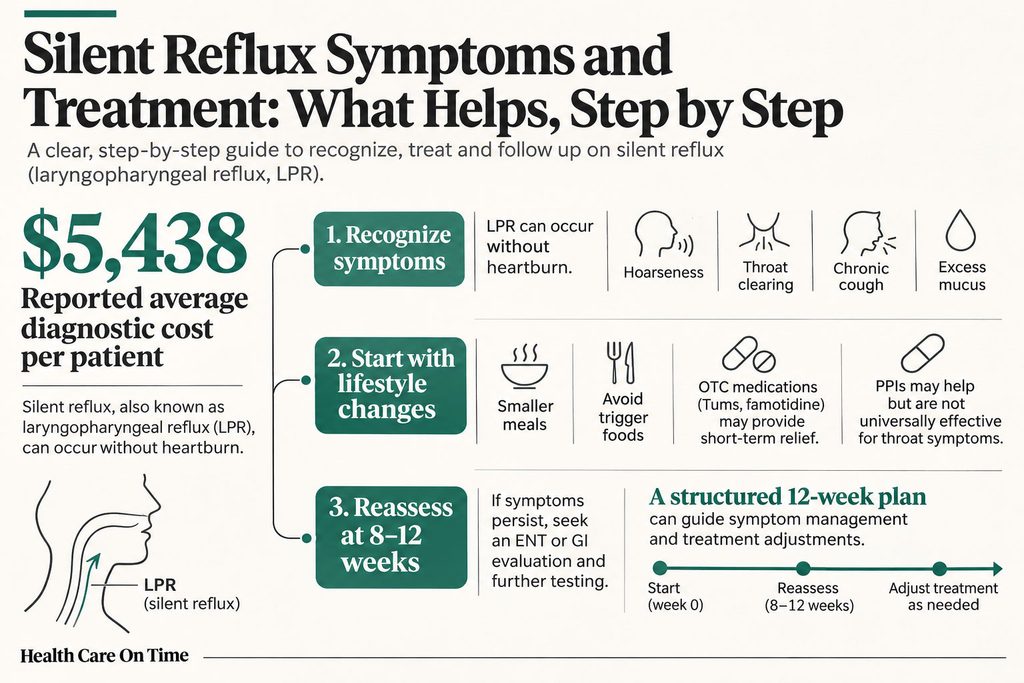
Quick answer: Silent reflux symptoms are mostly throat and voice problems: hoarseness, frequent throat clearing, excess mucus, a lump feeling, chronic cough and a sore throat, often with no heartburn. Treatment starts with smaller meals, no food for 2 to 3 hours before lying down, and cutting trigger foods. Tums, Gaviscon and famotidine can ease symptoms for a short time. PPIs such as omeprazole help some people, but throat-only symptoms deserve an ENT exam or reflux testing first.
Why silent reflux skips the heartburn
There is a valve at each end of your esophagus. The lower esophageal sphincter keeps stomach contents in the stomach, and the upper one, just below the throat, is the last barrier before the voice box. With laryngopharyngeal reflux, both let material slip past, so acid and digestive enzymes such as pepsin land on tissue that has very little protection against them.
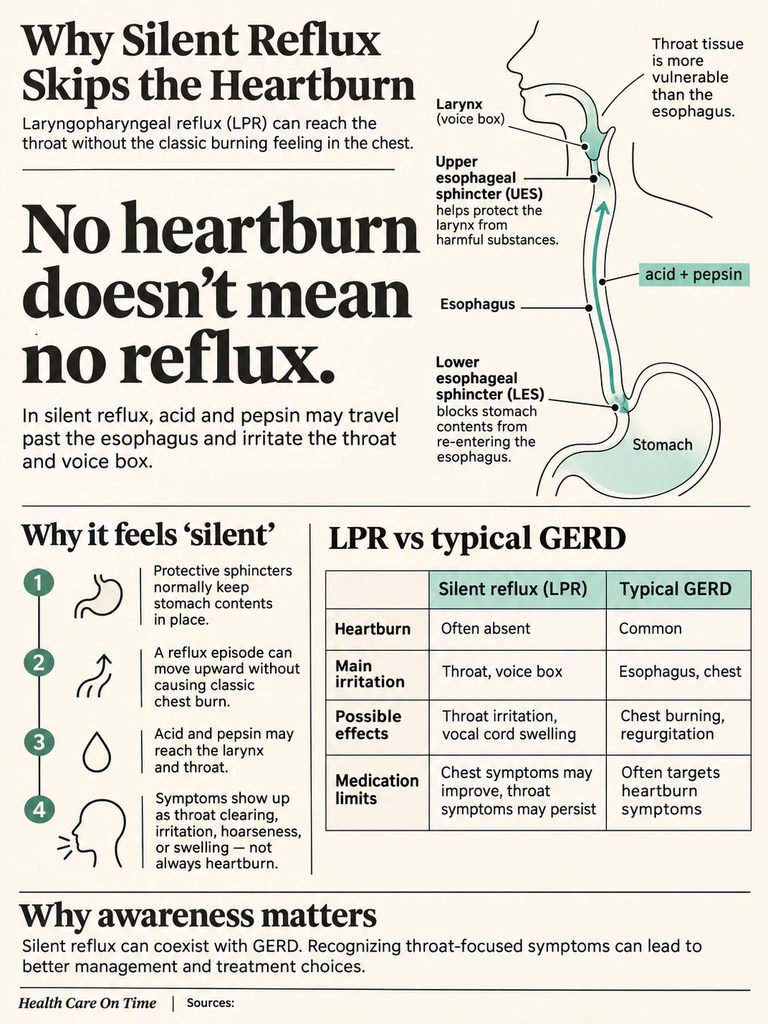
The lower esophagus can put up with some acid. The larynx handles it poorly, and so a few brief reflux episodes, too small to cause heartburn, can still leave the vocal cords swollen and the throat coated in thick mucus.
The word “silent” refers only to the missing chest burn, and doctors also call the condition extraesophageal reflux. Many people have LPR and GERD, the heartburn-driven form of reflux, at the same time, which is one reason heartburn medicine can settle the chest and still leave the voice rough.
Silent reflux symptoms
Throat and voice changes lead the list. The symptoms that come up most often include:
- Hoarseness, or a voice that sounds lower or rougher than it used to
- A lump feeling, as if something is stuck in your throat
- Frequent throat clearing
- Chronic cough
- Excess mucus or phlegm that seems to sit at the back of the throat
- Trouble swallowing
- Throat pain, such as a chronic sore throat or repeated laryngitis
- Postnasal drip
- Wheezing, frequent upper respiratory infections, or asthma that is new or getting worse
- A sour or bitter taste in the mouth
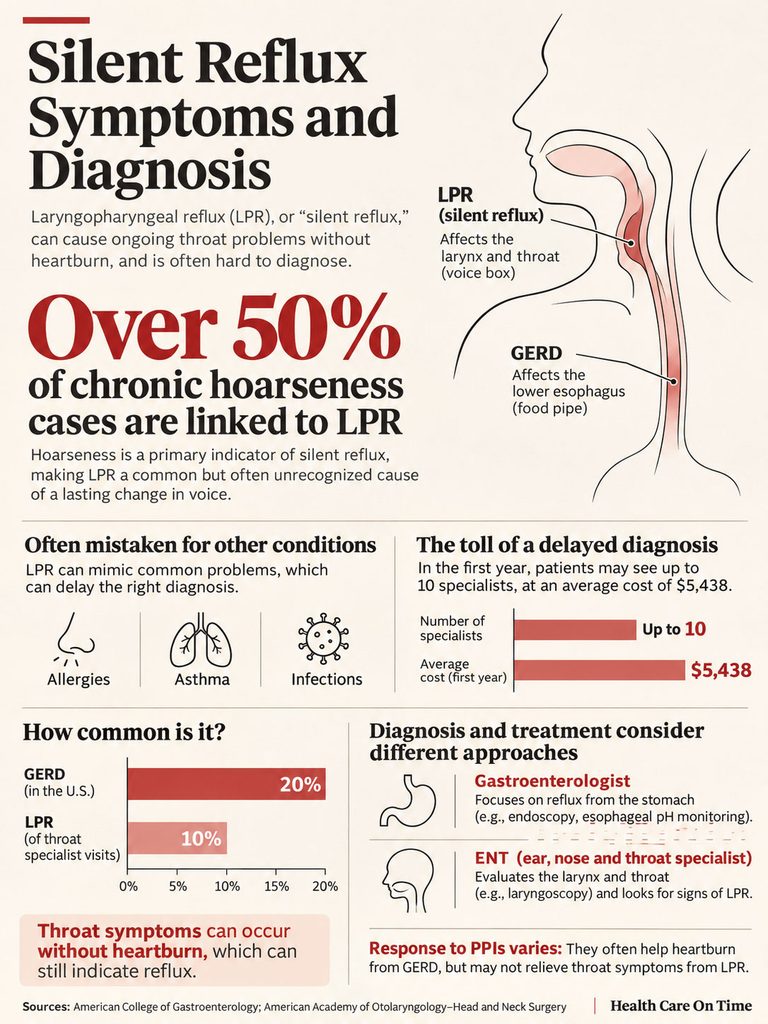
Hoarseness is the most telling. More than half of people with chronic hoarseness are estimated to have LPR, and about 10% of people who see a throat specialist leave with that diagnosis. Among 113 patients with voice or laryngeal disorders who had 24-hour pH monitoring, 50% turned out to have it.
Say you eat dinner at 9 p.m. and go to bed an hour later. Lying flat that soon after a meal lets the upper valve open more easily, and by morning your voice is rough and your throat is full of phlegm that takes a while to clear.
Why the diagnosis is so often missed, or wrongly made
Allergies, postnasal drip, smoking, voice overuse, asthma, medication side effects and infections can all produce a hoarse voice, a nagging cough or phlegm that sticks in your throat. People with LPR therefore tend to move from one doctor to the next, and one estimate puts the first year at about 10 specialist visits and 6 tests, costing about $5,438 per patient.
The reverse problem is just as real. Up to 50% to 60% of people whose symptoms are only in the throat show no measurable reflux when tested, which is why the American College of Gastroenterology (ACG) strongly recommends ruling out other causes before blaming the stomach.
| Feature | GERD | Silent reflux (LPR) | What it means for you |
| Main symptoms | Heartburn, regurgitation, chest discomfort | Hoarseness, throat clearing, lump feeling, chronic cough, excess mucus | Throat symptoms without heartburn still count as possible reflux |
| Where the damage happens | Lower esophagus, in the chest | Voice box (larynx) and throat (pharynx) | The throat has far less protection, so small amounts can cause symptoms |
| Valve involved | Lower esophageal sphincter | Lower and upper esophageal sphincters | Upper-valve triggers (lying down, bending, singing) matter more in LPR |
| Doctor who usually diagnoses it | Primary care or gastroenterologist | Ear, nose and throat doctor (ENT) | An ENT can look at your vocal cords with a small camera |
| First test when symptoms persist | Upper endoscopy if alarm symptoms; reflux monitoring if unclear | Flexible laryngoscopy, then pH-impedance testing off acid blockers | ACG advises against diagnosing LPR from laryngoscopy alone |
| Response to PPIs | Usually good for heartburn | Mixed; two large placebo-controlled trials found no clear benefit | A PPI that doesn’t help your throat doesn’t rule reflux in or out |
| How common | About 20% of people in the US have GERD (NIDDK) | About 10% of throat specialist visits end in an LPR diagnosis | GERD is far more common, and you can have both |
What makes silent reflux worse?
Coffee, chocolate, alcohol, mint, garlic and onions can relax the lower valve for a few hours, and so can large meals, tight belts and lying down soon after eating. Several common medicines have a similar effect:
benzodiazepines, calcium channel blockers, tricyclic antidepressants, NSAIDs such as ibuprofen, theophylline and menopausal hormone therapy. Don’t stop a prescribed drug on your own, but ask your doctor or pharmacist whether one of yours could be adding to the problem. A pharmacist can check quickly.
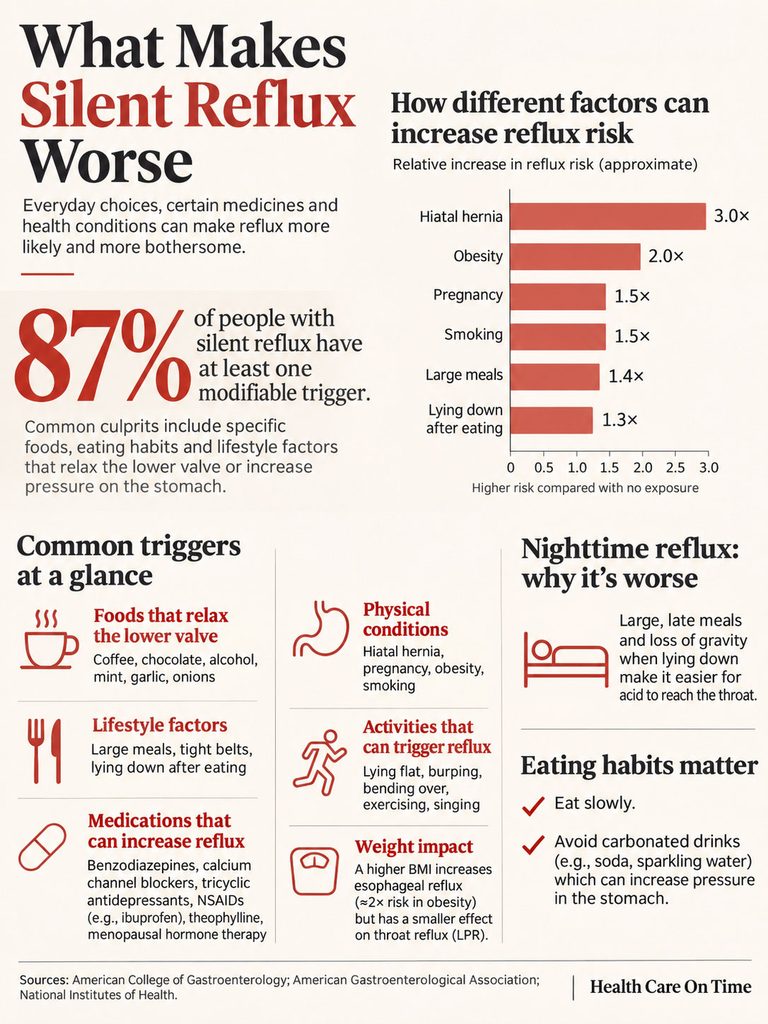
A hiatal hernia, pregnancy, obesity and smoking weaken the valve over a longer stretch.
Lying flat, burping, bending over, exercising and singing can each let the upper valve open, and smoking and alcohol affect both valves. That helps explain why people who sing a lot, or exercise right after eating, can have more trouble with LPR than their diet alone would predict.
Weight seems to matter less for the throat than for heartburn. In one study, reflux events in the esophagus rose with BMI while reflux events reaching the throat did not. Losing weight is still strongly recommended for people with reflux who are overweight, and the payoff may simply show up more in the chest than in the voice.
Why nights are often worse
A large, late meal is the usual culprit, since the stomach is full at exactly the moment you lie down and lose the help of gravity. Keeping notes for a few weeks often shows the pattern clearly: the mornings after a late, heavy dinner or a couple of drinks are the mornings with the roughest voice. Burping can also open the upper valve, so eating slowly and skipping carbonated drinks matter more for silent reflux than they do for ordinary heartburn.
How do doctors confirm silent reflux?
No single test settles it. Doctors piece the answer together from your symptoms, a look at your larynx and, when needed, reflux monitoring.
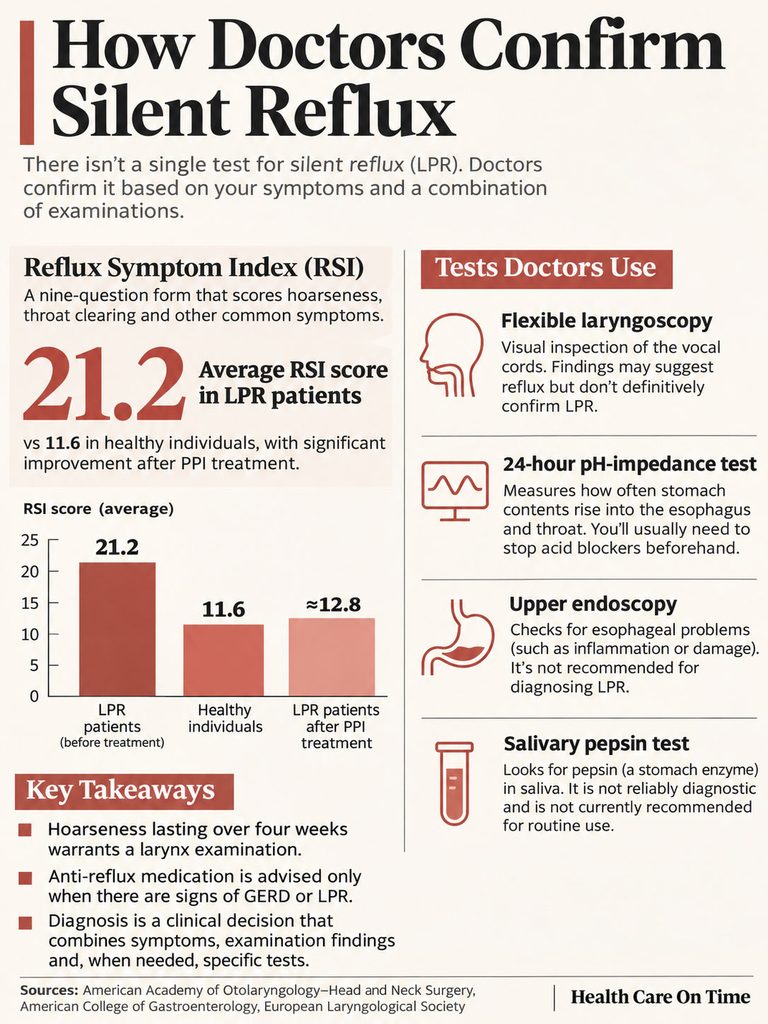
Your ENT may hand you the Reflux Symptom Index (RSI) first, a nine-question form that asks you to rate hoarseness, throat clearing, mucus, swallowing trouble, cough, breathing problems, the lump feeling and heartburn. When the form was first tested in 2002, people with LPR averaged 21.2, people without symptoms averaged 11.6, and the LPR group dropped to 12.8 after six months of twice-daily PPI treatment. Research trials often enroll people who score above 10 or above 13.
During flexible laryngoscopy, a thin lighted camera goes through your nose so the doctor can see your vocal cords and the back of the voice box. Swelling, redness and thick mucus there support the diagnosis, but healthy people can have the same findings, so the camera view alone isn’t enough to call it LPR.
If the picture is still unclear or treatment has failed, a 24-hour pH-impedance test measures how often stomach contents rise and how high they reach, and you usually stop acid blockers beforehand so the results show your natural pattern. Upper endoscopy has a different job: checking the esophagus when there are warning signs like trouble swallowing, weight loss or bleeding, and it isn’t recommended for diagnosing LPR itself. Salivary pepsin tests are available, yet they don’t reliably separate people with throat symptoms from healthy controls, so they aren’t recommended yet.
For hoarseness with no other symptoms, the 2018 hoarseness guideline from the American Academy of Otolaryngology–Head and Neck Surgery Foundation advises against anti-reflux medicine unless there are signs of GERD or LPR, and calls for a look at the larynx if hoarseness lasts longer than four weeks.
The silent reflux treatment ladder
Cheaper, safer steps come first, and stronger medicines or procedures come later. Many people never need to go past the first two rows.
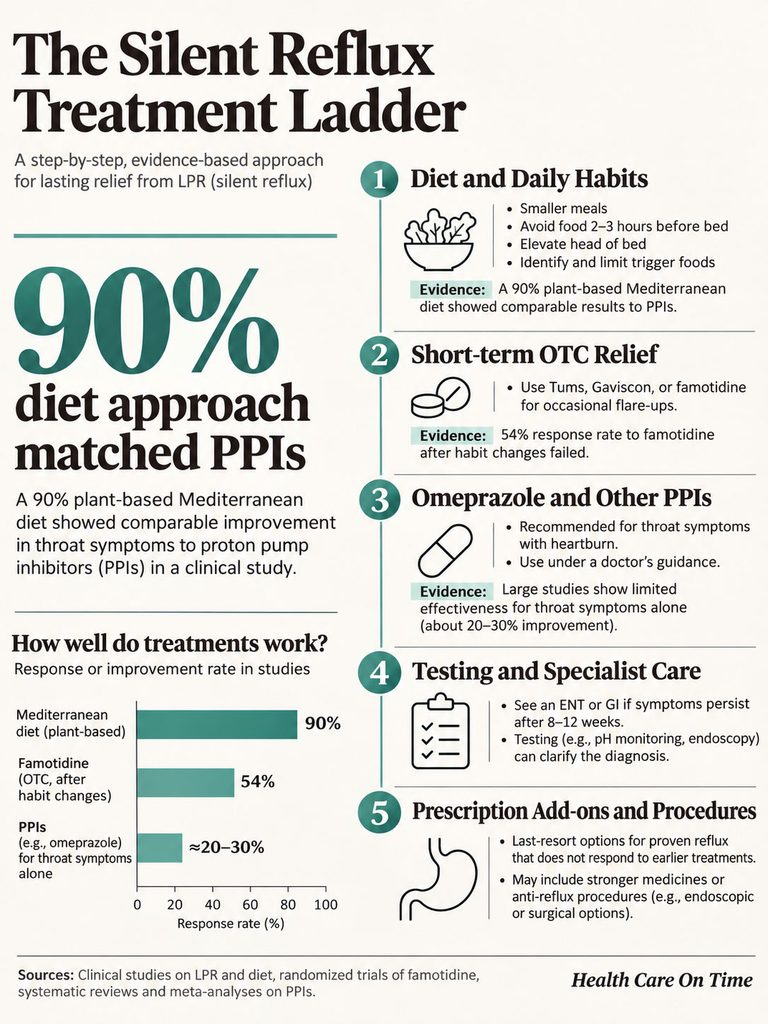
| Step | Who it fits | What to do, within US labels | What the evidence shows |
| 1. Diet and daily habits | Everyone with suspected silent reflux | Smaller meals, no food 2 to 3 hours before bed, raise the head of the bed 6 to 8 inches, cut trigger foods and drinks, stop smoking | A 90% plant-based Mediterranean diet with alkaline water matched PPIs in one 184-patient study (62.6% vs 54.1% improved) |
| 2. Short-term OTC relief | Occasional flares, or while habits change | Tums: 2 to 4 tablets as needed, no more than 15 in 24 hours; Gaviscon liquid after meals and at bedtime; famotidine 20 mg, no more than 2 tablets in 24 hours | In one stepwise study, 54% of people who failed habit changes alone responded to famotidine 20 mg at night |
| 3. Omeprazole or another PPI | Throat symptoms plus heartburn or regurgitation, or as a doctor directs | Prilosec OTC: 1 tablet before breakfast for 14 days, repeat no more often than every 4 months; longer or twice-daily use only under a doctor’s care | Two large placebo-controlled trials found no clear advantage over placebo for throat symptoms; some people still respond |
| 4. Testing and specialist care | Symptoms after 8 to 12 weeks, hoarseness past 4 weeks, or any red flag | Laryngoscopy, pH-impedance testing off acid blockers, review of other causes | Testing separates true reflux from look-alike conditions before stronger treatment |
| 5. Prescription add-ons and procedures | Proven reflux that doesn’t respond | Baclofen, an external upper-sphincter compression device, or fundoplication | Baclofen plus a PPI helped 53% of 32 patients; fundoplication helped 59% of 27 PPI-resistant patients at least partly |
Step 1: diet and daily habits
For LPR, habit changes are part of the main treatment, and in some studies they did about as well as medicine. Combining them with any medicine you take gives you the best odds.
Five or six smaller meals work better than three big ones, with dinner finished at least 2 to 3 hours before bed. Raise the head of the bed 6 to 8 inches, using a foam wedge or extra pillows, if your symptoms are worse at night. Sleeping on your left side, wearing looser waistbands and drinking fewer carbonated drinks (which make you burp) each help a little.
Common trigger foods include citrus, tomatoes, alcohol, chocolate, caffeine, high-fat foods, mint and spicy dishes. Not all of them will bother you. A food diary kept for a few weeks usually shows which ones do.
In a large study of nurses, coffee, tea and soda were each tied to more frequent reflux symptoms, decaf coffee looked about the same as regular, and swapping two servings a day for plain water went along with a small drop in risk. Milk, water and juice showed no link. The study included only women and tracked heartburn-type symptoms rather than throat symptoms, so how well it applies to the throat is uncertain.
Zalvan and colleagues looked back at 85 patients treated with a PPI plus standard reflux precautions and 99 patients who instead switched to alkaline water (pH above 8.0), a 90% plant-based Mediterranean-style diet and the same precautions. After 6 weeks, 62.6% of the diet group and 54.1% of the PPI group had at least a 6-point drop in their RSI, a gap too small to be statistically significant, while the average percent drop was larger with diet, 39.8% versus 27.2%. The groups were treated in different years and the data came from charts, so the study can’t show that diet is better, only that a food-based plan held up well against medicine in these patients.
Smaller studies agree. A strict low-acid diet, with every food at a pH of 5 or higher, helped 20 people whose LPR hadn’t improved on PPIs; patients on pantoprazole did better when they also followed diet and lifestyle advice; and a strict two-week starter diet plus lifestyle changes improved symptoms within about a month, while a comparison group hadn’t improved after roughly twice as long.
While your throat heals, try a sip of water instead of clearing it, because each hard clear irritates the vocal cords again. Drink enough fluids, go easy on caffeine and menthol cough drops, and avoid long stretches of shouting or whispering, both of which strain the cords. If your job means talking for hours, short voice breaks help. So does a water bottle within reach.
Step 2: short-term over-the-counter relief
Antacids and acid reducers can take the edge off a flare while your habits change. None of them heals the throat, and each US label caps how long you should use it before talking to a doctor.
Tums (calcium carbonate) acts quickly but briefly. A Regular Strength tablet holds 500 mg of calcium carbonate, which is 200 mg of elemental calcium, and adults and children 12 and older can chew 2 to 4 tablets as symptoms come on, up to 15 in 24 hours (10 if pregnant). Using the top dose for more than 2 weeks, or treating symptoms that last longer than 2 weeks, needs a doctor’s input. Because an antacid only neutralizes acid already in the stomach and does nothing for either valve, it fits an occasional bad evening better than daily hoarseness.
Alginates work differently. They form a foam raft on top of stomach contents that can block reflux after meals, which is why they’re popular for LPR. In the US, check the box. The US Gaviscon liquid lists aluminum hydroxide and magnesium carbonate as its active ingredients and sodium alginate as an inactive one, which makes it a different product from the alginate-based Gaviscon Advance used in several European studies. Regular Strength is taken as 1 to 2 tablespoonfuls four times a day after meals and at bedtime, up to 8 in 24 hours, and Extra Strength as 2 to 4 teaspoonfuls four times a day, up to 16 teaspoonfuls in 24 hours. Shake the bottle well first. If you have kidney disease or are on a sodium- or magnesium-restricted diet, ask a doctor first. Even the alginate research doesn’t give a clean answer: one randomized trial beat no treatment at 2, 4 and 6 months but had no placebo group, and a double-blind 8-week trial found liquid alginate no better than placebo because both groups improved.
Famotidine (Pepcid AC and store brands) is an H2 blocker that cuts how much acid the stomach makes. Its FDA-approved label allows one 20 mg tablet to relieve symptoms, or one tablet 10 to 60 minutes before a meal or drink that triggers heartburn, with no more than 2 tablets in 24 hours and no more than 14 days without asking a doctor. In one stepwise study, 93 of 182 patients (51%) got better with standard precautions alone, and of the 89 who didn’t, 48 (54%) responded to famotidine 20 mg at night. Doctors also add a bedtime dose for breakthrough symptoms in people already taking a PPI.
Step 3: omeprazole and other PPIs
Proton pump inhibitors lower stomach acid more effectively than H2 blockers. You can buy omeprazole over the counter as Prilosec OTC or a store brand, and lansoprazole and pantoprazole show up in the LPR research.
Over-the-counter omeprazole is labeled for frequent heartburn, with no mention of throat symptoms. Adults 18 and older take 1 tablet with water before eating in the morning, every day for 14 days, and full effect can take 1 to 4 days. Some people feel better within 24 hours. A new 14-day course is allowed every 4 months, and more often only if a doctor directs. If you’ve had heartburn for more than 3 months, wheeze often or have lost weight without trying, the label asks you to check with a doctor before starting.
Why doesn’t omeprazole fix every hoarse voice? In a trial of lansoprazole 30 mg twice daily for 16 weeks, throat symptom scores improved no more than they did on placebo, and the result held at 12 months. The larger TOPPITS trial came out the same way at 16 weeks and at 12 months. Results like these led the authors of a 2021 treatment review to stop recommending a quick PPI trial as an automatic first step for throat symptoms.
Whether you also have classic reflux decides the next move. With heartburn or regurgitation on top of throat symptoms, a twice-daily PPI for 8 to 12 weeks is a sensible trial before more testing. With throat symptoms and nothing else, the guideline strongly recommends reflux testing before any PPI, since many of these patients don’t have reflux. In both cases a PPI works best taken 30 to 60 minutes before a meal, not at bedtime.
Short courses of a PPI are generally safe. Long-term use is less settled. Research suggests a possible higher chance of C. difficile infection, and the effects of long-term or high-dose use are still being studied, so staying on one for the long haul is a choice to make with your doctor. When a PPI hasn’t helped your throat after a full trial, doubling the dose on your own is the wrong next step. The cause may not be reflux at all, or something other than acid may be irritating the throat. Alginates are one option doctors turn to then. They sit on top of stomach contents as a physical barrier instead of lowering acid, and in LPR they’re meant to keep digestive enzymes away from the throat as well.
Step 4: testing and specialist care
If you’ve given habits and medicine 8 to 12 weeks of honest effort and your throat isn’t better, or your voice has been hoarse for more than four weeks, an ENT or GI visit is the next stop. Testing at this point, ideally off acid blockers, shows whether stronger reflux treatment makes sense or whether allergies, vocal cord lesions or a cough with another cause explains the problem.
Expect questions about your voice, diet, smoking, medicines and how long the symptoms have lasted, so bring your food diary and a list of what you’ve already tried, with doses and dates. Mention any weight change, too. That record saves time, because a doctor who can see that famotidine did nothing for two weeks, or that your voice improved once dinner moved earlier, has a much clearer picture than one starting from scratch. If reflux testing is planned, ask exactly when to stop any acid blockers beforehand and follow the clinic’s instructions to the letter.
Step 5: prescription add-ons and procedures
These are last-resort options. For reflux that testing has confirmed and that keeps breaking through, doctors may consider:
- Baclofen, a muscle relaxant that reduces brief relaxations of the lower valve. Added to lansoprazole for 3 months, it helped 53% of 32 patients in one small study, but its side effects keep it from routine use.
- An external upper-sphincter compression device worn around the neck at night. In a two-phase trial of 31 patients, 55% reached a normal RSI or at least halved their score.
- Surgery, mostly for people with objective reflux on testing. After Nissen fundoplication, 59% of 27 PPI-resistant patients improved at least partly, and results across studies range from 10% to 93%. When a hiatal hernia is present, the same operation can repair it. Magnetic sphincter augmentation and transoral incisionless fundoplication (TIF) lowered average RSI scores from 20.9 to 8.1 and from 19.2 to 6.1 in small studies.
A 12-week plan you can follow
In weeks 1 and 2, make the changes that do the most: an earlier, smaller dinner at least 2 to 3 hours before bed, the head of the bed raised 6 to 8 inches, and no smoking. Start a food diary on day one. On bad evenings, use Tums or Gaviscon within the limits on the box.
By week 4, listen to your voice. If the hoarseness hasn’t eased, or you smoke, book a visit to have your larynx examined now instead of waiting out the full 12 weeks.
Weeks 4 to 8 are for fine-tuning. Drop whatever foods your diary keeps flagging. If night symptoms still break through, famotidine 20 mg at bedtime can be added for up to 14 days before you check with a doctor, and anyone who also has heartburn or regurgitation can raise the idea of a PPI trial.
Around weeks 8 to 12, take stock. A clearly better throat means you keep the habits and taper any medicine with your doctor’s help, while a throat that’s no better means testing and a specialist visit come before any stronger drug.
Silent reflux by the numbers
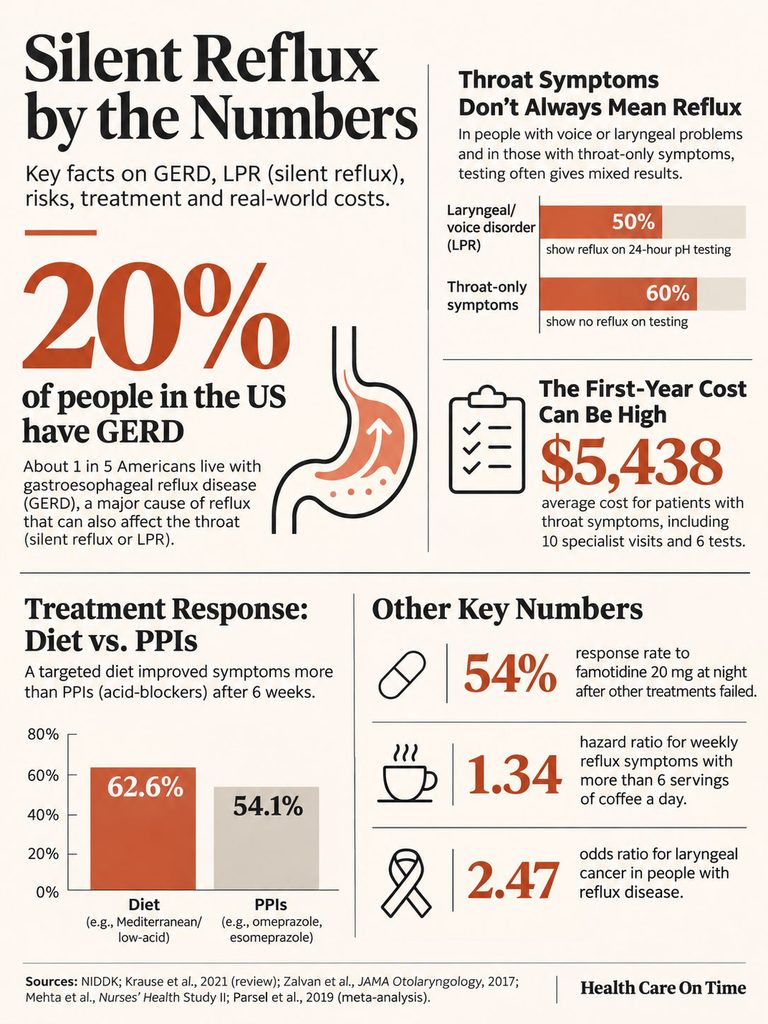
| Measure | Figure | Source |
| People in the US with GERD | About 20% | NIDDK |
| Voice or laryngeal disorder patients with LPR on 24-hour pH testing | 50% of 113 | Krause et al., 2021 review |
| People with throat-only symptoms who show no reflux on testing | Up to 50% to 60% | Krause et al., 2021 review |
| Average first-year cost per patient with throat symptoms | About $5,438, with about 10 specialist visits and 6 tests | Krause et al., 2021 review |
| Throat symptom improvement, diet vs PPI (6-point RSI drop at 6 weeks) | 62.6% diet vs 54.1% PPI | Zalvan et al., JAMA Otolaryngology, 2017 |
| Response to famotidine 20 mg at night after habits alone failed | 48 of 89 (54%) | Stepwise study in Krause et al., 2021 |
| Risk of weekly reflux symptoms with more than 6 servings of coffee a day vs none | Hazard ratio 1.34 | Mehta et al., Nurses’ Health Study II |
| Odds of laryngeal cancer with reflux disease | Odds ratio 2.47 across 18 case-control studies | Parsel et al., 2019 meta-analysis |
Is silent reflux dangerous?
For most people, no. With treatment, symptoms usually settle within months, and most people don’t need prescription medicine long term, although it can take several months to see whether lifestyle changes are doing their job.
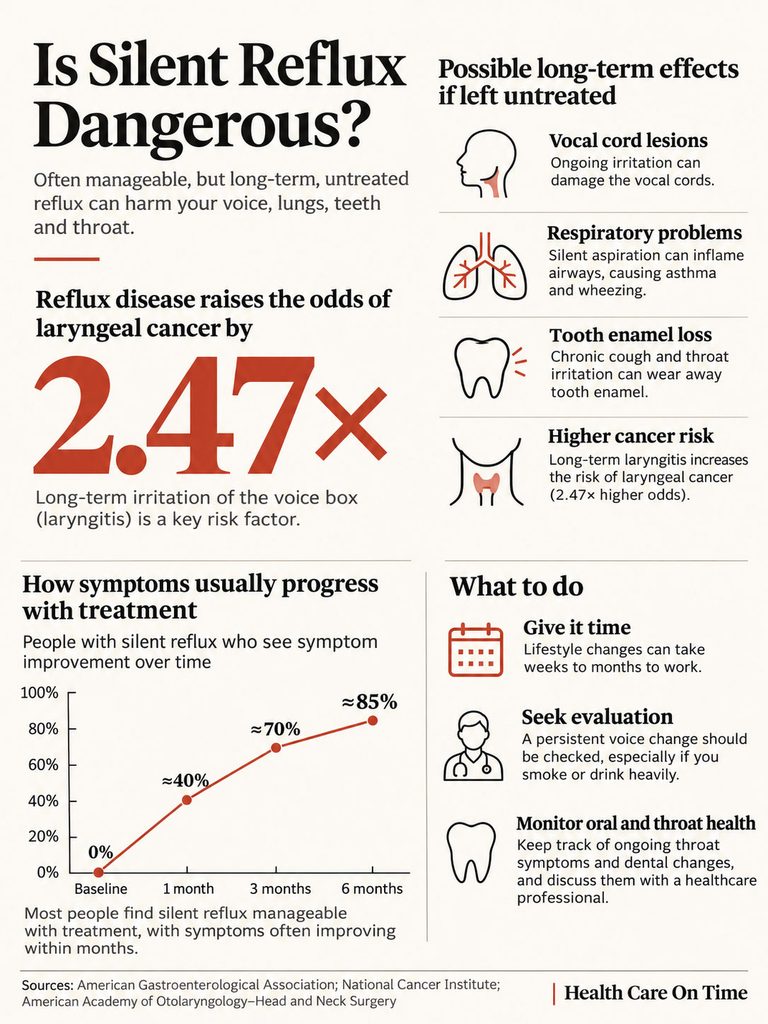
Untreated for years, the irritation can cause vocal cord lesions, excess mucus and frequent infections. Some people also inhale small amounts of refluxed material without choking or coughing, a pattern called silent aspiration, which can inflame the airways.
The lungs and mouth can be affected too. New or worsening asthma, wheezing and frequent upper respiratory infections all appear among LPR symptoms, and reflux in general is linked to chronic cough, laryngitis and wearing away of tooth enamel. If your asthma has become harder to control for no clear reason, tell the doctor treating it about any throat symptoms. Unexplained enamel wear is worth raising with both your dentist and your doctor.
Long-term laryngitis is considered a risk factor for laryngeal cancer, and when researchers pooled 18 case-control studies in 2019, people with reflux disease had 2.47 times the odds of having laryngeal cancer. Studies of that design can show a link but not that reflux causes cancer, and smoking and alcohol muddy the picture; the authors called for prospective studies. Reflux may add some risk, then, and a voice change that won’t go away should be checked, especially if you smoke or drink heavily.
When to see an ENT or GI doctor
A primary care doctor can handle most silent reflux at first, but some symptoms call for a closer look sooner.
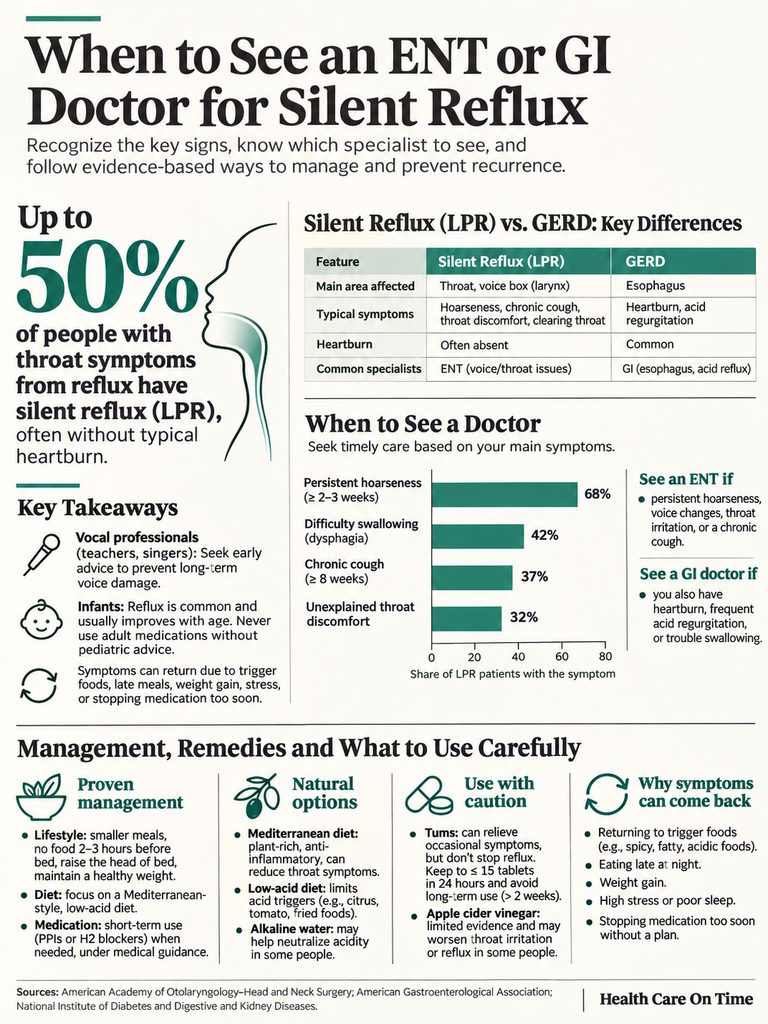
Red flags: see a doctor promptly if you have
- Hoarseness that lasts longer than 4 weeks, or any lasting voice change if you smoke or have smoked
- Trouble breathing, or a lump you can feel in your neck
- Pain or trouble swallowing
- Vomit with blood or that looks like coffee grounds, or black, tarry stools
- Unexplained weight loss or loss of appetite
- Chest pain, especially with shortness of breath, sweating or pain spreading to the arm, neck or shoulder (call 911)
- Voice changes after recent surgery on the head, neck or chest, or after a recent breathing tube
Don’t wait on these.
Teachers, singers and anyone else who talks for a living should get seen early, since a strained voice affects their work long before it becomes dangerous.
It helps to walk in with your questions written down, for example:
- Could allergies, postnasal drip or a current medicine be causing this instead?
- Do you need to look at the vocal cords before any medicine is tried?
- Without any heartburn, is a reflux test worth doing first?
- How long should a PPI trial last, and how will we know it’s working?
- If a PPI gets started, can famotidine be added at night too?
- When can the medicine stop, and does it need to be tapered?
Babies with reflux
Infants get reflux too, and their care is handled differently. Never give an infant adult products such as Tums, famotidine tablets or omeprazole without a pediatrician’s advice, and bring feeding, breathing or weight worries to that visit, along with any of the signs of acid reflux in infants that call for prompt care.
Frequently Asked Questions
What is the best way to cure silent reflux?
For most adults, the most reliable approach pairs habit changes with short-term medicine when needed. Eat smaller meals, stop eating 2 to 3 hours before bed, raise the head of your bed, figure out your trigger foods and quit smoking. A mostly plant-based Mediterranean diet with alkaline water has done as well as a PPI for throat symptoms in a head-to-head comparison. If you’re not better after 8 to 12 weeks, an ENT exam and reflux testing help confirm the cause before stronger treatment, since many throat symptoms turn out to have nothing to do with reflux.
Can Tums help with LPR?
For an occasional flare, yes, since Tums neutralize stomach acid, but they don’t stop reflux from reaching the throat. Stay under 15 tablets in 24 hours and don’t use them for symptoms lasting over 2 weeks.
What are some natural remedies for LPR?
Diet has the best support. A plant-based Mediterranean diet, a strict low-acid diet and alkaline water have all been studied with encouraging results, but the studies were small or looked back at old charts. Raising the head of the bed, eating dinner earlier and losing weight if needed also help. Apple cider vinegar is a popular suggestion with little research behind it; it’s acidic, it could make heartburn worse, and drinking it undiluted can erode tooth enamel. If you have low potassium or take insulin or water pills, ask a doctor before trying it.
Does coffee cause silent reflux?
On its own, probably not, but it can relax the lower valve and set off symptoms. In the Nurses’ Health Study II, women who had more than 6 servings a day had a 34% higher risk of weekly reflux symptoms than nondrinkers, and decaf looked similar. Cutting back for a few weeks will tell you whether it matters for you.
How long does silent reflux take to heal?
Weeks to months. Many people improve within 6 weeks, though judging whether lifestyle changes are working can take several months, and a PPI trial typically runs 8 to 12 weeks.
Does omeprazole work for silent reflux?
It helps some people, especially those who have heartburn along with throat symptoms. For throat symptoms alone, large placebo-controlled trials haven’t shown a clear benefit. Prilosec OTC is labeled for 14-day courses for heartburn, no more often than every 4 months, so anything longer should be guided by a doctor.
Is silent reflux worse at night?
Often, yes. Lying down lets the upper valve open more easily, so late meals and going to bed on a full stomach tend to show up the next morning as a rough voice and extra phlegm.
Is silent reflux the same as GERD?
Not quite. GERD mainly affects the lower esophagus and causes heartburn, while silent reflux reaches the throat and voice box. Plenty of people have both.
Can silent reflux come back after treatment?
It can, usually when late dinners, smoking or heavy drinking creep back in. Most people don’t need long-term prescription medicine once they find habits that keep symptoms quiet.
Does alkaline water help silent reflux?
Alkaline water above pH 8.0 was one part of the diet plan that matched PPIs, alongside a mostly plant-based diet. Nobody has tested it well on its own.
Medical disclaimer: This article is for general information and does not replace advice from your doctor, ENT specialist or pharmacist. Do not start, stop or change any medicine based on this article, and follow the directions on US product labels. Seek urgent care for chest pain, trouble breathing, vomiting blood or black stools.
References
- Cleveland Clinic. Laryngopharyngeal Reflux (LPR). https://my.clevelandclinic.org/health/diseases/15024-laryngopharyngeal-reflux-lpr
- Krause AJ, Walsh EH, Weissbrod PA, Taft TH, Yadlapati R. An Update on Current Treatment Strategies for Laryngopharyngeal Reflux Symptoms. Ann N Y Acad Sci. 2022;1510(1):5-17 (published online 2021). https://pmc.ncbi.nlm.nih.gov/articles/PMC9012673/
- Katz PO, Dunbar KB, Schnoll-Sussman FH, Greer KB, Yadlapati R, Spechler SJ. ACG Clinical Guideline for the Diagnosis and Management of Gastroesophageal Reflux Disease. Am J Gastroenterol. 2022;117(1):27-56. https://pmc.ncbi.nlm.nih.gov/articles/PMC8754510/
- Hoover L. Dysphonia (Hoarseness): AAO-HNSF Releases Updated Clinical Guideline for Treatment. Am Fam Physician. 2018;98(10):606-607. https://www.aafp.org/pubs/afp/issues/2018/1115/p606.html
- Zalvan CH, Hu S, Greenberg B, Geliebter J. A Comparison of Alkaline Water and Mediterranean Diet vs Proton Pump Inhibition for Treatment of Laryngopharyngeal Reflux. JAMA Otolaryngol Head Neck Surg. 2017;143(10):1023-1029. https://touroscholar.touro.edu/nymc_fac_pubs/791
- Belafsky PC, Postma GN, Koufman JA. Validity and Reliability of the Reflux Symptom Index (RSI). J Voice. 2002;16(2):274-277. https://augusta.elsevierpure.com/en/publications/validity-and-reliability-of-the-reflux-symptom-index-rsi/
- Parsel SM, Wu EL, Riley CA, McCoul ED. Gastroesophageal and Laryngopharyngeal Reflux Associated With Laryngeal Malignancy: A Systematic Review and Meta-analysis. Clin Gastroenterol Hepatol. 2019;17(7):1253-1264. https://scholarlyworks.lvhn.org/medicine/2244
- Massachusetts General Hospital. Coffee, Tea and Soda Associated With Gastroesophageal Reflux Symptoms (Mehta RS et al., Clin Gastroenterol Hepatol). https://advances.massgeneral.org/digestive-health/journal.aspx?id=1573
- National Institute of Diabetes and Digestive and Kidney Diseases. Acid Reflux (GER & GERD) in Adults. https://www.niddk.nih.gov/health-information/digestive-diseases/acid-reflux-ger-gerd-adults/all-content
- Tums Regular Strength (calcium carbonate) Drug Facts label, Haleon. https://www.guidelinecentral.com/drug/ac80f627-3f51-425b-8c75-e07363048b00/tums-regular-strength
- Gaviscon Regular Strength and Extra Strength liquid (aluminum hydroxide and magnesium carbonate) Drug Facts label, Haleon. https://www.guidelinecentral.com/drug/2d74e5bc-1f10-4fb6-9258-cd906e360013/gaviscon
- Famotidine Tablets 20 mg (Pepcid) Drug Facts label, FDA. https://www.accessdata.fda.gov/drugsatfda_docs/label/2022/020325Orig1s037lbl.pdf
- Prilosec OTC (omeprazole delayed-release tablets 20 mg) Drug Facts label, DailyMed. https://dailymed.nlm.nih.gov/dailymed/drugInfo.cfm?setid=77ed80a2-a482-4838-ac55-4865b5c31d9f
- Cleveland Clinic Health Essentials. Apple Cider Vinegar for Acid Reflux: Does It Work? https://health.clevelandclinic.org/is-apple-cider-vinegar-good-for-acid-reflux