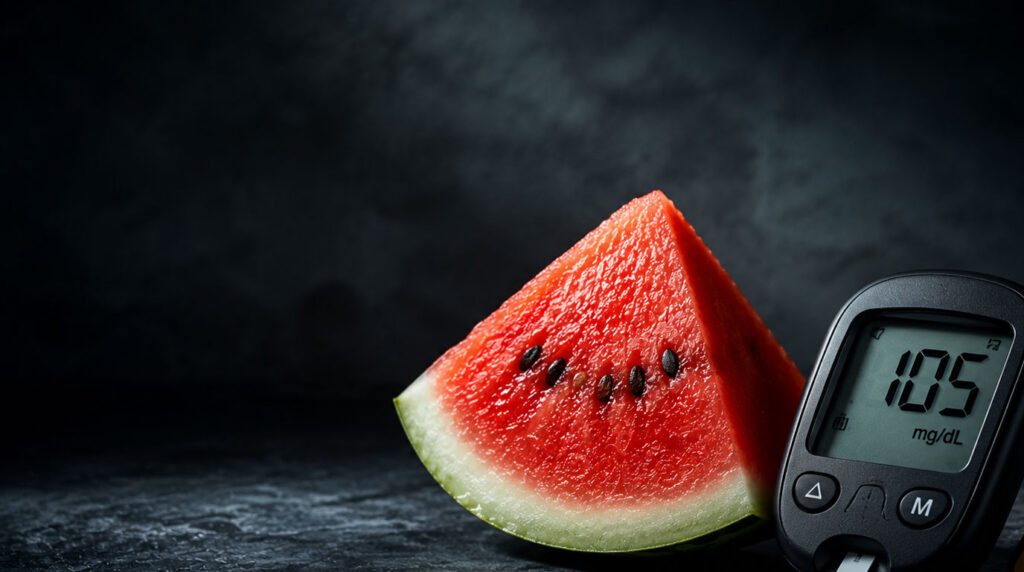
A standard wedge of watermelon and a 12-ounce can of soda carry a similar amount of sugar on the label. One of them fills you up, hydrates you, and delivers vitamin C and antioxidants. The other gives you nothing but the sugar. That single contrast explains why watermelon belongs in a smart diet, and it all starts with the calorie count most people guess wildly wrong.
Table of Contents
Quick Answer: One cup of diced watermelon (152g) has about 46 calories. A 100g portion has 30 calories, a standard wedge (about 286g) has roughly 86 calories, and a whole 15-inch melon holds close to 1,360 calories, according to USDA FoodData Central. Watermelon is roughly 92% water, has almost no fat, and supplies vitamin C, potassium, and lycopene for very few calories.
At a Glance
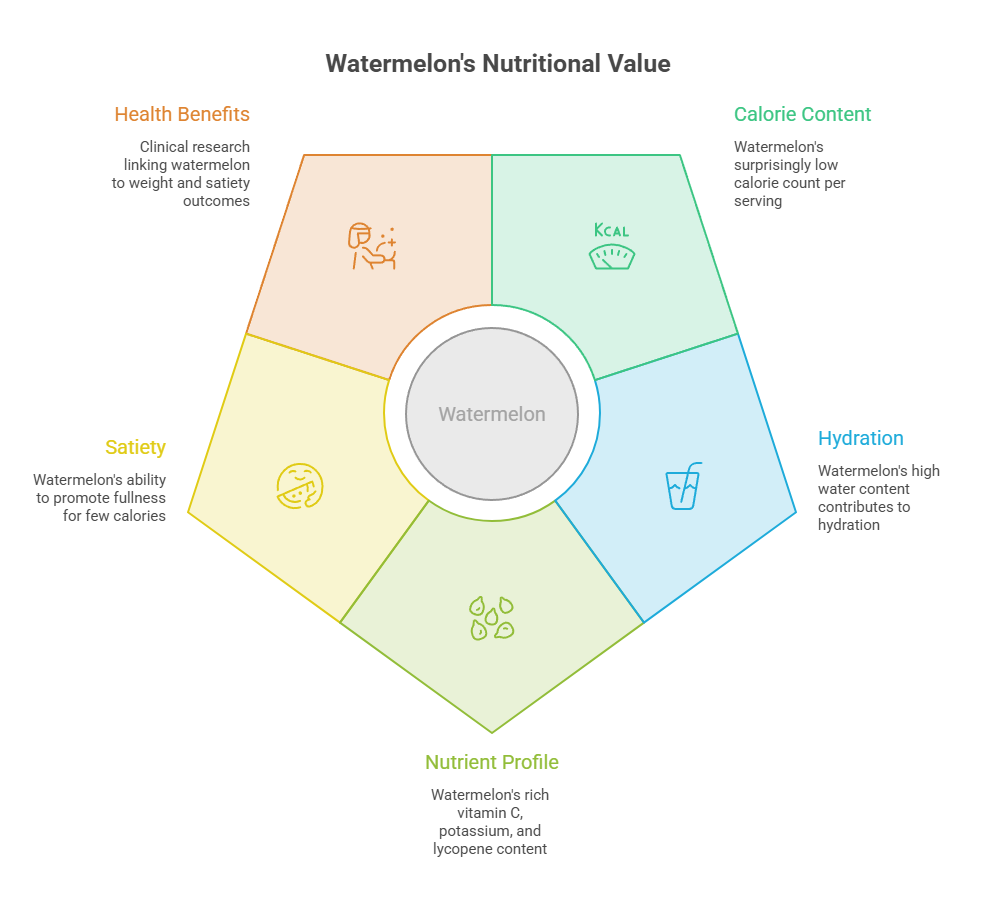
- A 1-cup serving of diced watermelon is about 46 calories
- Watermelon is around 92% water, which is why it fills you up for so little
- It has almost no fat and only trace protein
- Despite a high glycemic index, its glycemic load per serving is low
- It holds more lycopene than any other fresh fruit or vegetable
- Clinical research links it to better satiety and weight outcomes than processed snacks
- It fits weight-loss, diabetes-aware, and active diets when portioned sensibly
Watermelon shows up at nearly every American summer cookout, yet most people have no clue how light it actually is. Patients booking nutrition-related tests with us often assume the intense sweetness signals heavy calories. The USDA data tells a very different story. The rest of this guide breaks down every serving size, every macronutrient, and every practical question you are likely to have, with the numbers to back each answer.
Watermelon Calories by Serving Size (Cup, Slice, Wedge, Whole)
The most common question is also the simplest, but the answer shifts depending on how you cut the fruit. People eat watermelon cubed, sliced, in big triangular wedges, and sometimes juiced. Each format carries a different calorie count, so here is the full picture before the summary table.
One Cup of Diced Watermelon
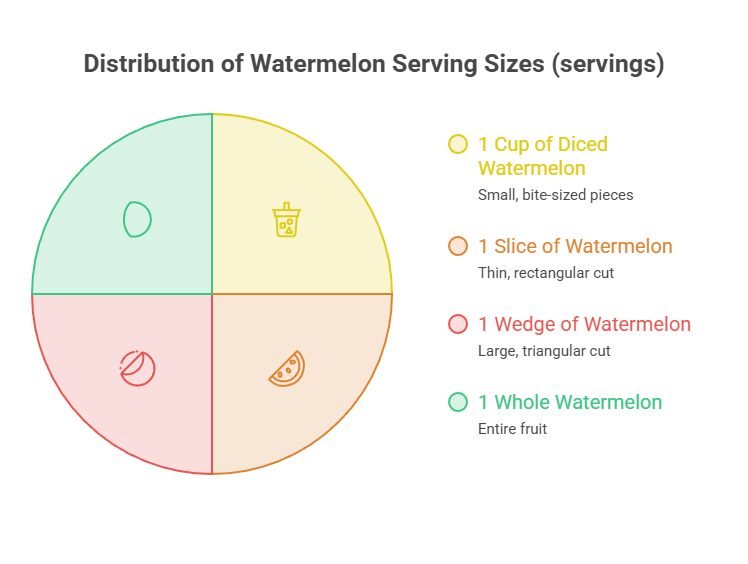
This is the serving nearly every calorie-tracking app uses as a default. One cup of diced watermelon (152g) provides 46 calories, 0.9g of protein, 11.5g of carbohydrates, and 0.2g of fat. That is fewer calories than a single medium apple or half a banana.
For a fruit this sweet, 46 calories is strikingly low. The reason sits in the water content, covered in the nutrition section below. Our nutrition reviewers point to this as the textbook example of a volume food, plenty of bulk and chew for very little energy.
One Slice and One Wedge
Slice sizes vary by how the melon was cut, so the USDA standardizes a wedge as one-sixteenth of the fruit. A wedge that is around one-sixteenth of the melon (286 grams) contains almost double the calories of a cup, approximately 86 calories.
A thinner hand-cut slice can land anywhere between 50 and 90 calories depending on thickness. When precision matters, weigh it. A cheap kitchen scale removes the guesswork, which is especially useful for anyone counting carbs closely for diabetes or a diet plan.
A Whole Watermelon
Here is where the number catches people off guard. According to the USDA, a 15-inch-long watermelon contains about 1,360 calories. That sounds enormous until you remember a whole melon can weigh 15 to 20 pounds and feed an entire gathering.
No one is meant to finish a whole watermelon alone. Divided among a family at a picnic, each person’s share stays modest. The problem only appears when one person treats half a melon as a single sitting, a pitfall we revisit later.
Watermelon Juice
Juicing concentrates the sugars and strips most of the (already minimal) fiber. A cup of watermelon juice runs about 71 calories, higher than the 46 in a cup of whole diced fruit, with a quicker effect on blood sugar.
Whole fruit beats juice for almost everyone watching weight or glucose. Our medical reviewers note that chewing whole watermelon also slows your intake and supports fullness in a way that sipping juice simply does not.
The table below lines up every common serving using USDA figures, so you can find your exact portion at a glance. This is also the chart Google is most likely to pull for a table snippet.
| Serving | Weight | Calories | Carbs (g) | Sugar (g) |
| Per 100 grams | 100g | 30 | 7.6 | 6.2 |
| 1 ounce | 28g | 9 | 2.1 | 1.7 |
| 1/2 cup, diced | 76g | 23 | 5.7 | 4.7 |
| 1 cup, diced | 152g | 46 | 11.5 | 9.4 |
| 1 wedge (1/16 melon) | 286g | 86 | 21.6 | 17.7 |
| 1 cup, juice | ~250g | 71 | 18.0 | 16.5 |
| Whole melon (15-inch) | ~4.5 kg flesh | ~1,360 | ~340 | ~280 |
Source: USDA FoodData Central and CalorieKing. Whole-melon figures are estimates based on average flesh yield.
How Long to Burn Off Watermelon Calories
Calories in are only half the equation, so here is the other half in plain terms. A cup of watermelon costs so little energy that offsetting it takes almost no effort. You would need to walk roughly 13 minutes to burn the 46 calories in a cup of watermelon.
Put that next to other snacks and the gap is obvious. A small bag of chips at around 150 calories can take 35 to 40 minutes of walking to work off. A cup of watermelon clears in about the time it takes to walk the dog around the block.
| Watermelon serving | Calories | Walking time to burn | Light jogging time |
| 1/2 cup, diced | 23 | ~6 minutes | ~3 minutes |
| 1 cup, diced | 46 | ~13 minutes | ~6 minutes |
| 1 wedge (1/16 melon) | 86 | ~24 minutes | ~11 minutes |
| 2 cups, diced | 92 | ~26 minutes | ~12 minutes |
| 1 cup, juice | 71 | ~20 minutes | ~9 minutes |
Estimates based on a 150-pound adult; actual burn varies with body weight and pace. The takeaway is simple: watermelon is one of the easiest sweet treats to balance against daily activity.
Full Watermelon Nutrition Facts (USDA Breakdown)
Calories tell you the energy. The rest of the label tells you why watermelon is worth eating at all. For a fruit that is mostly water, it carries a surprising amount of useful nutrition into a single low-calorie serving.
Macronutrients: Carbs, Protein, Fat
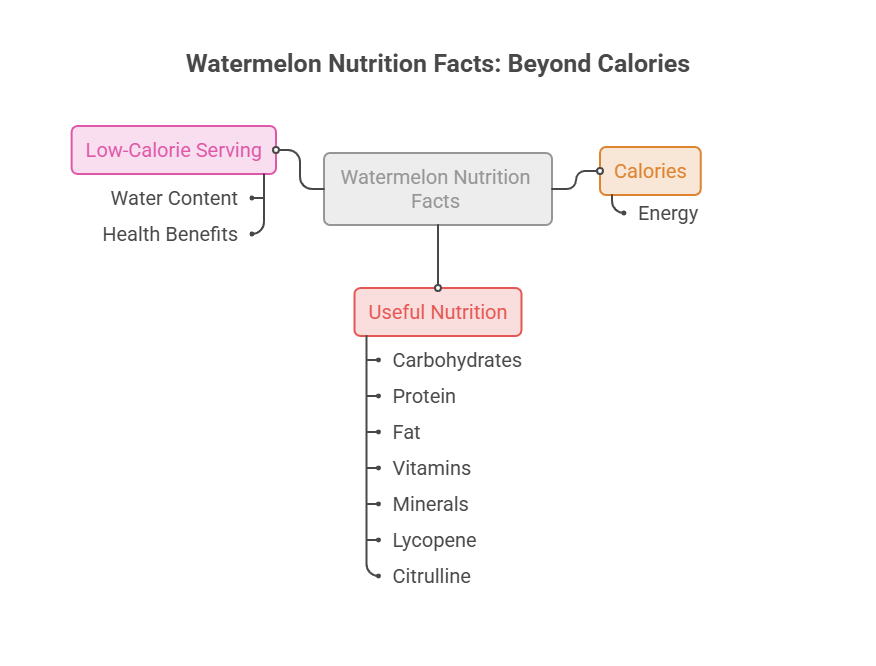
Watermelon is a carbohydrate food, and those carbs are mostly natural sugar. In a cup of diced watermelon, total carbohydrates are 11.5 grams, of which 9.4 grams are sugars and only 0.6 grams are fiber.
Protein and fat barely register. A cup holds under 1 gram of each. That makes watermelon almost pure, fast-burning fuel with no fat load, part of why it sits so low on the calorie scale.
The sugar profile matters for digestion too. About half the sugar in watermelon is fructose, one quarter is glucose, and less than one quarter is sucrose. That fructose share is also why some people with sensitive guts react when they eat large amounts at once.
Water Content and Why It Matters
This is the headline nutrient. Watermelon is over 92 percent water, which is the entire reason a sweet fruit can be so light. Water carries zero calories but real volume and weight.
That volume triggers stretch receptors in the stomach and signals fullness early. Across the readers HealthCareOnTime serves, the people who manage portions best tend to lean on high-water foods like this one. A cup of watermelon satisfies far more than a cup of dried fruit at the same weight, because the dried version packs the same sugar into a fraction of the space.
Vitamins and Minerals
Watermelon is no multivitamin, but it pulls its weight for the calories. A 1-cup serving provides about 12 milligrams of vitamin C, 865 IU of vitamin A, and 170 milligrams of potassium, with zero fat, cholesterol, or sodium.
Vitamin C supports immune function and skin repair. Potassium helps regulate fluid balance and blood pressure. A serving also chips in small amounts of magnesium, copper, and several B vitamins, rounding out a respectable micronutrient profile for 46 calories.
Lycopene and Citrulline
These two compounds are watermelon’s real claim to fame. Watermelon has more lycopene than any other fresh fruit or vegetable, an antioxidant linked to lower risk of cancer, heart disease, and age-related eye disorders.
Then there is citrulline, an amino acid most fruits lack. Watermelon is the richest known dietary source of citrulline, with the highest amount found in the white rind. The body converts citrulline into arginine, which supports healthy blood flow.
The breakdown below shows what one serving contributes per 100 grams and per cup, with daily-value context, so you can see exactly what you get for the calories you spend.
| Nutrient | Per 100g | Per 1 cup (152g) | %DV (per cup) |
| Calories | 30 | 46 | 2% |
| Water | 91.5g | ~139g | n/a |
| Carbohydrates | 7.6g | 11.5g | 4% |
| Sugar | 6.2g | 9.4g | n/a |
| Fiber | 0.4g | 0.6g | 2% |
| Protein | 0.6g | 0.9g | 2% |
| Vitamin C | 8.1mg | 12.3mg | 14% |
| Potassium | 112mg | 170mg | 4% |
Source: USDA FoodData Central, FDC ID 167765. Percent daily values based on a 2,000-calorie reference diet.
Is Watermelon Fattening? What the Science Says
This is the question behind the question. Most people do not want calorie trivia; they want to know whether watermelon will derail their goals. The short answer is no, and the research supports it.
Calorie Density and Volume Eating
The principle traces to decades of work by Barbara Rolls at Penn State on energy density, the calories packed into each gram of food. Low-energy-density foods let you eat a satisfying amount for fewer total calories, which makes portion control feel effortless.
Watermelon sits near the bottom of that density scale thanks to all its water. A cup of watermelon at 46 calories fills more stomach space than a small handful of pretzels at over 100 calories. Make that swap a few times a week and the savings stack up.
The Clinical Evidence
Real trials back the theory, not just lab speculation. In one controlled study, eating fresh watermelon was associated with stronger satiety for up to two hours, decreased body weight and BMI, and improved lipid profiles over four weeks, compared with low-fat cookies of equal calories.
The mechanism is straightforward. Post-meal glucose and insulin levels stayed stable thanks to watermelon’s low glycemic load and trace fiber. Early research also links watermelon, added to a calorie-controlled diet, to lower waist-to-hip ratios in overweight adults.
Our medical reviewers flag one caveat that matters: these gains came from adding watermelon to a sensible diet, not from watermelon-only cleanses. The fruit is a helper, never a stand-alone fix.
Eating Watermelon at Night
A stubborn myth claims fruit eaten at night turns to fat. Calories do not change based on the clock. What governs weight is your total daily intake, not the hour you eat.
A large late-night serving of any sugary food can disturb sleep or blood sugar in sensitive people, so keep evening portions modest. A single cup of watermelon as a night snack is fine for most. Patients commonly ask us this, and the honest answer is that portion size beats timing every time.
Watermelon Sugar, Carbs, and Blood Sugar (GI vs GL)
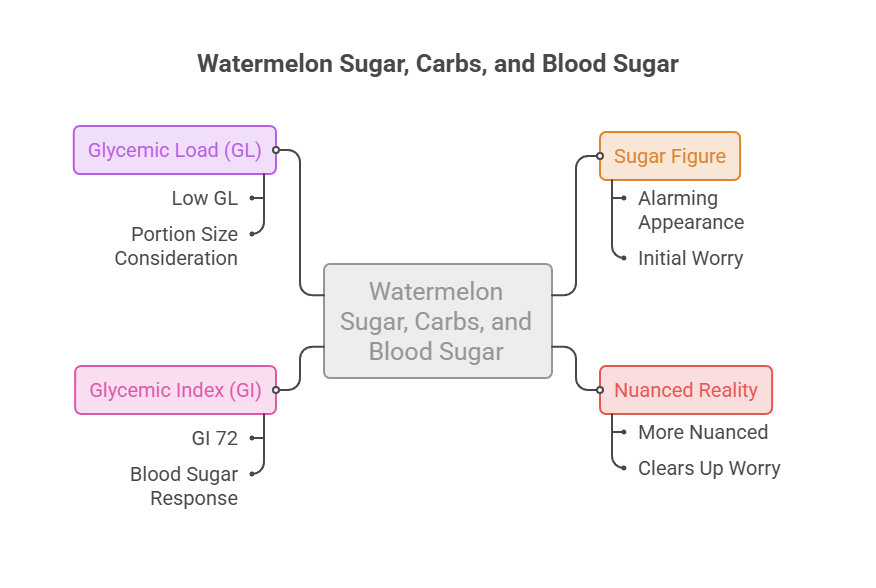
For anyone tracking carbs or managing diabetes, the sugar figure can look alarming at first. The reality is more nuanced, and the difference between two metrics clears up most of the worry.
How Much Sugar Is Really in Watermelon
A cup of watermelon holds about 9 to 10 grams of sugar. That feels high for the sweetness, yet it is actually lower than many fruits. A medium banana carries more than 14 grams; a cup of grapes lands around 15 grams.
So watermelon tastes intensely sweet while delivering relatively modest sugar. The big flavor comes from the fruit’s aromatic compounds and the rush of water on the tongue, not from a heavy sugar dose.
Glycemic Index 72 vs Low Glycemic Load
Here is the detail that trips up almost everyone. Watermelon has a high glycemic index of 72, which means its sugars can raise blood sugar quickly, but its glycemic load, which accounts for the actual carb amount in a serving, is low.
Glycemic index measures speed. Glycemic load measures real-world impact for a normal portion. Because a serving of watermelon contains so few grams of carbohydrate, its glycemic load sits around 4 to 5, firmly in the low range.
In plain terms, the scary 72 rarely matters at sensible portions. A small bowl of watermelon will not spike most people the way a soda or candy bar does.
Is Watermelon Safe for Diabetics?
For many people with diabetes, watermelon fits in moderation. Despite a high glycemic index, watermelon is often considered acceptable for individuals with diabetes because it contains relatively low digestible carbohydrates per serving.
The smart move is portion control plus pairing. A cup eaten with a source of protein or healthy fat, such as a few nuts or a slice of cheese, blunts the blood sugar response. Anyone with diabetes should still test their own reaction and coordinate with their care team.
Watermelon and Keto
Strict keto is where watermelon struggles. A cup carries roughly 11 grams of net carbs, which can swallow a large share of a tight daily keto budget in one snack.
Small amounts can still fit a less rigid low-carb plan. A few cubes, rather than a full bowl, keep the carb hit manageable while you still get the flavor and hydration.
Health Benefits Backed by Calories You Can Afford
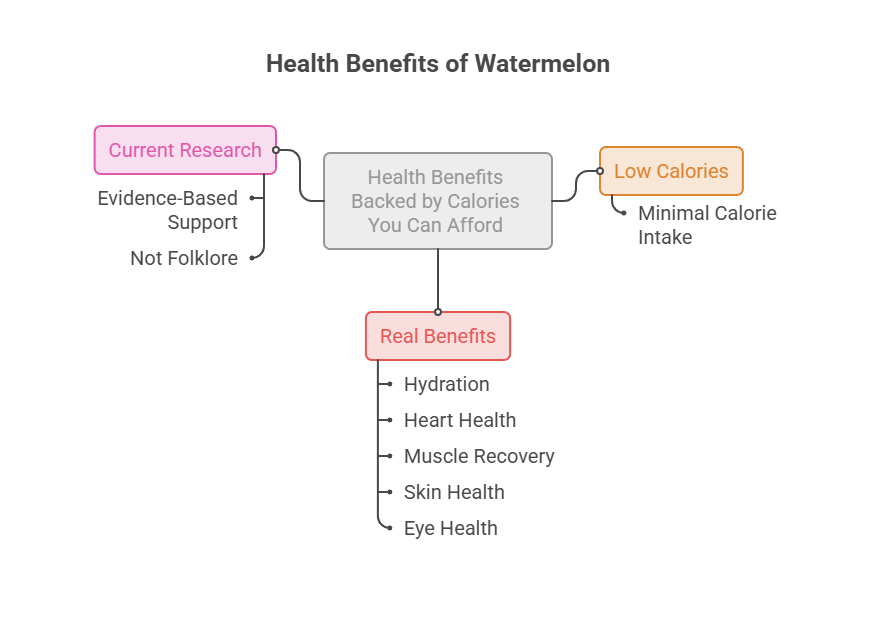
Low calories alone would justify a spot on your plate, but watermelon gives back real benefits for the few calories it costs. These payoffs are supported by current research, not folklore.
Hydration
Since watermelon is over 92% water, it doubles as a hydration source on hot days. It helps replace fluids while delivering electrolytes like potassium that plain water lacks.
This is no replacement for drinking water, but it is a useful bonus. For people who struggle to drink enough plain water, water-rich foods make staying hydrated easier and a lot more enjoyable.
Heart Health and Blood Pressure
This is where citrulline shines. Citrulline is transformed in the body into arginine, and both play a role in producing nitric oxide, which helps lower blood pressure by relaxing and dilating blood vessels.
The lycopene adds cardiovascular support, helping shield cholesterol from oxidation. Across cases reviewed by our medical team, the heart-health angle is one of the most overlooked reasons to make watermelon a regular habit rather than a once-a-summer treat.
Muscle Recovery
Athletes have a specific reason to reach for it. A single 500 mL dose of citrulline-rich watermelon juice taken before exercise reduced muscle soreness for 24 to 72 hours and lowered post-race lactate compared with placebo.
That makes it a natural pre- or post-workout option, almost a homemade sports drink. The citrulline supports oxygen delivery to working muscles, which may speed recovery after hard training sessions.
Skin and Eye Health
The vitamins A and C carry their own weight here. Vitamin C aids collagen production and wound healing, while vitamin A supports vision and skin maintenance.
Combined with lycopene’s antioxidant action, a steady watermelon habit feeds several systems at once. For the calorie cost, the nutritional return is tough to beat among common fruits, which is exactly why dietitians keep recommending it.
How Watermelon Stacks Up Against Other Fruits
Context turns a number into a decision. Dieters rarely ask about watermelon in isolation; they ask whether it beats the banana, the apple, or the handful of grapes sitting next to it. On calories per cup, watermelon almost always wins.
A cup of watermelon at 46 calories compares favorably with most popular fruits and trounces processed snacks. The fruit gives you bulk, hydration, and vitamins for the lowest energy cost of the group, which is why it works so well for weight management.
| Food (1 cup or item) | Calories | Sugar (g) | Why it compares |
| Watermelon, diced | 46 | 9.4 | Lowest calories, highest water content |
| Strawberries, halved | 49 | 7.4 | Similar calories, more fiber |
| Cantaloupe, diced | 53 | 13 | Close cousin, slightly more sugar |
| Apple, medium | 95 | 19 | Double the calories, more fiber |
| Grapes | 104 | 23 | More than double the sugar |
| Banana, medium | 105 | 14 | Highest calories of common fruits |
Sources: USDA FoodData Central and FatSecret nutrition database. Figures rounded to nearest whole number.
How to Fit Watermelon Into Your Day
Knowing the calories is step one. Putting that knowledge to work is step two. These guidelines reflect how our nutrition reviewers frame portion advice for everyday readers.
Smart Portion Sizes
National guidance gives a helpful anchor. The Dietary Guidelines for Americans recommend 1.5 to 2.5 cups of whole fruit daily, and watermelon can fill part of that allowance with ease.
One to two cups is a sensible serving for most adults. That keeps calories between roughly 46 and 92, plenty of satisfaction without blowing past your fruit budget for the day.
Pair It Right
Eating watermelon alongside protein or fat slows sugar absorption. Pair cubes with cottage cheese, Greek yogurt, a handful of almonds, or a sprinkle of feta and fresh mint.
This pairing trick is the single most useful habit for anyone watching blood sugar. The combination converts a fast-digesting fruit into a steadier, more balanced snack that holds you longer.
Don’t Toss the Seeds or Rind
Most people throw away the most nutrient-dense parts. The white rind holds the highest concentration of citrulline, and it can be grated into salads or pickled. The seeds carry real value too.
According to USDA FoodData Central, 100 grams of dried, shelled watermelon seed kernels contain about 28.3 grams of protein. Roasted seeds make a protein-bearing snack that most shoppers overlook entirely.
The quick-reference table below matches your goal to a smart serving and pairing, so you can act on these numbers immediately.
| If your goal is… | Recommended serving | Smart pairing or tip |
| Weight loss | 1 cup before a meal | Eat first to curb appetite through volume |
| Diabetes / blood sugar | 3/4 to 1 cup, cubed | Pair with nuts or cheese to slow glucose rise |
| Pre-workout fuel | 1 cup or 500 mL juice | Take about 1 hour before for the citrulline benefit |
| Post-workout recovery | 1 to 1.5 cups | Combines hydration with muscle-soreness support |
| Keto / low-carb | A few cubes only | Stay under about 10g net carbs for the day’s budget |
| Late-night snack | 1 small cup | Keep it modest; timing matters less than amount |
Common Mistakes and Pitfalls
Watermelon is forgiving, but a few habits turn a healthy fruit into a problem. These are the ones our team sees most often among readers trying to do everything right.
Eating a Whole Melon in One Sitting
The calories per cup are low, so it is easy to keep reaching for more. Eat enough cups and the totals climb fast. A whole melon at 1,360 calories proves how quickly just one more piece adds up.
Portion to a bowl, not to the melon. Cut and refrigerate the rest so the visual cue of a single serving stays intact and you are not grazing straight from the rind.
Choosing Juice Over Whole Fruit
Reaching for juice instead of whole fruit costs you fiber and adds a faster sugar hit. A cup of juice carries more calories and a steeper glucose response than the same cup of cubes.
Whole fruit almost always wins. Save juice for an occasional treat rather than a daily staple, especially if blood sugar control is a priority for you.
Crowding Out Higher-Fiber Foods
Watermelon is delicious, but it is low in fiber. Leaning on it too heavily can edge out higher-fiber fruits and vegetables that aid digestion and longer-lasting fullness.
Treat it as one player on a varied plate. Rotate it with berries, apples, and other produce across the week so your overall fiber intake stays healthy.
Frequently Asked Questions
How many calories are in 2 cups of watermelon?
Two cups of diced watermelon hold about 92 calories. That equals roughly one banana, yet you get far more water and a much bigger volume of food, which is why two cups can feel more filling than a single denser piece of fruit.
Is watermelon high in calories?
Not at all. At 46 calories per cup and 30 per 100 grams, it ranks among the lowest-calorie fruits you can buy. Its 92% water content keeps energy density near rock-bottom, so a generous portion still costs you very little.
How many calories in a slice of watermelon?
A USDA-standard wedge cut at one-sixteenth of the melon weighs about 286 grams and runs near 86 calories. A thinner restaurant-style slice may fall between 50 and 90 calories. Thickness drives the difference, so a quick weigh-in gives the truest count.
Does watermelon make you gain weight?
On its own, no. Weight gain follows a surplus of total daily calories, and watermelon’s low density makes overshooting hard. Trials even show it beats equal-calorie processed snacks for fullness and BMI. Eaten in reasonable amounts, it supports weight goals rather than working against them.
How much sugar is in a cup of watermelon?
Expect about 9 to 10 grams of natural sugar per cup. Even though it tastes sweeter than a banana, it actually carries less sugar, and the small serving size keeps the glycemic load low, which softens its effect on your blood sugar.
Is watermelon good for weight loss?
It is one of the better fruit choices for it. The high water volume fills you up for few calories, and eating a cup before a meal can naturally reduce how much you eat next. It works best inside a balanced, calorie-controlled routine rather than alone.
Can diabetics eat watermelon?
Often yes, in measured portions. The glycemic index reads high at 72, but the glycemic load per serving stays low because each portion holds little carbohydrate. Pairing a small bowl with protein or fat steadies the response. Always monitor your own numbers and consult your provider.
How many calories in a whole watermelon?
A 15-inch melon holds roughly 1,360 calories by USDA estimate, though that swings with size since melons weigh 15 to 20 pounds. It is meant to be shared, so any one person’s slice stays light when the melon feeds a group.
Is watermelon keto-friendly?
Not for strict keto. A cup delivers about 11 grams of net carbs, enough to use much of a tight daily allowance. A small scattering of cubes can work on a looser low-carb plan, but a full serving usually pushes carb totals past the keto threshold.
Are seedless and seeded watermelon different in calories?
There is no meaningful gap. Both types share nearly identical calorie and nutrition values because the red flesh is what you eat. The seeds themselves add only trace calories. Pick whichever is more convenient; the choice has no real effect on your intake.
How many calories in watermelon juice?
A cup of watermelon juice carries about 71 calories, noticeably more than the 46 in a cup of whole cubes. Juicing concentrates sugar and removes most fiber, speeding up the blood sugar effect, so whole fruit remains the smarter pick for most goals.
Is it bad to eat watermelon at night?
For most people, no. Calories stay the same regardless of the hour, so a modest evening cup is harmless. A very large sugary serving right before bed might disturb sleep or blood sugar in sensitive individuals, but the amount you eat matters far more than the timing.
Disclaimer: This article is for general education and is not a substitute for personalized medical advice. Watermelon’s effect on blood sugar, kidney function (due to its potassium), or digestion can vary by individual. If you have diabetes, kidney disease, or another health condition, consult a licensed healthcare provider before making significant changes to your diet.
References
- USDA FoodData Central, Watermelon, raw (FDC ID 167765)
- Mayo Clinic Health System, The Wonders of Watermelon
- NC State Cooperative Extension, Watermelon Nutrition Facts and Benefits
- Healthline, Watermelon Nutrition Facts and Benefits
- News-Medical, Is Watermelon a Superfood? Examining the Scientific Evidence
- Current Developments in Nutrition, Fresh Watermelon and Cardiometabolic Health Study Protocol
- CalorieKing, Calories in Watermelon, raw