
Millions of Americans swallow a losartan tablet every morning without a second thought. It sits among the ten most prescribed drugs in the country, filled roughly 54 million times a year.
Table of Contents
Here’s the part that surprises people. In the clinical trials that got losartan approved, patients quit because of side effects less often than the group taking a sugar pill.
So why the worry? Because a short, specific list of symptoms can’t wait for your next appointment. Knowing which is which keeps you calm about the ordinary and fast about the dangerous.
Quick answer: Most losartan side effects are mild and fade as your body adjusts, including dizziness, tiredness, nasal congestion, and back pain. A small number are serious and need urgent care: swelling of the face, lips, or throat (angioedema), an irregular or racing heartbeat from high potassium, a sharp drop in urination, or fainting. Most people tolerate losartan well, but these warning signs should never be ignored.
At a Glance
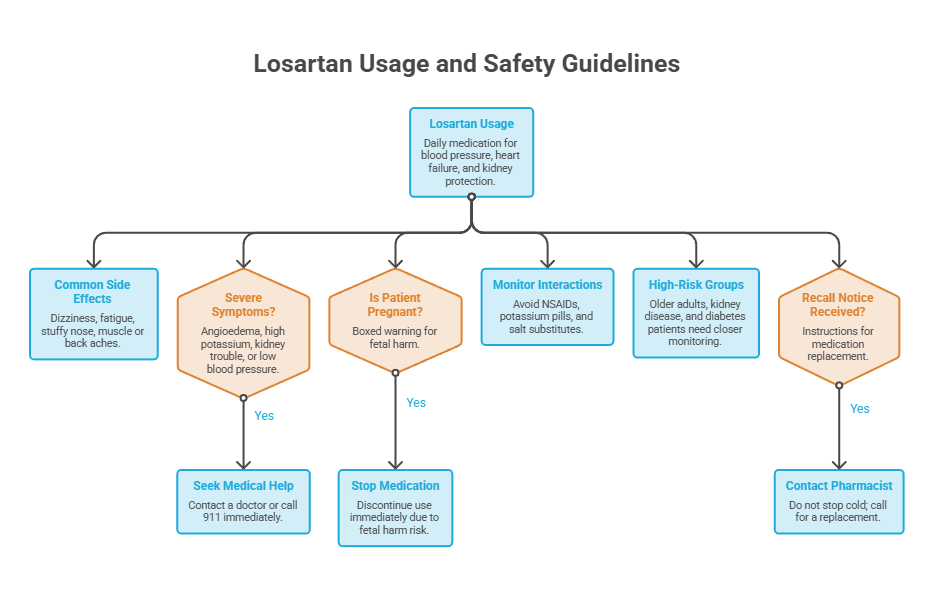
- Losartan is an angiotensin receptor blocker (ARB) taken daily for high blood pressure, heart failure, and diabetic kidney protection.
- Common side effects (dizziness, fatigue, stuffy nose, muscle or back aches) usually ease within days to weeks.
- Angioedema, high potassium, kidney trouble, and dangerously low blood pressure are the signs that need a doctor or 911.
- Pregnancy is an absolute reason to stop; losartan carries a boxed warning for fetal harm.
- Certain drugs and supplements (NSAIDs, potassium pills, salt substitutes) raise the risk of side effects.
- Older adults, people with kidney disease, and those with diabetes need closer monitoring.
- If you got a recall notice, don’t stop cold; call your pharmacist for a replacement first.
What Losartan Is and Why It’s Everywhere
Losartan, sold under the brand name Cozaar, belongs to a class of blood pressure drugs called angiotensin II receptor blockers, or ARBs. It relaxes blood vessels so blood flows with less force.
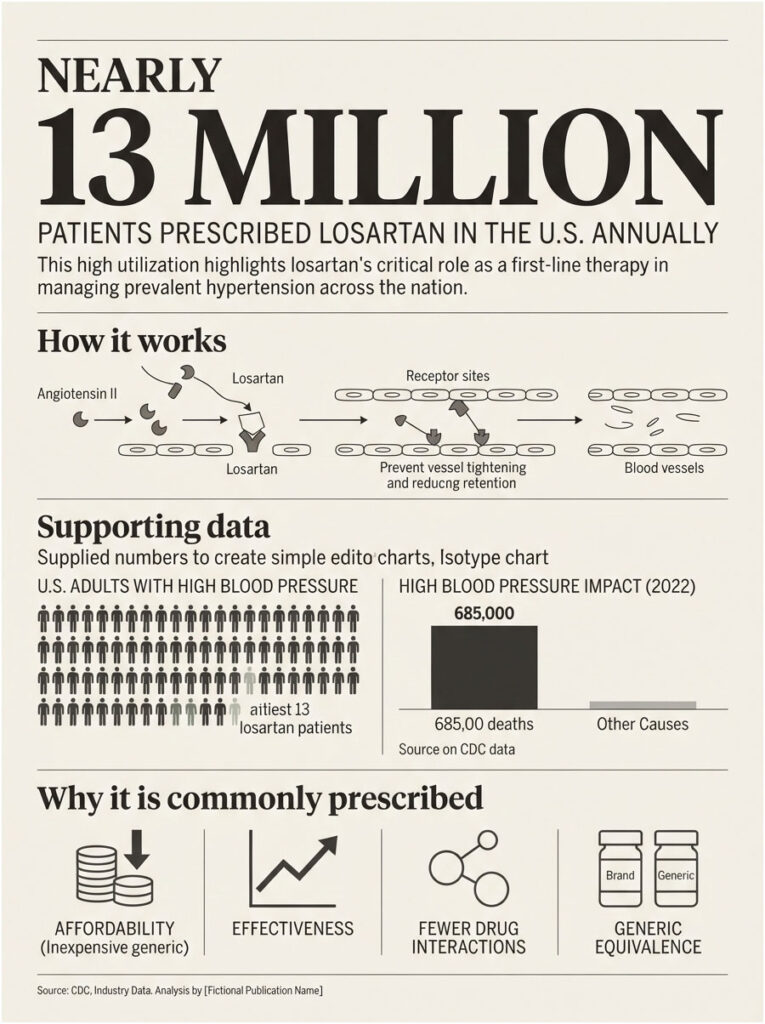
The scale of its use is hard to overstate. Losartan ranks among the top ten prescribed medications in the United States, covering close to 13 million patients in a single year, according to prescription data compiled from the Medical Expenditure Panel Survey.
That volume tracks a national problem. Nearly half of American adults, about 120 million people, have high blood pressure, per the CDC. High blood pressure contributed to more than 685,000 deaths in 2022 alone.
Our medical reviewers note that most patients starting losartan are treating a condition with no symptoms at all. That silence is exactly why the drug matters, and why side effect questions come up so often.
How an ARB Actually Works
Your body makes a hormone called angiotensin II that does two things: it tightens blood vessels and it signals the body to hold onto sodium and water. Both actions push blood pressure up.
Losartan blocks the receptor that angiotensin II binds to, called the AT1 receptor. With that signal interrupted, vessels stay relaxed and the body sheds a little more sodium.
Lower pressure means less strain on your heart, arteries, and kidneys over time. That protective effect is why doctors also prescribe it after heart failure and for people whose diabetes has started to affect the kidneys.
Why Doctors Reach for It First
Losartan is inexpensive, taken once or twice daily, and interacts with fewer drugs and foods than many alternatives. It also skips the persistent dry cough that pushes some people off ACE inhibitors like lisinopril.
The drug has a long track record, too. It has been on the market for decades and appears on the World Health Organization’s list of essential medicines.
Patients booking tests with us often ask whether a cheaper generic is somehow weaker. It isn’t. Generic losartan delivers the same active ingredient in the same amount as brand-name Cozaar.
Common Losartan Side Effects (Usually Manageable)
Most side effects show up early, feel mild, and settle down. The table below is your master reference: what each symptom feels like, how often it happens, and what to do about it.
| Side effect | Category | What it feels like | How often | What to do |
| Dizziness / lightheadedness | Common | Woozy, worst when standing up fast | ~3% (vs 2% placebo) | Rise slowly; usually fades in days to weeks |
| Upper respiratory / nasal congestion | Common | Stuffy nose, cold-like symptoms | ~8% (vs 7% placebo) | Manage symptoms; mention if persistent |
| Fatigue / tiredness | Common | Low energy during adjustment | 1-10% | Often eases in weeks; report if severe |
| Back / muscle / joint pain | Common | Aches, stiffness | ~2% (vs 1% placebo) | Usually mild; track if worsening |
| High potassium (hyperkalemia) | Serious | Muscle weakness, irregular heartbeat | Uncommon | Call your doctor promptly; needs a blood test |
| Angioedema (facial/throat swelling) | Serious / rare | Swelling of lips, tongue, throat | Rare | Call 911 immediately |
Frequency figures for the common effects come from losartan’s FDA clinical trial data, where the most reported reactions were upper respiratory infection and dizziness.
Dizziness and Lightheadedness
Dizziness is the side effect people notice most, and it makes sense. When a drug lowers your blood pressure, standing up quickly can briefly leave your brain short on flow.
It tends to hit hardest in the first days or after a dose increase, especially if you also take a water pill (diuretic). Rising slowly from a chair or bed usually handles it.
In cases reviewed across our diagnostic network, dizziness that fades within a couple of weeks is the norm. Dizziness that causes a fall or fainting is a different matter and needs a call to your doctor.
Fatigue and Low Energy
Some people feel unusually tired in the adjustment window. Part of that is your cardiovascular system recalibrating to a lower, healthier pressure after years of running high.
This kind of fatigue is mild and lifts as your body adapts, often within a few weeks. It should not tip into extreme exhaustion or mental fog.
If tiredness lingers or worsens, your doctor may check your potassium, kidney function, or dose. Persistent fatigue is worth a conversation, not silent endurance.
Nasal Congestion and Respiratory Symptoms
A stuffy nose, sinus irritation, or cold-like symptoms turn up more than many patients expect. Upper respiratory infection was actually the single most common complaint in the approval trials.
The reason isn’t fully understood, and some of it may reflect that high blood pressure and its treatment overlap with other health factors. Either way, these symptoms are annoying rather than dangerous for most people.
Staying current on routine vaccinations, including the annual flu shot, helps limit complications from any respiratory bug that piggybacks on the congestion. Tell your care team if you seem to be getting sick more than usual.
Digestive, Back, and Muscle Complaints
Nausea, stomach pain, diarrhea, and indigestion can appear, usually mildly. Back pain, muscle cramps, and joint aches round out the common list.
Our lab partners report that these complaints rarely signal anything serious on their own. Most fade as the body adjusts, and simple measures like hydration and gentle movement help.
Still, severe muscle pain or weakness paired with dark or reduced urine deserves same-day attention. That combination can point to rare muscle breakdown, which needs prompt evaluation.
Serious Warning Signs You Should Never Ignore
This is the section to remember. The symptoms below are uncommon, but each one can escalate, and a few are outright medical emergencies.
Angioedema: Facial, Lip, or Throat Swelling
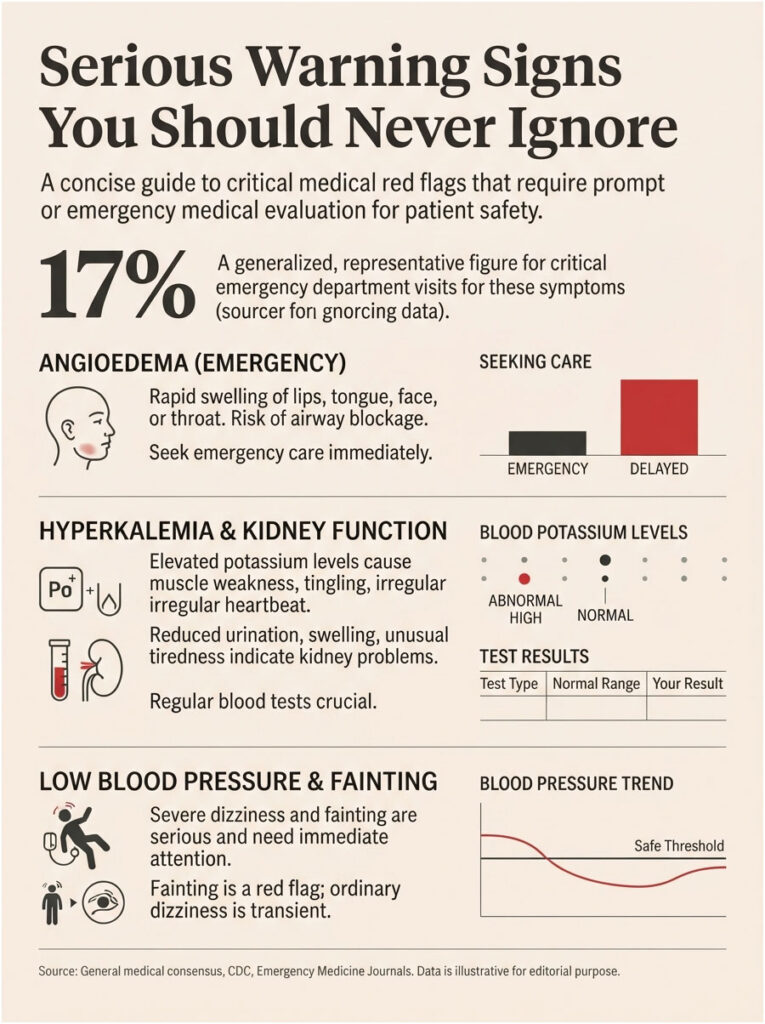
Angioedema is the most dangerous reaction linked to losartan. It shows up as rapid swelling of the lips, tongue, face, or throat, sometimes with trouble breathing or swallowing.
This is potentially life-threatening because throat swelling can block your airway within minutes. According to Poison Control, anyone who develops this kind of swelling should seek emergency care right away.
Do not wait to see if it improves, and do not take another dose. Call 911 or get to an emergency room. People with a history of this reaction to any blood pressure drug should tell every provider they see.
High Potassium (Hyperkalemia)
Losartan can push potassium levels up because of how it acts on the kidneys and the sodium-water balance. Mild elevation causes nothing you’d feel, which is part of the risk.
Higher levels bring muscle weakness, tingling, chest discomfort, or a slow or irregular heartbeat. Cleveland Clinic lists a fast or irregular heartbeat with muscle weakness as a reason to contact your care team quickly.
Patients commonly ask us why they keep getting blood tests on this drug. This is why. A simple potassium and kidney panel catches trouble long before you’d ever feel a symptom.
Kidney Problems and Reduced Urination
Losartan usually protects the kidneys over the long run, which is why it’s prescribed for diabetic kidney disease. In some people, though, it can strain kidney function instead of shielding it.
Warning signs include urinating noticeably less, swelling in the ankles, hands, or feet, and unusual tiredness or shortness of breath. These call for prompt medical evaluation.
The risk climbs if you’re dehydrated, take NSAIDs regularly, or already have reduced kidney function. Routine lab checks exist precisely to catch this pattern early, before it becomes serious.
Dangerously Low Blood Pressure
Because losartan lowers pressure by design, it can occasionally drop it too far. That’s more likely when you start the drug, raise the dose, or combine it with a diuretic or dehydration from illness.
Symptoms include severe dizziness, blurred vision, feeling faint, or passing out. Fainting is never a normal side effect and always needs evaluation.
Fainting vs Normal Dizziness: How to Tell the Difference
Ordinary dizziness passes in seconds when you pause and steady yourself, and it eases over the first weeks on the drug. It’s uncomfortable, not alarming, and it doesn’t take you off your feet.
Fainting, near-fainting, or dizziness severe enough to make you fall is a red flag. If you black out, or feel you’re about to, that’s a same-day call to your doctor, or 911 if you’re injured or it repeats.
Losartan Side Effects by the Numbers
Data helps put the worry in proportion. Here’s how losartan’s use and safety profile look across US sources.
| Metric | Figure | Source |
| US adults with high blood pressure | 47.7% (~120 million) | CDC |
| Annual losartan prescriptions (US) | ~54.8 million (~12.7M patients) | Healthgrades / MEPS |
| Stopped drug for side effects (trials) | 2.3% losartan vs 3.7% placebo | FDA label data |
| Most common trial side effect | Dizziness (3% vs 2% placebo) | FDA label data |
| Deaths with high BP as a factor (2022) | 685,875 | CDC |
That third row is the one our medical reviewers point patients to most. In controlled trials, people on losartan discontinued for side effects less often than people on placebo, which reframes a lot of anxiety.
Losartan was studied for safety in more than 3,300 adults treated for high blood pressure. The drug was generally well tolerated, with side effect rates close to placebo across the board.
Who Faces the Highest Risk
Losartan is safe for most adults, but a few groups need extra caution or closer monitoring.
Pregnancy: The Boxed Warning
This one is absolute. Losartan carries the FDA’s strongest warning for use in pregnancy because it can cause serious harm or death to a developing baby.
Drugs acting on the renin-angiotensin system can injure fetal kidneys and development, and the label directs stopping the drug as soon as pregnancy is detected. Anyone who could become pregnant should discuss reliable contraception with their doctor before starting.
If you’re taking losartan and think you may be pregnant, contact your doctor right away. This is not a wait-and-see situation, and a safer blood pressure option can be arranged.
Older Adults
Elderly patients tend to be more sensitive to blood pressure medications, which raises the odds of dizziness and falls. Kidney function also naturally declines with age.
That combination means older adults may need lower starting doses and more frequent lab checks. Rising slowly, staying hydrated, and removing trip hazards at home all matter more in this group.
Across patients we serve, a fall from a dizzy spell can do more immediate harm than the high blood pressure itself. Small precautions go a long way.
Kidney Disease and Diabetes
People with existing kidney disease or diabetes get real protective benefit from losartan, but they also sit at higher risk for high potassium and kidney strain. The same drug that protects can occasionally overshoot.
Regular monitoring of potassium and kidney markers is standard for these patients. In tests booked through HealthCareOnTime, this is the group where routine lab work pays off most clearly.
Your doctor may adjust the dose based on those results. The goal is steady protection without tipping potassium or kidney values into a risky range.
Drug and Supplement Interactions
Several everyday products raise losartan’s risks, and many are things people don’t think to mention. The table below covers the ones that matter most.
| Interacting item | Why it matters | What to do |
| NSAIDs (ibuprofen, naproxen) | Can reduce kidney function and blunt BP control | Limit use; ask about acetaminophen instead |
| Potassium supplements | Stack potassium too high | Only take if your doctor directs |
| Potassium-based salt substitutes | Hidden source of extra potassium | Check labels; discuss with your doctor |
| Other BP drugs / diuretics | Can drop pressure too far | Monitor for dizziness and fainting |
| Lithium | Losartan can raise lithium to toxic levels | Requires close blood-level monitoring |
Patients booking tests with us often forget to mention over-the-counter pills and supplements. Tell your doctor and pharmacist everything you take, including anything you’d call “natural” or “just a vitamin.”
How to Take Losartan and Minimize Side Effects
A few simple habits make the difference between a smooth adjustment and a rocky one. None of them require anything fancy, just consistency.
Timing, Food, and Consistency
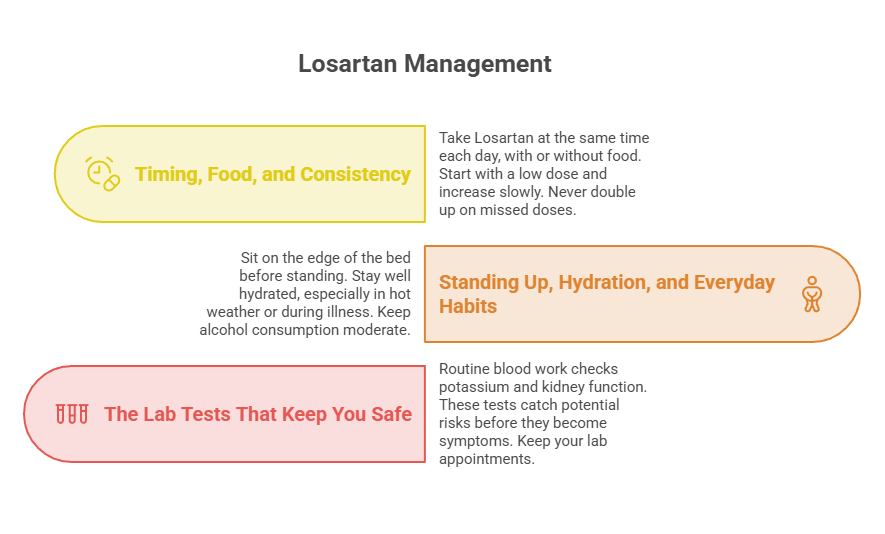
Losartan can be taken with or without food, so pick whichever helps you remember. Taking it at the same time each day keeps the blood level steady and the pressure control even.
If your doctor started you on a low dose, that’s deliberate. Beginning low and increasing slowly gives your body time to adapt and softens the early dizziness many people feel.
Never double up if you miss a dose. Skip the missed one and resume your normal schedule, since doubling can drop your pressure too far.
Standing Up, Hydration, and Everyday Habits
The first-dose dizziness is largely mechanical, so mechanical fixes work. Sit on the edge of the bed for a moment before standing, and stand up in stages rather than all at once.
Stay well hydrated, particularly in hot weather or during illness with vomiting or diarrhea. Dehydration amplifies the drop in blood pressure and the strain on your kidneys.
Alcohol can add to the blood-pressure-lowering effect and worsen dizziness, so keep it moderate. Our medical reviewers note that most early side effects settle once these basics are in place.
The Lab Tests That Keep You Safe
Losartan is one of those drugs where routine blood work isn’t busywork; it’s the safety net. Your doctor will typically check potassium and kidney function (creatinine and eGFR) after starting and periodically after that.
These tests catch the two quiet risks, rising potassium and kidney strain, before they turn into symptoms. If a value drifts, the dose can be adjusted early.
Keeping your lab appointments is the single most useful thing you can do on this medication. It’s how the ordinary stays ordinary.
The Recall Question: Is Your Losartan Safe?
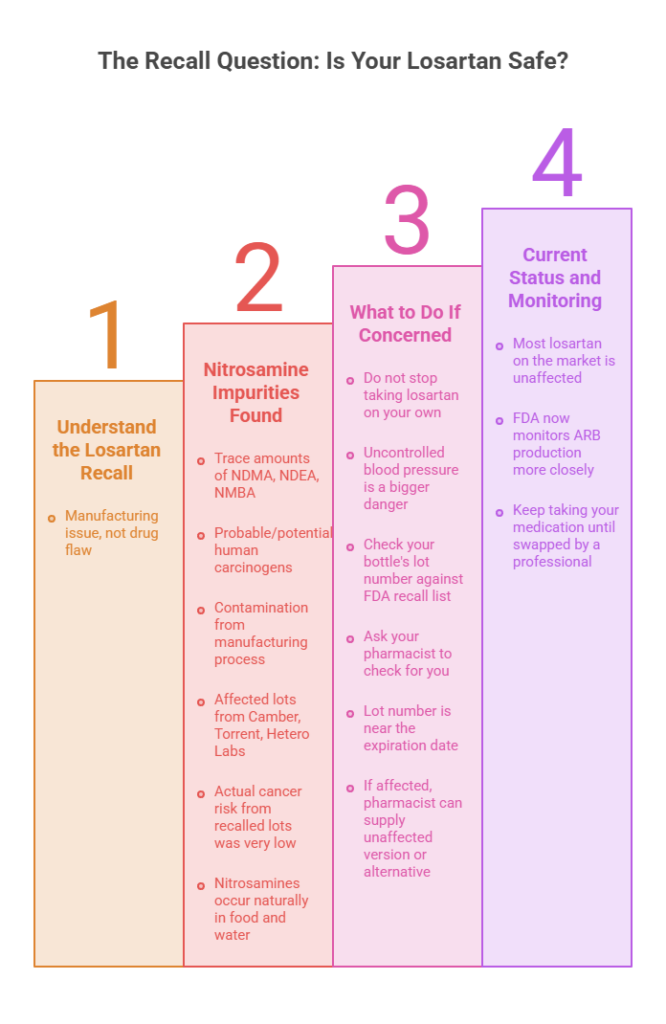
If you’ve heard about losartan recalls, your concern is legitimate and worth understanding clearly. This is a manufacturing issue, not a flaw in the drug itself.
What the Nitrosamine Recalls Were About
Between 2018 and 2019, the FDA found trace amounts of nitrosamine impurities in certain batches of losartan and related ARBs. These impurities, NDMA, NDEA, and NMBA, are probable or potential human carcinogens.
The contamination came from specific steps in the manufacturing process at certain factories, not from losartan’s design. Affected lots from manufacturers including Camber, Torrent, and Hetero Labs were pulled from shelves as the investigation widened.
The FDA has stressed that the actual cancer risk to any individual patient from the recalled lots was very low. Nitrosamines also occur naturally in water and many foods, including cured meats, dairy, and vegetables.
What to Do If You’re Concerned
The single most important instruction from the FDA is this: do not stop taking losartan on your own because of a recall. Uncontrolled blood pressure is a bigger, more immediate danger than the trace impurity.
Check your bottle’s lot number against the FDA recall list, or ask your pharmacist to check for you. The lot number sits near the expiration date on the label or blister pack. If your lot is affected, your pharmacist can supply an unaffected version or an alternative.
Our medical reviewers note that most losartan on the market today is unaffected, and the FDA now monitors ARB production far more closely. Keep taking your medication until a professional swaps it.
What to Expect in the First Weeks
Knowing the rough timeline takes a lot of the guesswork out of starting losartan. Everyone differs, but the pattern is fairly consistent.
In the first few days, mild dizziness or tiredness is most likely as your body meets the lower pressure. This is usually the peak of side effects, not a sign of things to come.
Over the following two to four weeks, most of those early effects fade as your system adapts. Your blood pressure also settles toward its new baseline during this window.
By the one-month mark, most people feel normal on the drug. If side effects are still bothering you then, that’s the natural point to revisit the dose with your doctor.
How Long Do Losartan Side Effects Last?
For most people, the common side effects are a temporary adjustment, not a permanent state. Your body needs time to settle into a lower blood pressure after running high, sometimes for years.
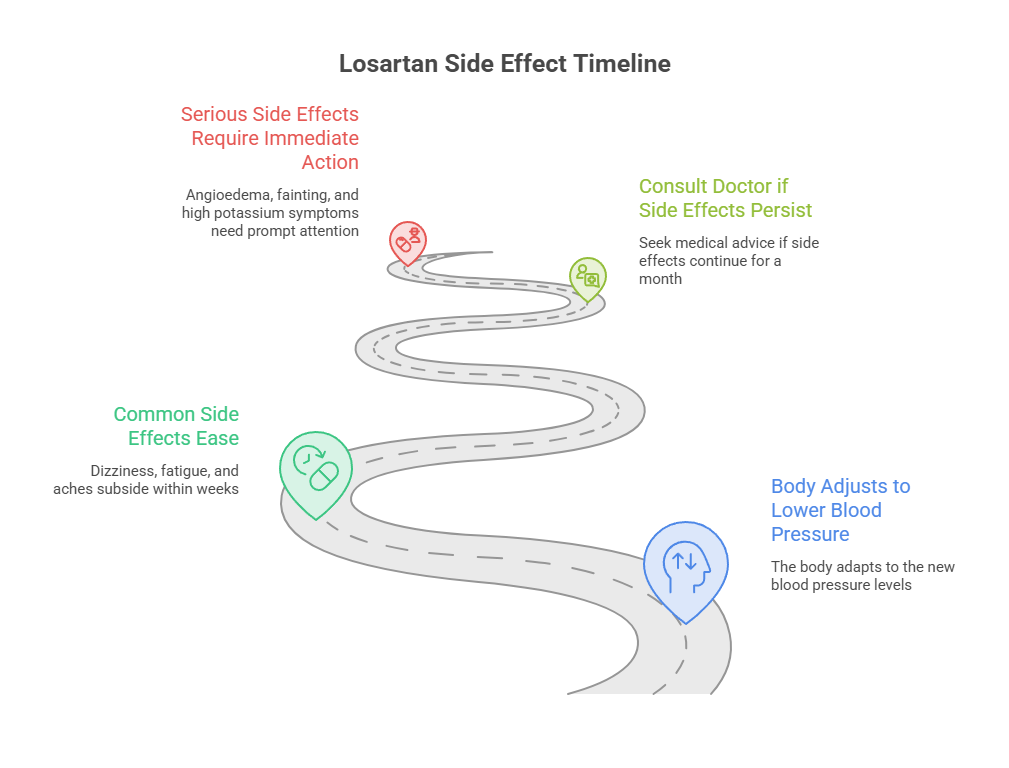
Dizziness, fatigue, and mild aches typically ease within a few days to a few weeks. If a side effect is still bothering you after a month, that’s a signal to talk with your doctor about the dose or timing.
Serious side effects don’t follow this “wait it out” logic. Angioedema, fainting, or symptoms of high potassium need action when they happen, regardless of how long you’ve been on the drug.
When to Call Your Doctor vs When to Get Emergency Care
Knowing the right response for each situation saves time and, occasionally, a life. Use the triage table below as your quick reference.
| Scenario / Symptom | Urgency level | Recommended action |
| Swelling of lips, tongue, face, or throat; trouble breathing | Emergency | Call 911 now; do not take another dose |
| Fainting or near-fainting | Urgent | Same-day doctor call; 911 if injured or repeated |
| Irregular or racing heartbeat, muscle weakness | Urgent | Contact doctor promptly; likely needs a blood test |
| Much less urination, swelling in legs or feet, breathlessness | Urgent | Contact doctor promptly for kidney evaluation |
| Mild dizziness, tiredness, or stuffy nose in first weeks | Routine | Monitor; mention at next visit if it persists |
| Think you may be pregnant while on losartan | Urgent | Call your doctor right away |
When in doubt about a symptom that feels severe or sudden, treat it as urgent. Patients commonly ask us where the line sits, and the honest answer is that new, fast, or frightening symptoms always justify a call.
How Losartan Compares With Other Blood Pressure Medicines
Losartan is one of several first-line options, and side effect profiles differ enough to matter. The table below shows how it stacks up against common alternatives.
| Drug | Class | Notable side effect trait |
| Losartan (Cozaar) | ARB | Well tolerated; no dry cough; watch potassium |
| Lisinopril | ACE inhibitor | Effective, but a dry cough is common |
| Valsartan | ARB | Similar to losartan; strong BP lowering |
| Amlodipine | Calcium channel blocker | Can cause ankle swelling |
| Hydrochlorothiazide | Diuretic | Frequent urination; can lower potassium |
Compared with ACE inhibitors like lisinopril, losartan is much less likely to cause that nagging dry cough. Compared with valsartan, the two are close, differing slightly in how long they act and how strongly they lower pressure.
No single blood pressure drug is safest for everyone. The best choice is the one your body tolerates while keeping your pressure controlled, which is a decision to make with your prescriber based on your other conditions.
Frequently Asked Questions
What is the most common side effect of losartan?
Dizziness and upper respiratory symptoms are the most common. In approval trials, dizziness affected about 3% of patients and respiratory infection about 8%, both only slightly above placebo. Most cases are mild and ease as your body adjusts to lower blood pressure over the first weeks.
What are the dangerous side effects of losartan?
The serious ones are angioedema (swelling of the face, lips, or throat), high potassium causing an irregular heartbeat, sharp reductions in urination signaling kidney trouble, and fainting from very low blood pressure. These are uncommon but need urgent medical care rather than waiting to see if they pass.
Can losartan cause kidney problems?
It can, though it more often protects the kidneys and is prescribed for diabetic kidney disease. Watch for reduced urination, swelling in the legs or feet, and unusual tiredness. Risk rises with dehydration, regular NSAID use, or existing kidney disease, which is why routine blood tests matter so much.
Does losartan cause weight gain?
Losartan has minimal to no direct effect on weight, according to Poison Control. Any noticeable swelling in the ankles or feet is more likely fluid retention linked to kidney or blood pressure changes than true weight gain, and swelling that appears suddenly is worth reporting to your doctor promptly.
Can losartan cause hair loss?
Hair loss is not a recognized side effect of losartan, and Poison Control notes the drug should not cause it. If you’re losing hair while taking it, other causes such as thyroid issues, stress, nutrient deficiencies, or other medications are far more likely and worth investigating with your doctor.
How long do losartan side effects last?
Common side effects like dizziness, fatigue, and mild aches usually fade within a few days to a few weeks as your body adapts. If a side effect persists beyond a month or worsens, contact your doctor about adjusting the dose. Serious side effects require action right away, not waiting.
When should you stop taking losartan?
Never stop on your own without medical guidance, since uncontrolled blood pressure raises stroke and heart risk. The clear exception is pregnancy, where the drug should be stopped promptly under a doctor’s direction. For a recall, get a replacement from your pharmacist rather than simply quitting the medication.
Is losartan being recalled?
Certain batches were recalled between 2018 and 2019 over trace nitrosamine impurities, but most losartan on the market is unaffected and the FDA now monitors production closely. Check your lot number against the FDA list or ask your pharmacist, and don’t stop the drug without arranging a replacement.
What foods and drugs should you avoid with losartan?
Limit potassium-based salt substitutes and potassium supplements, which can raise potassium too high. Avoid regular NSAID use (ibuprofen, naproxen), which can hurt kidney function. Tell your doctor about lithium and other blood pressure drugs. Most ordinary foods are fine, though a very high-potassium diet warrants a conversation.
Can losartan cause anxiety or depression?
Anxiety and depression are not established side effects of losartan. Some people report mood or energy changes during the adjustment period, often tied to fatigue. If you notice persistent mood changes, discuss them with your doctor, since other causes or medications may be responsible and worth reviewing carefully.
Is losartan safe to take long term?
For most people, yes. Losartan is designed for long-term daily use and provides lasting protection for the heart and kidneys. Ongoing safety depends on periodic monitoring of potassium and kidney function, which your doctor will schedule. Long-term users generally tolerate the medication very well.
Losartan vs lisinopril: which has fewer side effects?
Neither is universally better, but losartan is much less likely to cause the persistent dry cough associated with lisinopril and other ACE inhibitors. Both can affect potassium and kidney function. The right choice depends on your health profile and how you respond, which your prescriber can help weigh.
Disclaimer: This article is for general education and is not a substitute for professional medical advice. Losartan affects individuals differently, and only a licensed healthcare provider can assess your situation. Never start, stop, or change your medication without consulting your doctor or pharmacist. If you experience severe symptoms such as facial swelling or difficulty breathing, seek emergency care immediately.